
A practical prompt workflow for turning release notes into action
A repeatable GPT workflow for reading product updates, extracting what changed and turning them into tests or implementation tasks.
Release notes need translation
AI products, developer tools and cloud platforms publish a constant stream of release notes. The hard part is not reading them. The hard part is deciding whether they change your roadmap, your prompts, your code review rules, your costs or your product assumptions.
A useful GPT workflow should turn a release note into a structured decision. The model should summarize the change, list affected users, identify required tests and separate confirmed details from open questions.
The prompt pattern
Start with a narrow instruction: “Read this release note as a product engineer. Extract what changed, who is affected, what we should test and what is not yet clear.” Then ask for a table. A table makes the model expose assumptions instead of hiding them inside a smooth paragraph.
| Output | Purpose |
|---|---|
| Change summary | One paragraph of confirmed facts. |
| User impact | Who should care and why. |
| Tests | Actions to verify in your workflow. |
| Unknowns | Questions that require docs or support. |
How to keep it honest
Never ask a model to guess missing pricing, permissions or rollout status. Give it the source text, ask it to quote the relevant line in short form and require an unknowns section. That is the difference between prompt theater and a useful internal workflow.
Related articles
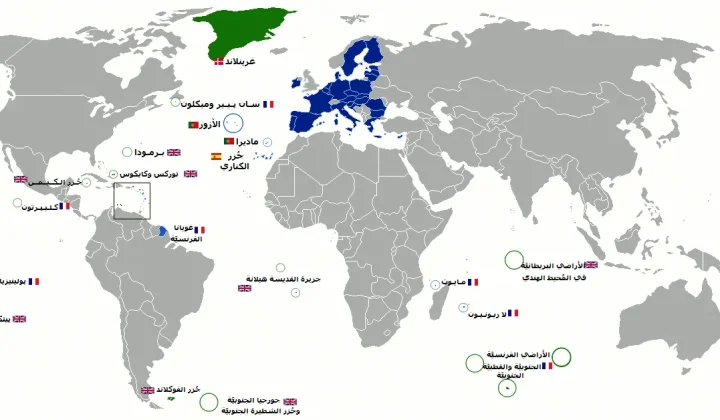
Mayotte fiber dispute does not meet ReviewArticle’s AI news brief
Le Monde reports that France’s competition authority has ordered Orange to suspend part of its fiber-optic rollout in Mayotte. The dispute is…
Read article
DiffEEG Model Uses Diffusion Pre-Training to Improve Seizure Detection from Minimal Labeled Data
Researchers have introduced DiffEEG, a 9.6-million-parameter foundation model that combines denoising diffusion pre-training with reinforcement learning fine-tuning to detect seizure events from…
Read article
The Technology Trap: Why AI Cannot Escape the Unchanging Fundamentals of War
A new Foreign Affairs essay by former Pentagon official Mara Karlin warns that over-reliance on AI and advanced tech in military planning…
Read article
Supabase Releases .NET SDK for C# Developers Across ASP.NET, Unity, and Mobile
Supabase has launched a .NET SDK for C# developers, extending its backend-as-a-service platform to ASP.NET Core, console apps, desktop, Unity, and mobile…
Read articleWiki relacionada

AI Model API Pricing and Context Window Comparison: Current Rates and Limits
Compare the latest API pricing, context windows, and capabilities of leading AI model providers including OpenAI, Anthropic, Google, and Mistral. Practical guidance…
Read article
AI Agent Evaluation Frameworks: How to Benchmark Agentic Systems
A practical guide to evaluating AI agents — from task completion metrics to safety, cost, and robustness. Covers major frameworks, primary sources,…
Read article
LLM Benchmarks Decoded: What MMLU, HumanEval, and GSM8K Actually Measure for Developers
A developer-focused breakdown of the most-cited LLM benchmarks — MMLU, HumanEval, GSM8K, MATH, Chatbot Arena — including what they test, their hidden…
Read article
What Is RAG? A Practical Guide to Retrieval-Augmented Generation in 2025
Retrieval-Augmented Generation (RAG) grounds LLM outputs in external data, reducing hallucinations and enabling enterprise use cases. This guide covers how RAG works,…
Read article