
Ancient “Proto-Stonehenge” Discovery Rewrites Timeline of Neolithic Solar Alignments
An excavation near Stonehenge has unearthed a set of 48 postholes dating back to approximately 2950 BC, suggesting a sophisticated understanding of solar cycles 500 years before the iconic monument was built.
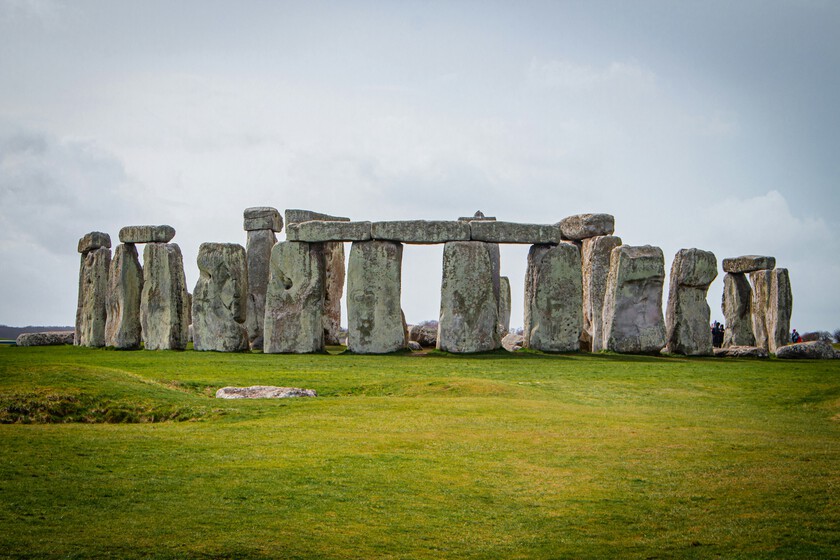
A significant archaeological discovery near the famed Stonehenge monument is prompting a reevaluation of prehistoric astronomical knowledge. Excavations have revealed a structure, dubbed a “proto-Stonehenge,” that predates the iconic stone circle by approximately 500 years. This finding suggests that complex solar alignments were understood and utilized by Neolithic communities much earlier than previously believed.
The Bulford site, located just five kilometers from Stonehenge in Wiltshire, was excavated between 2015 and 2017 by Wessex Archaeology. The research team identified 48 circular pits, or postholes, dated by radiocarbon analysis to around 2950 BC. At the center of this arrangement, evidence of two large wooden posts was found. These posts, though long gone, were precisely aligned to mark the rising sun on the summer solstice and the setting sun on the winter solstice.
Early Solar Astronomy
Phil Harding, director of the Wessex Archaeology investigation, highlights the importance of the discovery’s age. “Until now, our knowledge of this achievement of ancient astronomy was based on Stonehenge and other monuments of a similar period, but what we have discovered in Bulford is 500 years older than the famous stones we all know,” Harding stated. This evidence indicates that the tradition of marking solar cycles was established centuries before Stonehenge was constructed, positioning the famous monument as inheritor rather than innovator of this astronomical practice.
Dr. Fabio Silva, from Stone x Sky and the Skyscape Academy, contextualizes the find, emphasizing that it helps understand Stonehenge “not as a singular creation, but as part of a much longer conversation between people, the land, and the sky.” The alignment at Bulford suggests that Neolithic communities were actively engaging with the solstices within the Stonehenge landscape long before the iconic sarsen stones were erected.
Discovery Context and Artifacts
The Bulford site’s discovery was part of mandatory preventive archaeology conducted before the construction of military housing. Recovered materials included Grooved Ware pottery, animal bones, flint, and charcoal, indicating gatherings of large groups for short periods, likely for solar cycle celebrations. The presence of Grooved Ware pottery, originating from Scotland’s Orkney Islands, also points to extensive cultural contacts across hundreds of kilometers during this period.
One particular posthole may have served as an observation station and contained a rare disc-shaped flint knife. Its placement is thought to be symbolic, possibly referencing the sun. Digital reconstructions of the ancient sky and horizon by Dr. Silva confirmed the alignment of the two central posts with the solstices to within one degree of accuracy. The research team also speculates that an earlier, similar structure may have existed at Stonehenge itself but was erased by later construction phases.
Limitations and Future Research
Despite the compelling evidence, some experts urge caution. Jim Leary of the University of York noted that “two postholes do not constitute an especially convincing alignment,” expressing a preference for a longer row of posts to solidify the interpretation. Vince Gaffney, a landscape archaeologist from the University of Bradford, agrees that definitively proving intentional alignment based on just two points is challenging, though not impossible.
The full academic paper detailing the findings is expected later this year. Until then, the Bulford site offers a crucial glimpse into the deep roots of astronomical observation in prehistoric Britain, predating and potentially influencing the construction of Stonehenge.
Key facts
| Feature | Detail |
|---|---|
| Site Name | Bulford |
| Location | Wiltshire, UK (approx. 5 km from Stonehenge) |
| Estimated Date | c. 2950 BC |
| Key Findings | 48 postholes, evidence of two large wooden posts aligned with solstices |
| Significance | Pre-dates Stonehenge by approx. 500 years, indicating early sophisticated solar alignment knowledge |
| Excavating Body | Wessex Archaeology |
Source: Xataka IA, “Antes de Stonehenge hubo un “primer Stonehenge”: acabamos de descubrirlo a cinco kilómetros del que todo el mundo conoce”, https://www.xataka.com/magnet/antes-stonehenge-hubo-primer-stonehenge-acaba-aparecer-a-solo-cinco-kilometros-que-todo-mundo-conoce
Source
Xataka IA Publicacion original: 2026-06-27T16:00:14+00:00
Related articles

IBM CEO Puts a Number on the Open-Weight AI Value Proposition: 90% of the Performance at 10% of the Token Cost
IBM CEO Arvind Krishna told analysts that open-weight models now deliver about 90% of frontier-model effectiveness while costing between 10% and 25%…
Read article
OCU Finds Spanish Homeowner Communities Overpaying Up to €1,500 on Electricity and €3,515 on Gas—Can AI Tools Optimize Shared Energy Bills?
A new OCU analysis of Spanish homeowner community bills reveals widespread overpayment due to non-competitive tariffs and excess contracted power. Could AI-driven…
Read article
Mayotte fiber dispute does not meet ReviewArticle’s AI news brief
Le Monde reports that France’s competition authority has ordered Orange to suspend part of its fiber-optic rollout in Mayotte. The dispute is…
Read article
DiffEEG Model Uses Diffusion Pre-Training to Improve Seizure Detection from Minimal Labeled Data
Researchers have introduced DiffEEG, a 9.6-million-parameter foundation model that combines denoising diffusion pre-training with reinforcement learning fine-tuning to detect seizure events from…
Read articleWiki relacionada

AI Model API Pricing and Context Window Comparison: Current Rates and Limits
Compare the latest API pricing, context windows, and capabilities of leading AI model providers including OpenAI, Anthropic, Google, and Mistral. Practical guidance…
Read article
AI Agent Evaluation Frameworks: How to Benchmark Agentic Systems
A practical guide to evaluating AI agents — from task completion metrics to safety, cost, and robustness. Covers major frameworks, primary sources,…
Read article
LLM Benchmarks Decoded: What MMLU, HumanEval, and GSM8K Actually Measure for Developers
A developer-focused breakdown of the most-cited LLM benchmarks — MMLU, HumanEval, GSM8K, MATH, Chatbot Arena — including what they test, their hidden…
Read article
What Is RAG? A Practical Guide to Retrieval-Augmented Generation in 2025
Retrieval-Augmented Generation (RAG) grounds LLM outputs in external data, reducing hallucinations and enabling enterprise use cases. This guide covers how RAG works,…
Read article