
Beyond the 5-a-Day: Study Reveals Random Fruit & Veg Choices May Miss Key Bioactives
A new study suggests that simply eating five servings of fruits and vegetables daily may not be enough to ensure adequate intake of essential bioactives like flavanols, highlighting the importance of strategic food selection.
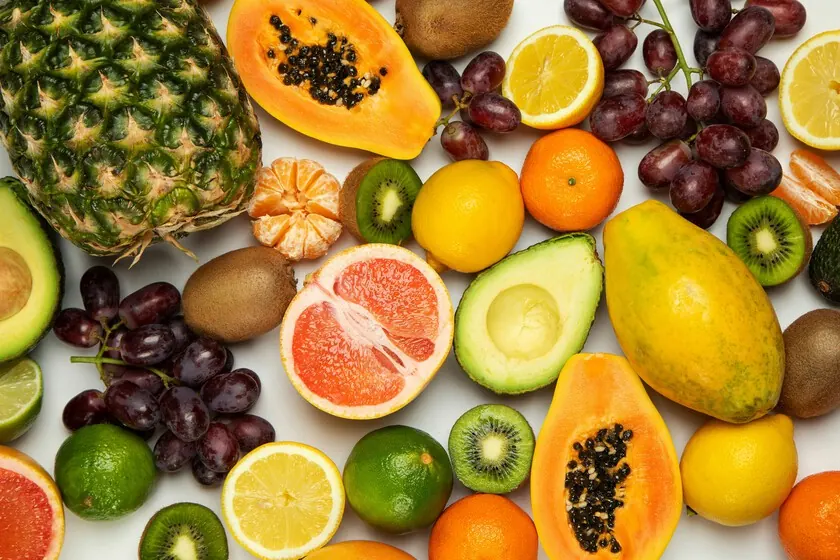
A recent investigation suggests that the widely promoted “5-a-day” recommendation for fruit and vegetable consumption might not guarantee optimal health benefits if the choices are random. The study, led by Professor Gunther Kuhnle of the University of Reading, indicates that a strategic selection of produce is crucial for ensuring adequate intake of important bioactives, such as flavanols.
Key Facts
| Aspect | Detail |
|---|---|
| Study Focus | Flavanol intake from fruit and vegetable consumption |
| Recommended Flavanol Dose | 500 milligrams per day |
| Study Participants | 30,000 individuals from UK and US (urine samples analyzed) |
| Key Finding | Less than 1 in 5 participants reached the recommended flavanol intake. |
| Influential Food | Tea identified as a significant source of flavanols. |
The Importance of Bioactives
Fruits and vegetables are recognized for their rich content of bioactives—substances that exert beneficial biological effects on the human body. Among these, flavanols are particularly significant plant-based compounds. The research aimed to determine if typical dietary habits, including the consumption of five daily servings of fruits and vegetables, translate into sufficient flavanol intake.
While the recommended daily intake of 500 milligrams of flavanols is achievable through a normal diet, the study found that very few individuals actually reach this target, even when adhering to the 5-a-day guideline. This suggests that the quantity of produce consumed might be less critical than the specific types chosen.
Methodology: Beyond Self-Reporting
Traditional dietary studies often rely on food diaries or surveys, which can be prone to inaccuracies due to imperfect recall. To overcome this limitation, the researchers analyzed urine samples from 30,000 participants in the UK and US. This method provided a more objective measure of absorbed bioactives.
Surprising Results Across Regions
The study revealed a significant gap between recommended intake and actual consumption of flavanols. In the US, approximately 20% of individuals who consumed five servings of fruits and vegetables daily met the 500 mg flavanol target. However, in the UK, only 10% of those following the same recommendation achieved this goal.
Interestingly, the study also found that a notable number of participants reached the recommended flavanol levels without necessarily consuming five servings of fruits and vegetables daily. This finding points to other dietary sources playing a significant role.
The Role of Tea
Tea emerged as a crucial factor in flavanol intake. In the US, tea consumption is often associated with a health-conscious lifestyle, which might correlate with higher fruit and vegetable intake. In the UK, however, tea consumption is more of a cultural habit, suggesting that many who don’t meet the 5-a-day recommendation might be compensating for flavanol intake through their tea consumption.
Strategic Selection Over Random Consumption
Professor Kuhnle concluded that a random selection of five fruits and vegetables daily is unlikely to provide significant amounts of bioactives. He advises consumers to be more deliberate in their choices. For instance, while carrots, cauliflower, and cucumbers are low in flavanols, cherries, berries, grapes, and apples are rich sources. Cacao is also noted for its high flavanol content.
This doesn’t mean abandoning the 5-a-day rule, which remains beneficial. Instead, it encourages a deeper understanding of the nutritional profiles of different foods. For example, carrots, though low in flavanols, are rich in carotenoids, another essential nutrient. The ideal approach is to aim for a diverse intake of various bioactives.
Optimizing Nutrient Intake
To maximize health benefits, combining a variety of fruits and vegetables is recommended. An example combination could include berries, artichoke, kale, carrots, and pomegranate. This mix ensures a broad spectrum of nutrients, including flavanols, other polyphenols, vitamin C, carotenoids, folate, calcium, potassium, and fiber. For instance, the elagitanins in pomegranate are beneficial for gut health.
While all edible fruits and vegetables are healthy, some, like lettuce and cucumber, are nutritionally less dense. Focusing solely on these might limit the overall benefit. Therefore, choosing fruits and vegetables with a richer nutritional profile, alongside a cup of tea, can enhance the health impact.
The 5-a-day guideline serves as a useful, albeit approximate, benchmark. Some studies suggest a more precise target of 400 grams of fruits and vegetables daily. Regardless of the exact numbers, the core message emphasizes the importance of a balanced diet rich in diverse nutrients, underscoring that informed food choices are key to maximizing health outcomes.
Source: “Una selección aleatoria puede ser insuficiente”: La elección de tus 5 frutas y verduras diarias también importa” published on Xataka by Azucena Martín.
Source
Xataka IA Publicacion original: 2026-06-19T18:00:17+00:00
Related articles

IBM CEO Puts a Number on the Open-Weight AI Value Proposition: 90% of the Performance at 10% of the Token Cost
IBM CEO Arvind Krishna told analysts that open-weight models now deliver about 90% of frontier-model effectiveness while costing between 10% and 25%…
Read article
OCU Finds Spanish Homeowner Communities Overpaying Up to €1,500 on Electricity and €3,515 on Gas—Can AI Tools Optimize Shared Energy Bills?
A new OCU analysis of Spanish homeowner community bills reveals widespread overpayment due to non-competitive tariffs and excess contracted power. Could AI-driven…
Read article
Mayotte fiber dispute does not meet ReviewArticle’s AI news brief
Le Monde reports that France’s competition authority has ordered Orange to suspend part of its fiber-optic rollout in Mayotte. The dispute is…
Read article
DiffEEG Model Uses Diffusion Pre-Training to Improve Seizure Detection from Minimal Labeled Data
Researchers have introduced DiffEEG, a 9.6-million-parameter foundation model that combines denoising diffusion pre-training with reinforcement learning fine-tuning to detect seizure events from…
Read articleWiki relacionada

AI Model API Pricing and Context Window Comparison: Current Rates and Limits
Compare the latest API pricing, context windows, and capabilities of leading AI model providers including OpenAI, Anthropic, Google, and Mistral. Practical guidance…
Read article
AI Agent Evaluation Frameworks: How to Benchmark Agentic Systems
A practical guide to evaluating AI agents — from task completion metrics to safety, cost, and robustness. Covers major frameworks, primary sources,…
Read article
LLM Benchmarks Decoded: What MMLU, HumanEval, and GSM8K Actually Measure for Developers
A developer-focused breakdown of the most-cited LLM benchmarks — MMLU, HumanEval, GSM8K, MATH, Chatbot Arena — including what they test, their hidden…
Read article
What Is RAG? A Practical Guide to Retrieval-Augmented Generation in 2025
Retrieval-Augmented Generation (RAG) grounds LLM outputs in external data, reducing hallucinations and enabling enterprise use cases. This guide covers how RAG works,…
Read article