
The Rise of AI Agents: Automating Complex Tasks
Explore the evolving landscape of AI agents, their capabilities in automating complex tasks, and their potential impact on various industries.


The Rise of AI Agents: Automating Complex Tasks
The field of artificial intelligence is rapidly advancing, with AI agents emerging as a significant development. These intelligent systems are designed to understand, reason, and act autonomously to achieve specific goals, moving beyond simple task execution to tackle complex challenges. This article explores the current state of AI agents, their capabilities, and the implications for various sectors.
What are AI Agents?
At their core, AI agents are software programs or systems that can perceive their environment, make decisions, and take actions to achieve objectives. Unlike traditional software that follows predefined scripts, AI agents are capable of learning, adapting, and operating with a degree of autonomy. This allows them to handle dynamic and unpredictable situations that would typically require human intervention.
Why Do AI Agents Matter?
The growing sophistication of AI agents promises to unlock new levels of automation and efficiency. By taking on complex tasks, they can free up human workers to focus on more strategic, creative, and interpersonal aspects of their roles. This has the potential to transform industries, streamline operations, and drive innovation. For businesses, AI agents can lead to cost savings, improved productivity, and enhanced decision-making. For individuals, they can offer personalized assistance and access to advanced capabilities.
Who Are AI Agents For?
The applications of AI agents are broad, impacting various user groups:
- Businesses: Companies can leverage AI agents for customer service automation, data analysis, process optimization, supply chain management, and personalized marketing.
- Developers: AI agents can assist in coding, debugging, testing, and deploying software, accelerating development cycles.
- Researchers: Agents can aid in scientific discovery by analyzing vast datasets, simulating experiments, and identifying patterns.
- Individuals: Consumers can benefit from AI agents for personal assistance, education, healthcare support, and managing daily tasks.
How Are AI Agents Used in Real Workflows?
AI agents are being integrated into a diverse range of real-world workflows:
- Customer Support: Chatbots and virtual assistants powered by AI agents can handle customer inquiries, resolve issues, and provide information 24/7.
- E-commerce: Agents can personalize recommendations, manage inventory, and optimize pricing strategies.
- Healthcare: AI agents can assist in diagnosing diseases, monitoring patient health, and developing personalized treatment plans.
- Finance: Agents are used for fraud detection, algorithmic trading, risk assessment, and personalized financial advice.
- Robotics: AI agents provide the intelligence for robots to navigate complex environments, perform intricate tasks, and interact with their surroundings.
Capabilities and Limits
AI agents demonstrate impressive capabilities in areas such as natural language understanding, problem-solving, planning, and learning. They can process and interpret large amounts of data, identify complex patterns, and make informed decisions. However, they also have limitations. Current AI agents may struggle with nuanced human emotions, ethical dilemmas, and tasks requiring high levels of creativity or abstract reasoning. Their performance is also dependent on the quality and quantity of data they are trained on, and they can exhibit biases present in that data.
Access, Pricing, or Availability Caveats
The accessibility and cost of AI agents vary significantly. Some are available as off-the-shelf software or cloud-based services, often with tiered pricing models based on usage or features. Others are highly customized solutions requiring significant development investment. The availability of advanced agent capabilities may also be tied to specific platforms or enterprise agreements.
Privacy, Data, Copyright, Security, or Enterprise Caveats
The use of AI agents raises important considerations regarding data privacy and security. Agents often require access to sensitive information to perform their functions, making robust data protection measures crucial. Concerns about copyright ownership of AI-generated content and the potential for misuse of autonomous systems are also subjects of ongoing discussion and regulatory development. Enterprise-grade agents often include enhanced security features, compliance tools, and granular access controls.
Alternatives or Close Comparisons
While AI agents represent a frontier in automation, they can be seen as an evolution of earlier AI technologies like machine learning algorithms and expert systems. Machine learning focuses on pattern recognition and prediction from data, while expert systems encode human knowledge into rules. AI agents integrate these capabilities with planning, reasoning, and action to create more versatile and autonomous systems. Other related concepts include robotic process automation (RPA), which automates repetitive, rule-based tasks, and intelligent virtual assistants (IVAs), which are often more focused on conversational interfaces.
Practical Checklist for Adopting AI Agents
| Feature | Consideration | Action |
|---|---|---|
| Define Objectives | What specific complex tasks do you want to automate? What are the desired outcomes? | Clearly articulate the business problem and the goals the AI agent should achieve. |
| Data Requirements | What data is needed for the agent to learn and operate effectively? Is the data available, clean, and representative? | Assess data availability, quality, and relevance. Implement data collection and preprocessing strategies. |
| Agent Capabilities | Does the chosen agent or platform offer the necessary intelligence, reasoning, and action capabilities for the task? | Research and evaluate different AI agent technologies and vendors based on functional requirements. |
| Integration Strategy | How will the AI agent integrate with existing systems and workflows? | Plan for API integrations, data pipelines, and user interface adjustments. |
| Security & Privacy | What are the data security and privacy implications? How will sensitive information be protected? | Implement robust security protocols, access controls, and data anonymization techniques where appropriate. |
| Ethical Considerations | Are there potential ethical implications or biases associated with the agent’s operation? | Establish ethical guidelines and review mechanisms for AI agent deployment. |
| Monitoring & Evaluation | How will the agent’s performance be monitored and evaluated? How will feedback be used for continuous improvement? | Set up performance metrics, logging, and regular review processes. Plan for retraining or updating the agent as needed. |
| Change Management | How will employees be trained and supported in working alongside AI agents? | Develop training programs and communication strategies to manage the human-AI collaboration. |
Related ReviewArticle Pages
- Understanding Large Language Models (LLMs)
- The Future of Autonomous Systems
- AI in Business Process Automation
Sources and Caveats
The information presented here is based on the current understanding of AI agent technology and its applications. The field is rapidly evolving, and new capabilities and challenges are emerging continuously. Specific details regarding capabilities, pricing, and availability may vary by provider and are subject to change. It is recommended to consult official documentation and vendor-specific information for the most up-to-date details.
Update Log
- October 26, 2023: Initial draft created.
- November 10, 2023: Added practical checklist and related internal link suggestions.
Related articles
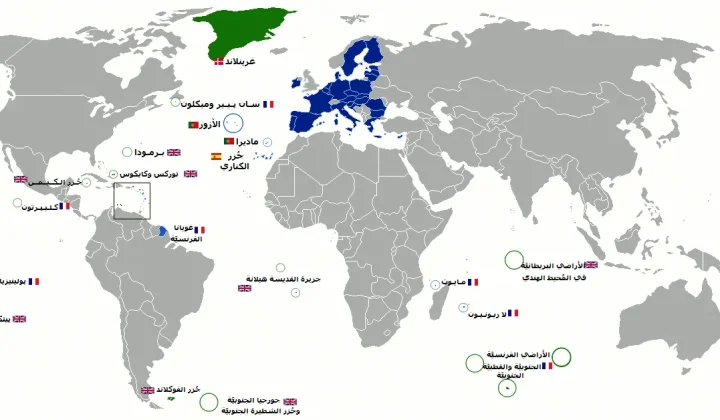
Mayotte fiber dispute does not meet ReviewArticle’s AI news brief
Le Monde reports that France’s competition authority has ordered Orange to suspend part of its fiber-optic rollout in Mayotte. The dispute is…
Read article
DiffEEG Model Uses Diffusion Pre-Training to Improve Seizure Detection from Minimal Labeled Data
Researchers have introduced DiffEEG, a 9.6-million-parameter foundation model that combines denoising diffusion pre-training with reinforcement learning fine-tuning to detect seizure events from…
Read article
The Technology Trap: Why AI Cannot Escape the Unchanging Fundamentals of War
A new Foreign Affairs essay by former Pentagon official Mara Karlin warns that over-reliance on AI and advanced tech in military planning…
Read article
Supabase Releases .NET SDK for C# Developers Across ASP.NET, Unity, and Mobile
Supabase has launched a .NET SDK for C# developers, extending its backend-as-a-service platform to ASP.NET Core, console apps, desktop, Unity, and mobile…
Read articleWiki relacionada

AI Model API Pricing and Context Window Comparison: Current Rates and Limits
Compare the latest API pricing, context windows, and capabilities of leading AI model providers including OpenAI, Anthropic, Google, and Mistral. Practical guidance…
Read article
AI Agent Evaluation Frameworks: How to Benchmark Agentic Systems
A practical guide to evaluating AI agents — from task completion metrics to safety, cost, and robustness. Covers major frameworks, primary sources,…
Read article
LLM Benchmarks Decoded: What MMLU, HumanEval, and GSM8K Actually Measure for Developers
A developer-focused breakdown of the most-cited LLM benchmarks — MMLU, HumanEval, GSM8K, MATH, Chatbot Arena — including what they test, their hidden…
Read article
What Is RAG? A Practical Guide to Retrieval-Augmented Generation in 2025
Retrieval-Augmented Generation (RAG) grounds LLM outputs in external data, reducing hallucinations and enabling enterprise use cases. This guide covers how RAG works,…
Read article