
Sakana AI Software Engineers Discuss AI Agents Transforming Financial Operations
Sakana AI's Applied Team is integrating AI agents into core financial sector operations, focusing on enhancing efficiency and accuracy. Software Engineers Shota Sakai and Katsuhiro Honda share insights into the challenges and opportunities of this transformative work.

Sakana AI is actively deploying its unique collective intelligence-inspired generative AI technology into critical sectors, with a particular focus on finance. The company’s Applied Team, launched in early 2025, is now seeing AI agents begin to fundamentally alter operational workflows within financial institutions. This shift is creating new roles and challenges for software engineers, as highlighted in a recent interview with Shota Sakai and Katsuhiro Honda, a Software Engineer and Engineering Manager at Sakana AI, respectively.
Diverse Backgrounds Fuel Innovation
Sakana AI attracts engineers from varied professional backgrounds. Shota Sakai, who joined in November 2025, previously worked at Accenture and freee, gaining extensive experience in large-scale financial system development, microservices architecture, and product operations. His background provides a strong foundation for full-stack AI product development. Katsuhiro Honda, an August 2025 hire, transitioned from roles including CTO at a legal tech startup and Senior Executive Engineer at Digital Garage, bringing a broad perspective from infrastructure to application development, with a consistent focus on delivering tangible business results.
The decision for both engineers to join Sakana AI stemmed from a desire to directly engage with the rapid evolution of AI agents. They saw the potential for AI not just as a developer tool, but as a core component of operational systems, while also recognizing the significant challenges in reliability, operability, and integration with existing infrastructure. While initially concerned about the breadth of full-stack responsibilities, they found Sakana AI emphasizes ownership and continuous learning over immediate perfection, allowing them to leverage their existing expertise in financial systems and product development.
Transforming Financial Workflows
Sakana AI’s Applied Team is currently developing AI agent-powered products to support banking operations, specifically in lending processes. These agents assist in complex tasks such as gathering and organizing customer and financial data, performing analysis, and drafting loan application documents. The goal is not to replace human decision-making but to reduce the burden of analysis and documentation, freeing up bank employees to focus on client interaction and critical decision-making.
Technical Hurdles in Enterprise AI
Implementing AI agents in the financial sector presents unique technical challenges. Unlike traditional web applications with predictable inputs and outputs, AI agent behavior can vary based on prompts and context. Defining “sufficient operational quality” for these agents within the strict regulatory and security constraints of finance is a significant undertaking. Sakai noted, “We need to carefully delineate what information is passed to the AI, what the AI is responsible for, and where human or application-side control is necessary.” This involves designing for context management, tool execution, permission controls, audit logs, human review points, and error recovery, all while ensuring security and stability within enterprise cloud environments and existing systems.
The development approach integrates UI/UX, evaluation methods, and application responsibilities from the outset, treating AI agent operation as a given. This contrasts with simply calling a model and displaying results.
Accelerated Development and Increased Autonomy
The pace of work at Sakana AI is notably fast, driven by its AI-native approach where workflows are designed around AI integration. While AI is used extensively in development, it’s coupled with robust governance, information control, and validation through sandboxes and clear instructions. This allows human engineers to concentrate on higher-level tasks like architecture design, specification judgment, code reviews, and risk assessment. Sakai observed, “Because of AI’s efficiency, the scope of personal discretion and responsibility has expanded. I have more opportunities to make decisions encompassing product value, user experience, technical feasibility, security, and operability, significantly increasing my scope of action compared to my previous role.”
Team Collaboration and Enterprise Focus
Honda manages a team comprising Software Engineers and Solution Engineers. Software Engineers typically handle full-stack development for core platforms and products, focusing on architecture, development productivity, and common infrastructure. A key responsibility is scaling Proof of Concept (PoC) systems to enterprise-grade quality suitable for large corporations. Solution Engineers focus on integration and deployment within client environments, navigating specific security, network, and operational constraints. The team’s diversity, including members from web development, data science, SI, cloud, and SRE backgrounds, fosters strong cross-functional collaboration.
Honda emphasizes the team’s need to deliver for clients in the short term, requiring not just technical skill but also the ability to collaborate across roles and with clients to overcome real-world operational challenges. In the long term, the team is expected to feed insights from project deliveries back into the platform and products, creating a continuous improvement cycle often enhanced by AI itself.
Datos clave
| Aspect | Description |
|---|---|
| Company | Sakana AI |
| Focus Area | AI Agents in Financial Operations |
| Key Technologies | Generative AI, Collective Intelligence |
| Roles Interviewed | Software Engineer, Engineering Manager |
| Primary Goal | Enhance efficiency and accuracy in financial processes |
The Future of AI in Enterprise
Sakana AI aims to become the de facto standard for AI utilization in Japan, fostering software where humans and AI collaborate naturally within existing workflows. Sakai envisions a future where AI provides timely support, and humans make informed decisions, all integrated seamlessly through thoughtful UI/UX, application design, and robust operational frameworks. Honda is keen on exploring new development paradigms enabled by AI, focusing on how to transform organizational processes and structures, not just individual tools. Both emphasize the importance of learning from clients and growing together to build globally competitive solutions.
Fuente: Sakana AI Blog – 金融領域の業務をAIエージェントで変える:Sakana AI、Software Engineerインタビュー (https://sakana.ai/finance-swe-interview-2026/)
Source
Sakana AI Blog Publicacion original: 2026-05-31T15:00:00+00:00
Related articles
IBM CEO Puts a Number on the Open-Weight AI Value Proposition: 90% of the Performance at 10% of the Token Cost
IBM CEO Arvind Krishna told analysts that open-weight models now deliver about 90% of frontier-model effectiveness while costing between 10% and 25%…
Read article
OCU Finds Spanish Homeowner Communities Overpaying Up to €1,500 on Electricity and €3,515 on Gas—Can AI Tools Optimize Shared Energy Bills?
A new OCU analysis of Spanish homeowner community bills reveals widespread overpayment due to non-competitive tariffs and excess contracted power. Could AI-driven…
Read article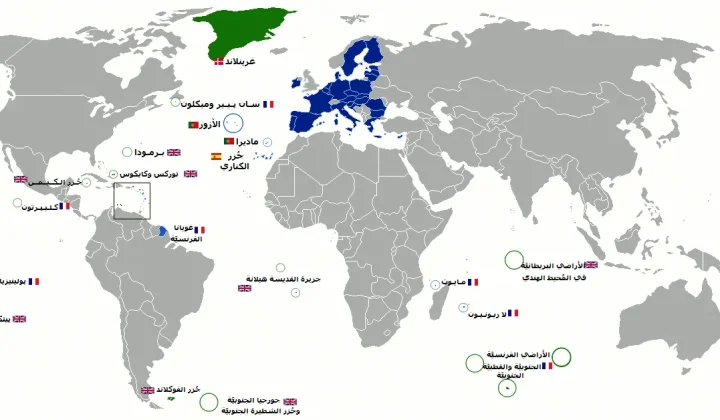
Mayotte fiber dispute does not meet ReviewArticle’s AI news brief
Le Monde reports that France’s competition authority has ordered Orange to suspend part of its fiber-optic rollout in Mayotte. The dispute is…
Read article
DiffEEG Model Uses Diffusion Pre-Training to Improve Seizure Detection from Minimal Labeled Data
Researchers have introduced DiffEEG, a 9.6-million-parameter foundation model that combines denoising diffusion pre-training with reinforcement learning fine-tuning to detect seizure events from…
Read articleWiki relacionada

AI Model API Pricing and Context Window Comparison: Current Rates and Limits
Compare the latest API pricing, context windows, and capabilities of leading AI model providers including OpenAI, Anthropic, Google, and Mistral. Practical guidance…
Read article
AI Agent Evaluation Frameworks: How to Benchmark Agentic Systems
A practical guide to evaluating AI agents — from task completion metrics to safety, cost, and robustness. Covers major frameworks, primary sources,…
Read article
LLM Benchmarks Decoded: What MMLU, HumanEval, and GSM8K Actually Measure for Developers
A developer-focused breakdown of the most-cited LLM benchmarks — MMLU, HumanEval, GSM8K, MATH, Chatbot Arena — including what they test, their hidden…
Read article
What Is RAG? A Practical Guide to Retrieval-Augmented Generation in 2025
Retrieval-Augmented Generation (RAG) grounds LLM outputs in external data, reducing hallucinations and enabling enterprise use cases. This guide covers how RAG works,…
Read article