
Sauna Use Linked to Significantly Lower Risk of Dementia and Alzheimer’s, Study Suggests
A 20-year Finnish study indicates that regular sauna use is associated with a substantial reduction in the risk of developing dementia and Alzheimer's disease, offering potential insights into brain health.
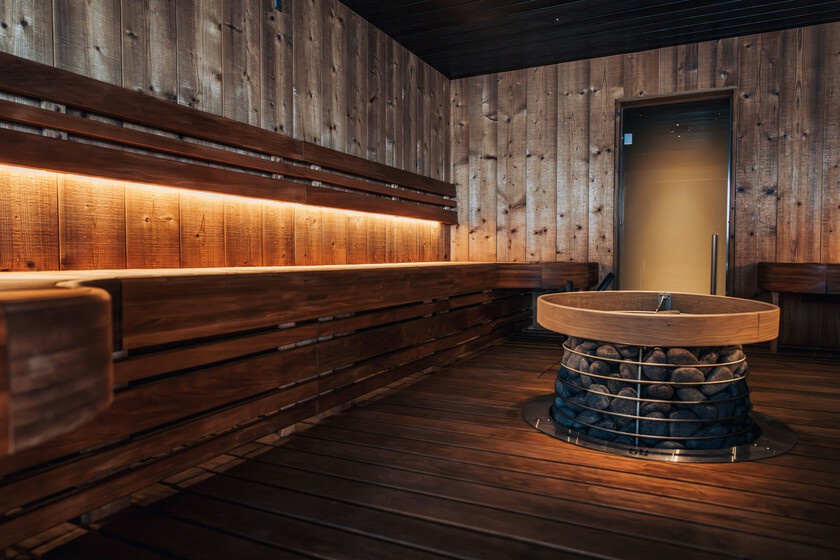
A long-term study conducted in Finland has revealed a strong association between regular sauna use and a significantly reduced risk of developing dementia and Alzheimer’s disease. The research, which followed over 2,300 middle-aged men for two decades, suggests that the practice of thermotherapy may offer protective benefits for brain health.
Finnish Cohort Study
The findings stem from the KIHD (Kuopio Ischaemic Heart Disease Risk Factor) study, led by the University of Eastern Finland. This large-scale observational study is considered a cornerstone for understanding the neurological impacts of sauna bathing. Researchers tracked participants’ sauna habits and health outcomes over a 20-year period.
The results indicated that individuals who used the sauna four to seven times per week had a 66% lower risk of developing dementia compared to those who only used it once a week. More specifically, the risk of developing Alzheimer’s disease was reduced by 65% in frequent sauna users.
These statistics were adjusted for various risk factors, including smoking and Body Mass Index (BMI), to isolate the potential effects of sauna use. Subsequent reviews have reportedly reinforced these findings, suggesting that the benefits of passive heat exposure on cognitive health are consistent across different risk profiles and are not exclusive to men.
Beyond Cognitive Health
The potential benefits of sauna use extend beyond memory and neurodegenerative diseases. Evidence also suggests that regular heat exposure may contribute to improvements in depressive symptoms. While the evidence in this area is more varied, relying on observational studies and smaller trials, neurobiological explanations are emerging.
One proposed mechanism involves the activation of heat shock proteins, which play a role in repairing damaged proteins and protecting cells from stress. The cyclical exposure to intense heat followed by cooling is also thought to train the body’s stress response systems, including the “fight or flight” and “rest and digest” pathways. Furthermore, given the known inflammatory component of depression, the temporary increase in body temperature during a sauna session may paradoxically reduce long-term inflammatory markers.
Important Caveats
Despite the compelling associations, the study authors and the reporting article emphasize that causality cannot be definitively established solely from this observational data. It is acknowledged that frequent sauna use (4-5 times per week) is often intertwined with a lifestyle that includes other health-promoting behaviors. These can include regular exercise, lower stress levels, increased social interaction, and generally better overall health habits, all of which are independently linked to a reduced risk of cognitive decline. Therefore, while the heat itself may be a contributing factor, it is likely part of a broader pattern of healthy living.
Key Facts
| Aspect | Detail |
|---|---|
| Study | KIHD (Kuopio Ischaemic Heart Disease Risk Factor) study |
| Location | Finland |
| Participants | 2,315 middle-aged men |
| Duration | 20 years |
| Key Finding | 4-7 sauna sessions/week linked to 65% lower Alzheimer’s risk |
| Potential Mechanism | Heat shock proteins, stress response training, reduced inflammation |
The implications of these findings for the general public are significant, especially as populations age and concerns about cognitive decline grow. While not a standalone cure, incorporating regular sauna bathing into a healthy lifestyle, alongside other evidence-based practices, may offer a proactive approach to maintaining brain health and potentially mitigating the risk of debilitating neurological conditions like Alzheimer’s disease. Further research, potentially including randomized controlled trials, would be needed to confirm direct causal links.
Source: Science reveals how saunas “hack” the brain: reduces Alzheimer’s risk by 65% in the future – Xataka IA (https://www.xataka.com/medicina-y-salud/ciencia-revela-como-sauna-hackea-cerebro-apunta-a-que-reduce-65-riesgo-alzheimer)
Source
Xataka IA Publicacion original: 2026-07-18T17:00:08+00:00
Related articles
OCU Finds Spanish Homeowner Communities Overpaying Up to €1,500 on Electricity and €3,515 on Gas—Can AI Tools Optimize Shared Energy Bills?
A new OCU analysis of Spanish homeowner community bills reveals widespread overpayment due to non-competitive tariffs and excess contracted power. Could AI-driven…
Read article
Mayotte fiber dispute does not meet ReviewArticle’s AI news brief
Le Monde reports that France’s competition authority has ordered Orange to suspend part of its fiber-optic rollout in Mayotte. The dispute is…
Read article
DiffEEG Model Uses Diffusion Pre-Training to Improve Seizure Detection from Minimal Labeled Data
Researchers have introduced DiffEEG, a 9.6-million-parameter foundation model that combines denoising diffusion pre-training with reinforcement learning fine-tuning to detect seizure events from…
Read article
The Technology Trap: Why AI Cannot Escape the Unchanging Fundamentals of War
A new Foreign Affairs essay by former Pentagon official Mara Karlin warns that over-reliance on AI and advanced tech in military planning…
Read articleWiki relacionada

AI Model API Pricing and Context Window Comparison: Current Rates and Limits
Compare the latest API pricing, context windows, and capabilities of leading AI model providers including OpenAI, Anthropic, Google, and Mistral. Practical guidance…
Read article
AI Agent Evaluation Frameworks: How to Benchmark Agentic Systems
A practical guide to evaluating AI agents — from task completion metrics to safety, cost, and robustness. Covers major frameworks, primary sources,…
Read article
LLM Benchmarks Decoded: What MMLU, HumanEval, and GSM8K Actually Measure for Developers
A developer-focused breakdown of the most-cited LLM benchmarks — MMLU, HumanEval, GSM8K, MATH, Chatbot Arena — including what they test, their hidden…
Read article
What Is RAG? A Practical Guide to Retrieval-Augmented Generation in 2025
Retrieval-Augmented Generation (RAG) grounds LLM outputs in external data, reducing hallucinations and enabling enterprise use cases. This guide covers how RAG works,…
Read article