
Singapore’s Advanced Water Management: A Model for AI-Driven Resourcefulness
Singapore has developed a sophisticated, multi-pronged approach to water management, leveraging engineering and public policy to ensure a reliable supply in a land-scarce nation. The system, a testament to innovation, offers insights into how complex resource challenges can be tackled.
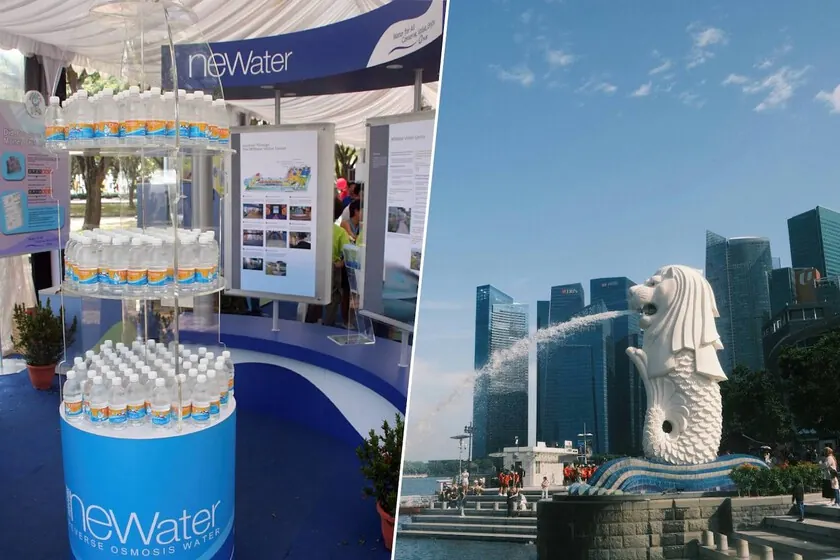
Singapore, a nation with limited land and scarce natural water resources, has emerged as a global leader in water management. The country has engineered a resilient and innovative system that ensures a high-quality water supply for its citizens, a feat driven by advanced engineering and strategic public policy. This approach, while not directly AI-powered in its core infrastructure, embodies the principles of data-driven decision-making, optimization, and resourcefulness that are central to AI development.
The Public Utilities Board (PUB), Singapore’s national water agency, has taken a comprehensive approach since 2001, managing the entire water cycle from rainwater collection to wastewater treatment. This unified vision allows for precise monitoring and management of available resources. Singapore’s strategy is built upon what are known as the “Four National Taps”: local catchment water, imported water, reclaimed water (NEWater), and desalinated water.
Local Catchment Water
A significant portion of Singapore’s water is collected from local catchments. Through an extensive network of drains, canals, and rivers spanning 7,000 kilometers, rainwater is channeled to 17 reservoirs. This system captures water from two-thirds of the country’s land area. The collected water then undergoes conventional treatment processes to meet potable standards. As Singapore continues to reclaim land from the sea, the development of new reservoirs, such as the planned Long Island project, ensures this source remains a robust and growing contributor to the nation’s water supply.
Imported Water: A Declining Reliance
Historically, Singapore has relied heavily on imported water, primarily from Malaysia. Agreements dating back to 1927 established the framework for this supply. However, as these agreements expire, Singapore is actively working towards greater water self-sufficiency. The nation aims to be fully independent by 2061, when the remaining agreements conclude. This strategic shift underscores a commitment to reducing external dependencies and strengthening domestic capabilities.
NEWater: The Strategic Reclaimed Water Initiative
NEWater represents Singapore’s most strategic water source, providing a reliable supply independent of rainfall or external sources. This advanced treated wastewater program can meet up to 40% of the nation’s total water demand. The system, which underwent significant development after an earlier attempt in 1974, involved an investment of $10 billion for its current iteration designed for a 100-year lifespan.
The Deep Tunnel Sewerage System (DTSS) collects urban wastewater through a 206-kilometer network, transporting it by gravity to four water reclamation plants. Here, technologies such as membrane bioreactors and reverse osmosis, coupled with ultraviolet disinfection, transform wastewater into high-grade potable water that exceeds World Health Organization standards. Currently, NEWater achieves a 90% recovery rate, producing 227,300 cubic meters of water daily. While technically brilliant, NEWater faces social acceptance challenges, with much of its output directed towards industrial use, particularly for semiconductor manufacturing, where ultra-pure water is essential.
Desalination: Harnessing the Sea
Singapore operates five desalination plants, all employing reverse osmosis as their primary treatment method. Desalination, though energy-intensive, is crucial for diversifying water sources. PUB’s research and development efforts are focused on reducing the energy consumption of desalination, aiming for less than 2 kWh per cubic meter.
The SingSpring plant, one of the earlier facilities, can produce 136,380 cubic meters of water daily, contributing about 7% to the national supply. The Tuas plant gained recognition in 2019 for its advanced pre-treatment system, which enhances membrane performance. The Keppel Marina East plant features a dual system capable of treating both seawater and freshwater.
Challenges and Future Outlook
Despite the technological prowess of Singapore’s water infrastructure, challenges remain. The energy consumption of desalination, at approximately 3.5 kWh per thousand liters, is significantly higher than NEWater’s 0.7 kWh. This reliance on electricity, largely generated from imported natural gas, presents an environmental and economic consideration. Furthermore, scaling up these advanced systems to meet growing demand while maintaining reliability is an ongoing objective.
Singapore’s comprehensive water management strategy, with its emphasis on diversification, technological innovation, and resource optimization, offers a compelling case study. While not a direct application of AI algorithms, the underlying principles of data integration, process efficiency, and forward-thinking policy echo the very foundations of intelligent systems. The nation’s success demonstrates how a multi-faceted, engineering-led approach can secure essential resources even in the face of significant constraints.
Key facts
| Aspect | Details |
|——————-|————————————————————————-|
| Water Sources | Local catchment, imported, NEWater (reclaimed), desalination |
| NEWater Capacity | Meets 40% of total demand, 90% recovery rate |
| Desalination Goal | Reduce energy consumption to <2 kWh/m³ |
| Self-Sufficiency | Aiming for 100% by 2061 |
Source: Beber agua del grifo en Asia es casi una locura menos en un país donde es motivo de orgullo: Singapur – Xataka (https://www.xataka.com/ecologia-y-naturaleza/beber-agua-grifo-asia-casi-locura-pais-donde-motivo-orgullo-singapur)
Datos clave
| Punto | Detalle |
|---|---|
| Fuente | Xataka IA |
| Fecha | 2026-06-21T18:31:08+00:00 |
| Tema | Beber agua del grifo en Asia es casi una locura menos en un país donde es motivo de orgullo: Singapur |
Source
Xataka IA Publicacion original: 2026-06-21T18:31:08+00:00
Related articles
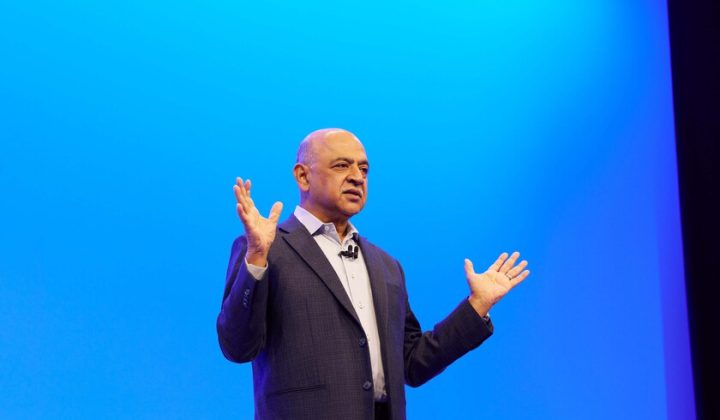
IBM CEO Puts a Number on the Open-Weight AI Value Proposition: 90% of the Performance at 10% of the Token Cost
IBM CEO Arvind Krishna told analysts that open-weight models now deliver about 90% of frontier-model effectiveness while costing between 10% and 25%…
Read article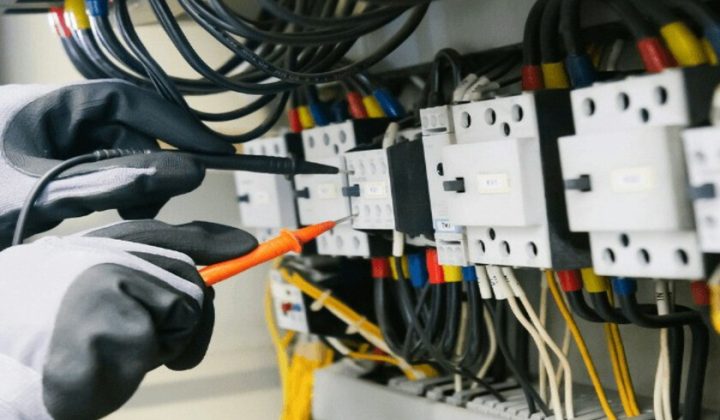
OCU Finds Spanish Homeowner Communities Overpaying Up to €1,500 on Electricity and €3,515 on Gas—Can AI Tools Optimize Shared Energy Bills?
A new OCU analysis of Spanish homeowner community bills reveals widespread overpayment due to non-competitive tariffs and excess contracted power. Could AI-driven…
Read article
Mayotte fiber dispute does not meet ReviewArticle’s AI news brief
Le Monde reports that France’s competition authority has ordered Orange to suspend part of its fiber-optic rollout in Mayotte. The dispute is…
Read article
DiffEEG Model Uses Diffusion Pre-Training to Improve Seizure Detection from Minimal Labeled Data
Researchers have introduced DiffEEG, a 9.6-million-parameter foundation model that combines denoising diffusion pre-training with reinforcement learning fine-tuning to detect seizure events from…
Read articleWiki relacionada

AI Model API Pricing and Context Window Comparison: Current Rates and Limits
Compare the latest API pricing, context windows, and capabilities of leading AI model providers including OpenAI, Anthropic, Google, and Mistral. Practical guidance…
Read article
AI Agent Evaluation Frameworks: How to Benchmark Agentic Systems
A practical guide to evaluating AI agents — from task completion metrics to safety, cost, and robustness. Covers major frameworks, primary sources,…
Read article
LLM Benchmarks Decoded: What MMLU, HumanEval, and GSM8K Actually Measure for Developers
A developer-focused breakdown of the most-cited LLM benchmarks — MMLU, HumanEval, GSM8K, MATH, Chatbot Arena — including what they test, their hidden…
Read article
What Is RAG? A Practical Guide to Retrieval-Augmented Generation in 2025
Retrieval-Augmented Generation (RAG) grounds LLM outputs in external data, reducing hallucinations and enabling enterprise use cases. This guide covers how RAG works,…
Read article