
South Korea Debates Redefining “Elderly” Amidst Rapid Aging Population
As South Korea officially becomes a "super-aged" society, the nation grapples with the question of what age truly defines "elderly" in the face of increasing life expectancy and demographic shifts.

South Korea has officially entered the ranks of “super-aged” societies, a significant demographic milestone marked in December 2024 and solidified in early 2025. With over 20% of its population now exceeding 65 years of age—a figure that has reached 21.21% or approximately 10.8 million people by the end of 2025—the nation is confronting a profound societal question: what does it mean to be “elderly” today? This evolving demographic landscape is prompting a national discussion on whether the traditional definition of old age needs to be re-evaluated.
The shift to a super-aged society is driven by two primary factors: a persistent low birth rate and a steadily increasing life expectancy. While recent indicators suggest a slight positive trend in birth rates, decades of decline mean the impact on the overall demographic structure will be long-lasting. Simultaneously, South Koreans born today can expect to live between 81 and 87 years, a stark contrast to the pre-1980 era when life expectancy was below 70. Projections indicate that by 2100, this figure could exceed 90 years.
Por que importa
This demographic transformation presents significant challenges, particularly to the nation’s social welfare systems, including pensions. The increasing ratio of retirees to working-age individuals creates financial strain. “Young people earn less than the elderly receiving basic pensions. Imposing taxes on them to fund the pensions of the elderly inevitably raises equity issues,” noted Professor Kim Woo-chang to The Korea Times. This has fueled discussions about reforming the pension system to better target those most in need, potentially limiting payments to elderly individuals not living below the poverty threshold.
The implications extend beyond financial sustainability. Lee Joong-keun, president of the Korean Senior Citizens Association, highlighted the projected burden: “The number of senior citizens is now 10 million, but will increase to 20 million by 2050. Excluding the 10 million minors, the remaining two million (of working age) will have to support the elderly.” This stark assessment has led to proposals, such as gradually increasing the age for social benefits from 65 to 75, with suggestions to raise the eligibility age by one year each decade.
Contexto
The debate over redefining “elderly” is multifaceted, touching upon various aspects of public life. Proposals include raising the age for retirement and re-evaluating eligibility for public services like free public transportation. The Seoul Metropolitan Government has announced plans to raise the minimum age for free public transport to 70. Similarly, Daegu has been progressively increasing this threshold since 2024. Public opinion reflects this shift, with a Gallup Korea poll indicating that 59% of respondents believe the age criterion for considering someone “elderly” should be raised to 70, a significant increase from 46% in 2015.
However, the urgency to adjust these age markers is not solely driven by the need to balance state budgets. South Korea faces a high rate of elderly poverty compared to other major economies. Data from the Korea Development Institute (KDI) indicates a poverty rate of 34.8% based on net income, significantly higher than in Germany, the United States, or the United Kingdom. When considering disposable net income, South Korea reports the highest poverty rate among OECD countries. This reality underscores the inadequacy of current support systems for the elderly.
Further complicating the issue is the staggered retirement age and the gap before pension payments begin. The minimum retirement age is 60, but pension eligibility varies, starting at 63 for those born between 1961-1964 and rising to 65 for those born from 1969 onwards. This interim period often forces many to continue working. In 2024, the employment rate for individuals aged 70 and over was 24.5%. Moreover, the labor force participation rate for those over 65 reached 37.3% in 2022, the highest among OECD nations, demonstrating a significant portion of the elderly population remains economically active out of necessity.
Key facts
| Aspect | Detail |
|—|—|
| Super-aged society threshold | Over 20% of population aged 65+ |
| Current elderly population (2025) | Approx. 10.8 million (21.21%) |
| Projected elderly population (2050) | 20 million |
| Elderly poverty rate (KDI, net income) | 34.8% |
| Labor force participation (65+, 2022) | 37.3% (highest in OECD) |
The ongoing debate in South Korea highlights a global trend of aging populations and the ensuing societal adjustments required. For AI and technology sectors, this demographic shift presents opportunities in areas like elder care technology, automation to support a shrinking workforce, and data analytics for demographic forecasting and policy-making. Understanding these societal changes is crucial for developing AI solutions that address the needs of an aging world.
Source: La población de Corea del Sur está envejeciendo tanto que el país ha abierto un debate: qué es un “viejo” hoy en día – Xataka: https://www.xataka.com/magnet/poblacion-corea-sur-esta-envejeciendo-que-pais-ha-abierto-debate-que-viejo-hoy-dia
Datos clave
| Punto | Detalle |
|---|---|
| Fuente | Xataka IA |
| Fecha | 2026-07-17T07:32:01+00:00 |
| Tema | La población de Corea del Sur está envejeciendo tanto que el país ha abierto un debate: qué es un "viejo" hoy en día |
Source
Xataka IA Publicacion original: 2026-07-17T07:32:01+00:00
Related articles
IBM CEO Puts a Number on the Open-Weight AI Value Proposition: 90% of the Performance at 10% of the Token Cost
IBM CEO Arvind Krishna told analysts that open-weight models now deliver about 90% of frontier-model effectiveness while costing between 10% and 25%…
Read article
OCU Finds Spanish Homeowner Communities Overpaying Up to €1,500 on Electricity and €3,515 on Gas—Can AI Tools Optimize Shared Energy Bills?
A new OCU analysis of Spanish homeowner community bills reveals widespread overpayment due to non-competitive tariffs and excess contracted power. Could AI-driven…
Read article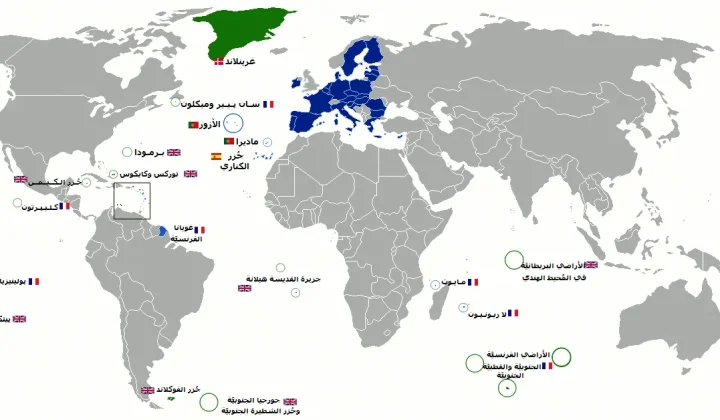
Mayotte fiber dispute does not meet ReviewArticle’s AI news brief
Le Monde reports that France’s competition authority has ordered Orange to suspend part of its fiber-optic rollout in Mayotte. The dispute is…
Read article
DiffEEG Model Uses Diffusion Pre-Training to Improve Seizure Detection from Minimal Labeled Data
Researchers have introduced DiffEEG, a 9.6-million-parameter foundation model that combines denoising diffusion pre-training with reinforcement learning fine-tuning to detect seizure events from…
Read articleWiki relacionada

AI Model API Pricing and Context Window Comparison: Current Rates and Limits
Compare the latest API pricing, context windows, and capabilities of leading AI model providers including OpenAI, Anthropic, Google, and Mistral. Practical guidance…
Read article
AI Agent Evaluation Frameworks: How to Benchmark Agentic Systems
A practical guide to evaluating AI agents — from task completion metrics to safety, cost, and robustness. Covers major frameworks, primary sources,…
Read article
LLM Benchmarks Decoded: What MMLU, HumanEval, and GSM8K Actually Measure for Developers
A developer-focused breakdown of the most-cited LLM benchmarks — MMLU, HumanEval, GSM8K, MATH, Chatbot Arena — including what they test, their hidden…
Read article
What Is RAG? A Practical Guide to Retrieval-Augmented Generation in 2025
Retrieval-Augmented Generation (RAG) grounds LLM outputs in external data, reducing hallucinations and enabling enterprise use cases. This guide covers how RAG works,…
Read article