
Spanish Geologists Discover First Meteorite Impact Crater in Spain
Researchers have identified Spain's first confirmed meteorite impact crater, a discovery made through detailed geological analysis in the Tabernas Basin, potentially rewriting understanding of Earth's impact history.
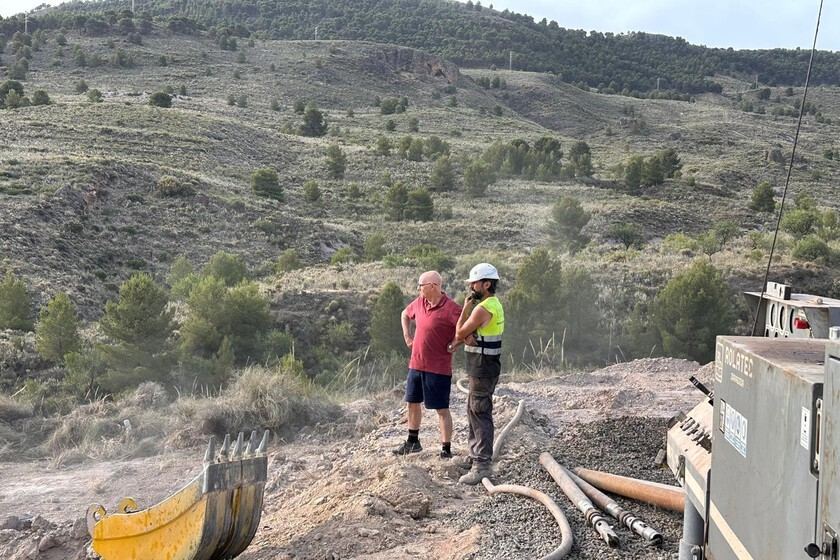
Geologists have identified what is believed to be the first confirmed meteorite impact crater in Spain, located in the Tabernas Basin. The discovery, led by Juan Antonio Sánchez Garrido and his colleague Sebastián Sánchez, emerged from detailed geological studies of the Gordo Megabed formation, which had previously been attributed to seismic activity.
Initial investigations revealed anomalies in the rock’s chemical composition and magnetic activity that did not align with typical seismic events. These discrepancies suggested an immense increase in temperature and pressure, pointing towards a significant impact event approximately 8 million years ago.
Key Facts
| Fact | Detail |
|---|---|
| Discovery | First confirmed meteorite impact crater in Spain |
| Location | Tabernas Basin, Almería |
| Estimated Impact Date | Approximately 8 million years ago |
| Meteorite Size | Estimated 800 meters in diameter |
| Crater Size | 5 km radius (impact crater), 24 km radius (fragmented area) |
Unusual Geological Signatures
The research team’s attention was first drawn to geochemical anomalies concerning platinum group elements. The proportions found were more consistent with those observed in impact craters elsewhere than with the local geology, which was known for seismic activity.
Further evidence came in the form of shatter cones, distinctive conical fractures in rocks formed under extreme pressure, characteristic of meteorite impacts. The area’s geological history also supported the impact theory; 8 million years ago, the region was submerged under 20-30 meters of water, leading to the formation of avalanche sediments typical of water impacts.
Magnetic anomalies, indicating temperatures as high as 2,000°C, were also detected. Following these anomalies helped delineate the impact crater and the surrounding fragmented region.
Collaboration and Confirmation
Despite the accumulating evidence, the novelty of such a discovery in Spain meant that local experts were not extensively trained in impact geology. “The geology that was taught to me at university has nothing to do with the geology of disorder, which is the geology of impact,” stated Sánchez Garrido.
To gain further insight, the team collaborated with Swedish scientists, who have more experience with impact craters due to several discoveries in their country. These international experts supported the Spanish team’s suspicions, indicating a high probability of an impact crater.
Planar deformation features (PDFs), microscopic deformations in minerals like quartz caused by extreme impact pressure, known as “shocked quartz,” provided critical confirmation. While not all desired quantities were found, the presence of shocked quartz strongly supports an impact origin.
Ongoing Research and Future Potential
Excavation efforts are currently underway at the crater site, with the University of Almería, the Center for Astrobiology, and the National Institute of Aerospace Technology (INTA) involved. Core samples, known as witnesses, are being extracted and analyzed for more evidence of quartz deformation and other impact-related features.
Sánchez Garrido believes that Spain may host other impact craters that have yet to be identified. He suggests that greater familiarity with impact geology among Spanish scientists could lead to more discoveries, as such structures are often found by chance. He cited the Chicxulub crater, linked to the extinction of the dinosaurs, which was discovered during oil exploration due to anomalous geological layers.
Impact and Consequences
The identified crater spans a 5-kilometer radius, with a fragmented area extending to 24 kilometers. The impacting meteorite is estimated to have been around 800 meters in diameter. The impact itself would have been immense, causing a magnitude 8-9 earthquake and significant environmental changes over a wide area, including alterations to geology, climate, and strong winds.
Analysis of fossilized corals from the region, which was underwater at the time of impact, shows a layer of organic material, followed by impact sediments, and then more organic material. This suggests that while the immediate impact buried life, surrounding life, like corals, continued to grow rapidly, indicating a geologically swift event, estimated to have occurred within 7-7.5 minutes.
The meteorite itself has not been found, as it likely melted and fused with terrestrial materials upon impact, contributing to the observed geochemical anomalies. The ongoing analysis of rock samples is expected to provide further details about the event.
Source: Juan Antonio Sánchez Garrido, descubridor del primer cráter de meteorito de España: “Estoy seguro de que puede haber otro” (Xataka), https://www.xataka.com/espacio/juan-antonio-sanchez-garrido-descubridor-primer-crater-meteorito-espana-estoy-seguro-que-puede-haber-otro-no-se-ha-dado-suerte-que-alguien-haya-sabido-como-buscarlo
Source
Xataka IA Publicacion original: 2026-06-22T08:00:07+00:00
Related articles
Mayotte fiber dispute does not meet ReviewArticle’s AI news brief
Le Monde reports that France’s competition authority has ordered Orange to suspend part of its fiber-optic rollout in Mayotte. The dispute is…
Read article
DiffEEG Model Uses Diffusion Pre-Training to Improve Seizure Detection from Minimal Labeled Data
Researchers have introduced DiffEEG, a 9.6-million-parameter foundation model that combines denoising diffusion pre-training with reinforcement learning fine-tuning to detect seizure events from…
Read article
The Technology Trap: Why AI Cannot Escape the Unchanging Fundamentals of War
A new Foreign Affairs essay by former Pentagon official Mara Karlin warns that over-reliance on AI and advanced tech in military planning…
Read article
Supabase Releases .NET SDK for C# Developers Across ASP.NET, Unity, and Mobile
Supabase has launched a .NET SDK for C# developers, extending its backend-as-a-service platform to ASP.NET Core, console apps, desktop, Unity, and mobile…
Read articleWiki relacionada

AI Model API Pricing and Context Window Comparison: Current Rates and Limits
Compare the latest API pricing, context windows, and capabilities of leading AI model providers including OpenAI, Anthropic, Google, and Mistral. Practical guidance…
Read article
AI Agent Evaluation Frameworks: How to Benchmark Agentic Systems
A practical guide to evaluating AI agents — from task completion metrics to safety, cost, and robustness. Covers major frameworks, primary sources,…
Read article
LLM Benchmarks Decoded: What MMLU, HumanEval, and GSM8K Actually Measure for Developers
A developer-focused breakdown of the most-cited LLM benchmarks — MMLU, HumanEval, GSM8K, MATH, Chatbot Arena — including what they test, their hidden…
Read article
What Is RAG? A Practical Guide to Retrieval-Augmented Generation in 2025
Retrieval-Augmented Generation (RAG) grounds LLM outputs in external data, reducing hallucinations and enabling enterprise use cases. This guide covers how RAG works,…
Read article