
Spanish High-Speed Rail Faces Downturn: Nearly 20% Passenger Drop Post-Adamuz Accident
Data reveals a significant decline in high-speed rail ridership in Spain during the first four months of 2026, attributed to infrastructure issues and a major accident.
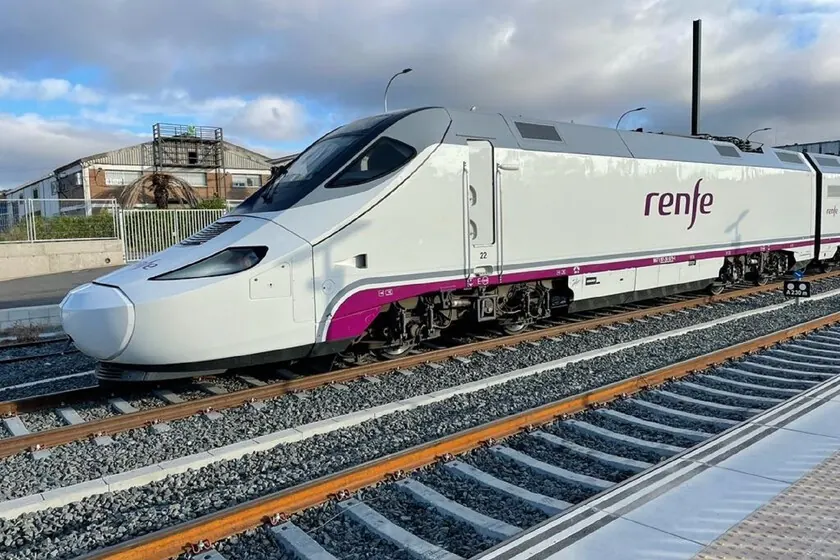
The Spanish high-speed rail network has experienced a significant downturn in passenger numbers in the first four months of 2026, marking the worst start to a year since the pandemic. Data from the National Statistics Institute (INE) indicates a 19.6% decrease in travelers across AVE, Avlo, Iryo, and Ouigo services compared to the same period in 2025. This decline follows a tragic accident in Adamuz on January 18th and a series of infrastructure issues and speed restrictions plaguing the network.
Key facts
| Metric | Value | Period |
|---|---|---|
| Passenger drop | 6% | January-April 2026 vs. 2025 |
| Total passengers | 06 million | January-April 2026 |
| Worst month | February 2026 | 32% drop vs. Feb 2025 |
The Adamuz accident, which resulted in 46 fatalities, served as a critical turning point. The incident led to the immediate closure of the Madrid-Andalusia corridor for several weeks. Furthermore, Adif, the railway infrastructure administrator, implemented numerous temporary speed limitations (LTVs) across various sections of the network. These restrictions were a direct response to concerns raised by train drivers regarding the deteriorating state of the infrastructure, leading to prolonged travel times, service disruptions, and a significant drop in punctuality.
Por que importa
Infrastructure failures and service disruptions have been a recurring theme. In addition to the Adamuz incident, the Madrid-Malaga corridor was rendered unusable for four months due to a landslide near Álora, exacerbated by heavy rainfall. This second major disruption further impacted passenger confidence and travel plans, with services only fully restored by April 30th.
The consequences for punctuality have been severe. According to Renfe’s punctuality report for AVE and long-distance services, only 46.9% of trains arrived within a five-minute delay during this period. In the Madrid-Barcelona corridor, operators were forced to eliminate the last train of the day to avoid coinciding with maintenance schedules, a direct result of the imposed speed restrictions. Adif reportedly extended travel times on this route by 25 minutes to facilitate these conservation tasks.
Contexto
Shifting travel patterns are evident as passengers seek alternatives. While high-speed rail ridership declined, other public transport options saw growth. In April, intercity bus services increased by 4.7%, and air travel rose by 3.2%. Urban transport, including metro and city buses, experienced an 8.4% surge, with the metro seeing nearly a 10% increase. Maritime transport, however, saw a 11.2% decrease.
Despite the challenging start to 2026, there are signs of a potential recovery. Ticket aggregator Trainline reports an increase in ticket prices, with Madrid-Barcelona journeys being 9% more expensive than in the summer of 2025, indicating a potential uptick in demand. Pedro García, Trainline’s General Manager for Europe, anticipates a “super-promising” summer for rail travel, bolstered by government initiatives like the “Verano Joven” program and the ongoing effects of rail liberalization since 2020, which has significantly reduced fares on key routes.
The underlying issue highlighted by the Adamuz accident is the fragility of Spain’s rail infrastructure, which requires substantial investment to remain competitive with European counterparts. The consistent growth in high-speed rail travelers, which had seen a 42% increase since liberalization according to Trainline, was abruptly halted in January. Reversing this trend will depend on the speed of infrastructure repairs and the restoration of traveler confidence in the system. The current situation underscores the critical need for sustained investment in maintaining and upgrading railway networks to ensure reliability and safety for passengers.
Source: Tras Adamuz, la alta velocidad en España no remonta: ha perdido casi un 20% de viajeros en cuatro meses, Xataka, https://www.xataka.com/movilidad/adamuz-alta-velocidad-espana-no-remonta-ha-perdido-casi-20-viajeros-cuatro-meses
Source
Xataka IA Publicacion original: 2026-06-17T08:00:17+00:00
Related articles

IBM CEO Puts a Number on the Open-Weight AI Value Proposition: 90% of the Performance at 10% of the Token Cost
IBM CEO Arvind Krishna told analysts that open-weight models now deliver about 90% of frontier-model effectiveness while costing between 10% and 25%…
Read article
OCU Finds Spanish Homeowner Communities Overpaying Up to €1,500 on Electricity and €3,515 on Gas—Can AI Tools Optimize Shared Energy Bills?
A new OCU analysis of Spanish homeowner community bills reveals widespread overpayment due to non-competitive tariffs and excess contracted power. Could AI-driven…
Read article
Mayotte fiber dispute does not meet ReviewArticle’s AI news brief
Le Monde reports that France’s competition authority has ordered Orange to suspend part of its fiber-optic rollout in Mayotte. The dispute is…
Read article
DiffEEG Model Uses Diffusion Pre-Training to Improve Seizure Detection from Minimal Labeled Data
Researchers have introduced DiffEEG, a 9.6-million-parameter foundation model that combines denoising diffusion pre-training with reinforcement learning fine-tuning to detect seizure events from…
Read articleWiki relacionada

AI Model API Pricing and Context Window Comparison: Current Rates and Limits
Compare the latest API pricing, context windows, and capabilities of leading AI model providers including OpenAI, Anthropic, Google, and Mistral. Practical guidance…
Read article
AI Agent Evaluation Frameworks: How to Benchmark Agentic Systems
A practical guide to evaluating AI agents — from task completion metrics to safety, cost, and robustness. Covers major frameworks, primary sources,…
Read article
LLM Benchmarks Decoded: What MMLU, HumanEval, and GSM8K Actually Measure for Developers
A developer-focused breakdown of the most-cited LLM benchmarks — MMLU, HumanEval, GSM8K, MATH, Chatbot Arena — including what they test, their hidden…
Read article
What Is RAG? A Practical Guide to Retrieval-Augmented Generation in 2025
Retrieval-Augmented Generation (RAG) grounds LLM outputs in external data, reducing hallucinations and enabling enterprise use cases. This guide covers how RAG works,…
Read article