
Truecaller Launches Scam Checker, Opening Scam Intelligence to the Open Web
Truecaller’s new Scam Checker lets anyone check suspicious phone numbers, links, or messages without an app or sign-in, as the company diversifies beyond its core caller ID business in India.
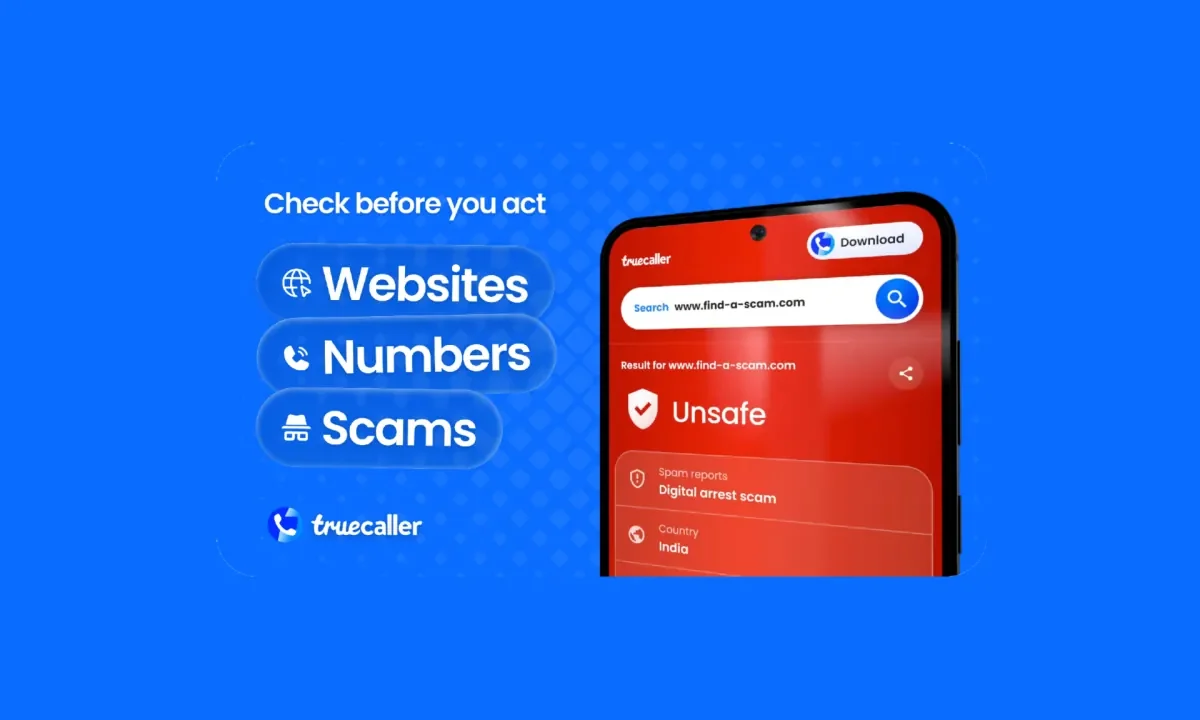
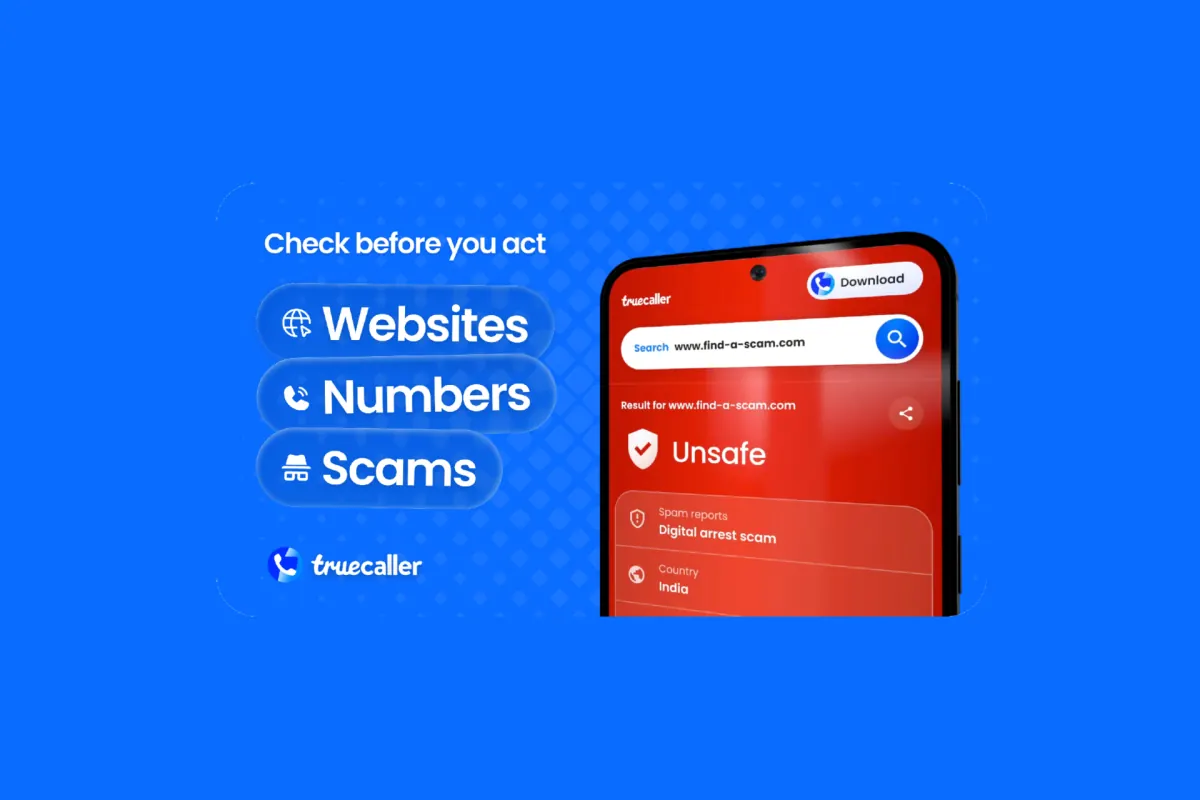
Truecaller, the Swedish caller ID company with over 500 million users, launched a new web-based scam detection tool on Sunday that requires no app download or account sign-in. The service, called Scam Checker, lets users paste a suspicious phone number, link, or text message to check if it is fraudulent, drawing on community reports from Truecaller’s ScamFeed.
The move marks a strategic shift for Truecaller as its core caller ID business faces mounting pressure in India, its largest market with more than 350 million users. Telecom operators are rolling out a government-backed Calling Name Presentation service, and both Apple and Google have added built-in caller identification and spam protection features. Last week, India’s telecom regulator ordered caller ID apps to share user-submitted spam reports with telecom operators, a move Truecaller criticized as a “one-way exchange.”
Key facts
| Detail | Information |
|---|---|
| Product | Truecaller Scam Checker |
| Availability | Free, no sign-in required; initially in India, expanding to Latin America, Middle East, Africa, and Southeast Asia |
| Data source | Truecaller community reports via ScamFeed; proprietary risk database |
| Current volume | ~20,000 live scam reports in India; ~1,300 new reports per week; 12.9 billion messages evaluated globally in one week (Sept 14-20) |
How Scam Checker works
The tool processes user-submitted links by expanding shortened URLs and following redirects to their final destination, then cross-referencing them against Truecaller’s proprietary risk database and fraud signals. Users can also paste a suspicious message, and the service will extract any phone numbers or links to check against community reports.
Truecaller CEO Rishit Jhunjhunwala told TechCrunch that the product was shaped by user behavior. “When you need it, you’re usually somewhere else. The link shows up on WhatsApp. Your mum gets a message about a traffic fine. A friend forwards you a screenshot and asks, ‘Is this real?’” he said. “What people do in that moment is search.” The company estimates that people make about 14 million web searches each month to check suspicious links and phone numbers, based on search volume analysis and traffic to existing verification services.
Scams expand beyond phone calls
The launch comes as fraudsters have moved well beyond voice calls. A 2025 GSMA survey of Indian adults found that 46% of scam victims were approached through messaging apps, 37% via SMS, and 32% through voice calls. Truecaller’s data reflects this shift: between September 14 and 20, the company evaluated 12.9 billion messages globally and flagged 20.3 million as fraudulent.
Scam Checker’s community reports are a growing asset. Approximately 20,000 scam reports are currently live on ScamFeed in India, with around 1,300 new reports added each week. While the free tool provides scam intelligence, more detailed information about a phone number, including the name associated with it, remains behind Truecaller’s existing app-based service, which requires a sign-in.
Business implications and future plans
Scam Checker serves multiple purposes for Truecaller. It functions as lead generation for its app, while the community reports give the company a more detailed view of active scam campaigns. This data could also feed into Truecaller for Business, its fraud and risk products sold to enterprises, though Jhunjhunwala said the consumer tool is the immediate focus.
“Caller ID was the first problem we solved, and it’s still how most people find us,” Jhunjhunwala said. “But scams moved to a more multi-channel approach with links and messages, and increasingly to voice and video. Our protection has to follow the scammer.” Truecaller plans to broaden the types of scams Scam Checker can detect and add screenshot uploads for further analysis in the near future.
What this means for users
For the average user, Scam Checker provides a quick, no-commitment way to verify suspicious communications without installing another app. The tool is particularly relevant for users in India, where the service launches first, but the planned expansion to Latin America, the Middle East, Africa, and Southeast Asia reflects the global nature of scam campaigns.
The tool’s reliance on community reports means its accuracy will depend on the volume and quality of user submissions. Truecaller’s existing database of flagged numbers and links gives it a head start, but the service is only as current as its community’s reporting activity.
Limitations and next checks
Scam Checker is initially available only in India, with no confirmed timeline for other regions. The tool does not reveal the name associated with a phone number without a sign-in. Users should also note that the service relies on community reports, which may not catch every new scam variant. Truecaller’s planned addition of screenshot analysis could expand the tool’s utility, but that feature is not yet live.
Source: TechCrunch AI – https://techcrunch.com/2026/09/27/truecaller-takes-its-scam-intelligence-to-the-open-web-as-it-looks-beyond-caller-id/
Source
TechCrunch AI Publicacion original: 2026-09-28T04:30:00+00:00
Related articles

Mayotte fiber dispute does not meet ReviewArticle’s AI news brief
Le Monde reports that France’s competition authority has ordered Orange to suspend part of its fiber-optic rollout in Mayotte. The dispute is…
Read article
DiffEEG Model Uses Diffusion Pre-Training to Improve Seizure Detection from Minimal Labeled Data
Researchers have introduced DiffEEG, a 9.6-million-parameter foundation model that combines denoising diffusion pre-training with reinforcement learning fine-tuning to detect seizure events from…
Read article
The Technology Trap: Why AI Cannot Escape the Unchanging Fundamentals of War
A new Foreign Affairs essay by former Pentagon official Mara Karlin warns that over-reliance on AI and advanced tech in military planning…
Read article
Supabase Releases .NET SDK for C# Developers Across ASP.NET, Unity, and Mobile
Supabase has launched a .NET SDK for C# developers, extending its backend-as-a-service platform to ASP.NET Core, console apps, desktop, Unity, and mobile…
Read articleWiki relacionada

AI Model API Pricing and Context Window Comparison: Current Rates and Limits
Compare the latest API pricing, context windows, and capabilities of leading AI model providers including OpenAI, Anthropic, Google, and Mistral. Practical guidance…
Read article
AI Agent Evaluation Frameworks: How to Benchmark Agentic Systems
A practical guide to evaluating AI agents — from task completion metrics to safety, cost, and robustness. Covers major frameworks, primary sources,…
Read article
LLM Benchmarks Decoded: What MMLU, HumanEval, and GSM8K Actually Measure for Developers
A developer-focused breakdown of the most-cited LLM benchmarks — MMLU, HumanEval, GSM8K, MATH, Chatbot Arena — including what they test, their hidden…
Read article
What Is RAG? A Practical Guide to Retrieval-Augmented Generation in 2025
Retrieval-Augmented Generation (RAG) grounds LLM outputs in external data, reducing hallucinations and enabling enterprise use cases. This guide covers how RAG works,…
Read article