
Trump Rescinds AI Safety Order Amidst Industry Pushback
A planned executive order on AI safety, intended to establish a voluntary review system for frontier models, was abruptly canceled by President Trump following last-minute calls from tech leaders like Elon Musk and Mark Zuckerberg. The decision underscores the ongoing tension between AI development acceleration and saf
President Donald Trump has halted the signing of an executive order focused on AI safety, which was slated for an imminent release. The decision to cancel the order, reportedly made at the eleventh hour, followed direct communications with prominent figures in the technology industry, including SpaceX CEO Elon Musk, Meta founder Mark Zuckerberg, and former AI advisor David Sacks. This abrupt reversal highlights the complex and often contentious relationship between government efforts to regulate AI and the industry’s drive for rapid innovation.
The planned order aimed to introduce a voluntary framework for reviewing advanced AI models, often referred to as “frontier models,” prior to their public release. Under this proposed system, AI companies would have been encouraged to submit their cutting-edge models to federal agencies for assessment up to 90 days before deployment. The objective was to identify and mitigate potentially dangerous capabilities and security vulnerabilities that could be exploited by malicious actors, including hackers and foreign adversaries. Crucially, the draft explicitly stipulated that the review process would be voluntary and would not involve mandatory government licensing or pre-approval, seeking to avoid stifling development.
Key facts
- Executive Order Purpose: Voluntary review system for AI frontier models
- Proposed Review Window: Up to 90 days before release
- Key Influencers: Elon Musk, Mark Zuckerberg, David Sacks
- Stated Reason for Cancellation: Concerns about slowing AI development and maintaining US lead
- Timing of Cancellation: Hours before a scheduled Oval Office signing ceremony
Industry Lobbying and Concerns
The cancellation followed a series of intensive phone calls occurring between Wednesday evening and Thursday morning. Reports indicate that Musk, Zuckerberg, and Sacks directly conveyed their concerns to President Trump. Their primary argument centered on the potential for the proposed review system to impede the pace of AI development, which they perceive as critical for maintaining America’s competitive edge, particularly in its technological race with China. The Washington Post and Politico were among the outlets reporting on these behind-the-scenes discussions.
David Sacks, who had previously been briefed on the draft by White House officials including science advisor Michael Kratsios, staff secretary Will Scharf, and National Cyber Director Sean Cairncross, initially appeared amenable to the proposal. However, late Wednesday night, Sacks reportedly began voicing significant concerns that the voluntary system could, in practice, morph into a de facto mandatory requirement or be susceptible to misuse by future administrations. According to Politico, citing a senior White House official, Sacks directly contacted Trump on Thursday morning without informing his own staff, a move that is credited with derailing the entire initiative.
A government official, speaking anonymously to Axios, characterized the entire effort as unnecessary and driven by individuals described as “doomers”—a term often used dismissively within tech circles for those who advocate for stronger AI safety measures and express concerns about existential risks from advanced AI.
Divisions within the Industry
The proposed executive order was not met with unanimous support even within the AI industry itself. While some, like OpenAI lobbyist Chris Lehane, broadly backed the initiative, others sought modifications. Certain companies reportedly pushed for a reduction in the pre-release review window, advocating for a 14-day period instead of the proposed 90 days. Furthermore, the draft’s designation of the Treasury Department to take a lead role in safety reviews, rather than agencies typically associated with cybersecurity and technology standards like CISA (Cybersecurity and Infrastructure Security Agency) and NIST (National Institute of Standards and Technology), also raised questions and some eyebrows among industry stakeholders.
The move to cancel the order comes at a time of escalating global interest in AI development and its potential societal impacts. The rapid advancements in AI capabilities, including models like Anthropic’s Mythos, which can autonomously identify and exploit code vulnerabilities, have intensified discussions around the need for robust safety protocols. The debate reflects a broader tension between fostering technological progress and ensuring that such progress does not outpace humanity’s ability to manage its risks.
Implications for AI Workflows
The cancellation of this executive order has immediate implications for AI developers, researchers, and companies. The absence of a government-backed, albeit voluntary, review process for frontier models means that the onus for identifying and mitigating risks largely remains with the developers themselves. This could lead to a more fragmented approach to AI safety, with varying standards and practices across different organizations.
For teams involved in building, testing, and deploying AI systems, the lack of a clear, government-endorsed safety vetting pathway may increase uncertainty. Companies that were anticipating a structured review process might now face a more ambiguous landscape regarding regulatory expectations. This could potentially accelerate development cycles for some, as they avoid a pre-release review period, but it also raises concerns about the timely identification and remediation of potential safety issues.
The decision also signals a potential prioritization of innovation speed over proactive government oversight in the current administration’s approach to AI. While proponents of rapid development argue this stance is crucial for maintaining a competitive edge, critics worry it could lead to the premature deployment of AI systems with unaddressed risks. The debate over how to balance AI advancement with safety and ethical considerations is likely to continue, with future policy initiatives potentially emerging from different angles or at different times. The industry’s ability to self-regulate effectively will be under increased scrutiny in the wake of this development.
Source: The Decoder (https://the-decoder.com/trump-pulls-ai-safety-order-after-last-minute-calls-from-musk-zuckerberg-and-sacks/)
Source
The Decoder Publicacion original: 2026-05-22T11:26:47+00:00
Related articles
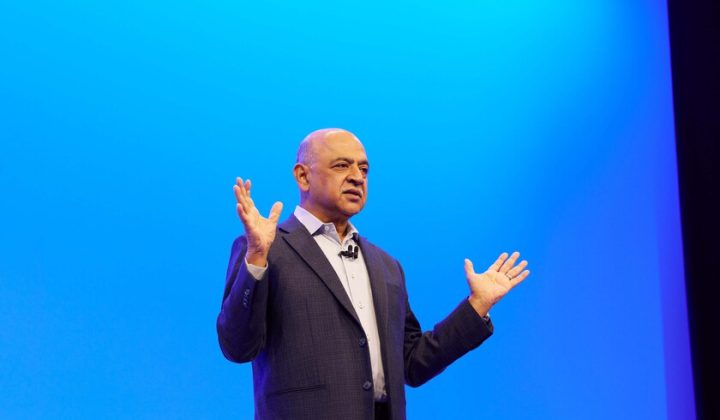
IBM CEO Puts a Number on the Open-Weight AI Value Proposition: 90% of the Performance at 10% of the Token Cost
IBM CEO Arvind Krishna told analysts that open-weight models now deliver about 90% of frontier-model effectiveness while costing between 10% and 25%…
Read article
OCU Finds Spanish Homeowner Communities Overpaying Up to €1,500 on Electricity and €3,515 on Gas—Can AI Tools Optimize Shared Energy Bills?
A new OCU analysis of Spanish homeowner community bills reveals widespread overpayment due to non-competitive tariffs and excess contracted power. Could AI-driven…
Read article
Mayotte fiber dispute does not meet ReviewArticle’s AI news brief
Le Monde reports that France’s competition authority has ordered Orange to suspend part of its fiber-optic rollout in Mayotte. The dispute is…
Read article
DiffEEG Model Uses Diffusion Pre-Training to Improve Seizure Detection from Minimal Labeled Data
Researchers have introduced DiffEEG, a 9.6-million-parameter foundation model that combines denoising diffusion pre-training with reinforcement learning fine-tuning to detect seizure events from…
Read articleWiki relacionada

AI Model API Pricing and Context Window Comparison: Current Rates and Limits
Compare the latest API pricing, context windows, and capabilities of leading AI model providers including OpenAI, Anthropic, Google, and Mistral. Practical guidance…
Read article
AI Agent Evaluation Frameworks: How to Benchmark Agentic Systems
A practical guide to evaluating AI agents — from task completion metrics to safety, cost, and robustness. Covers major frameworks, primary sources,…
Read article
LLM Benchmarks Decoded: What MMLU, HumanEval, and GSM8K Actually Measure for Developers
A developer-focused breakdown of the most-cited LLM benchmarks — MMLU, HumanEval, GSM8K, MATH, Chatbot Arena — including what they test, their hidden…
Read article
What Is RAG? A Practical Guide to Retrieval-Augmented Generation in 2025
Retrieval-Augmented Generation (RAG) grounds LLM outputs in external data, reducing hallucinations and enabling enterprise use cases. This guide covers how RAG works,…
Read article