
Ukraine Battlefield Report Exposes the Limits of Vision-Dependent FPV Drones
A report on fighting near Dobropillia shows how visibility, electronic warfare and operator capacity can constrain low-cost FPV drones. It also provides a useful warning against confusing remotely piloted systems with autonomous AI weapons.
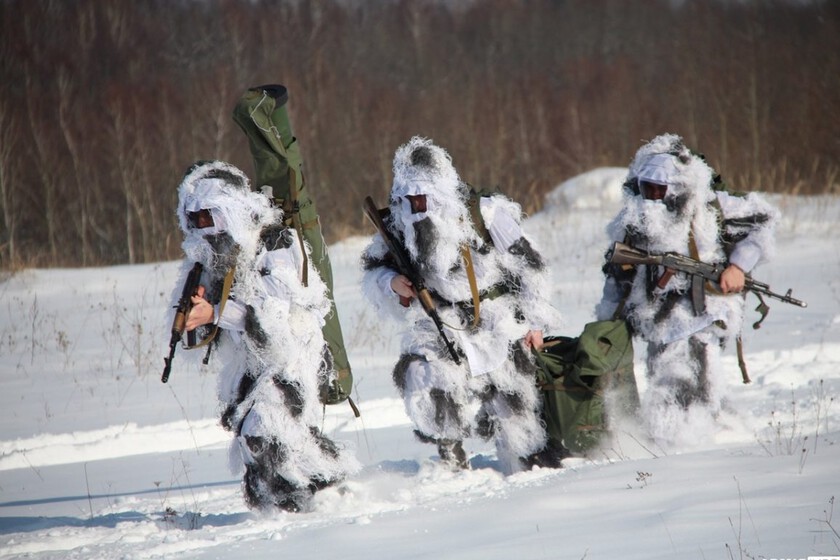
A report on preparations for fighting around Dobropillia in eastern Ukraine highlights a practical limitation of low-cost first-person-view drones: their effectiveness depends on more than the aircraft itself. Cameras, communications, trained operators and visibility all shape whether a drone can detect and reach a target.
The account, published by Spanish technology outlet Xataka, describes Ukrainian FPV drones as part of a defensive screen that can threaten vehicles before they reach established positions. It also says Russian forces may try to exploit reduced visibility while combining electronic warfare, protected vehicles and dispersed advances.
For AI and robotics readers, the central point is what the report does not establish. The systems described are FPV drones operated through communications links, not confirmed autonomous weapons making targeting decisions through artificial intelligence. The distinction matters when assessing claims about battlefield automation.
The reported vulnerability
Xataka, citing reporting from Forbes and statements attributed to General Denys Prokopenko, commander of Ukraine’s 1st Azov Corps, says small FPV aircraft have helped create monitored areas extending for tens of kilometers around parts of the front.
These drones can provide reconnaissance and carry explosives, allowing operators to engage vehicles, artillery or troop concentrations before they reach Ukrainian lines. Their number and low cost can make concentrated armored movement unusually difficult.
The same design choices that make FPV drones accessible also create constraints. Small aircraft have limited power and payload capacity. Many rely on electro-optical cameras rather than thermal imagers, according to the report, reducing their usefulness in darkness, fog or heavy precipitation. Strong wind can further restrict flight.
The available source does not provide model-level specifications, failure rates or mission data. It therefore cannot show how much operational availability falls under any particular condition.
Why this is not automatically an AI story
FPV is a control and viewing format, not evidence of autonomy. A human operator typically pilots the aircraft using a live video feed, while other personnel may identify targets, manage communications or coordinate missions.
Computer vision, automated navigation and terminal guidance can be added to drones, but Xataka’s account does not identify the software, processors or machine-learning models used by the units it discusses. Nor does it document autonomous target selection.
That boundary is important for developers, analysts and technology buyers. Describing every military drone as “AI-powered” obscures the more immediate engineering bottlenecks: camera performance, radio reliability, battery endurance, operator workload and resistance to jamming.
| Reported factor | Technical consequence | What should be verified |
|---|---|---|
| Limited electro-optical cameras | Reduced visibility in darkness or obscured conditions | Camera models and low-light performance |
| Small FPV airframes | Restricted power, payload and flight tolerance | Aircraft specifications and mission logs |
| Electronic warfare | Possible disruption of control or video links | Frequencies, link design and observed loss rates |
| Multiple simultaneous attacks | Higher demand on operators and communications | Staffing levels, command software and network capacity |
Russia’s adaptation targets the full system
According to Prokopenko’s assessment as relayed by Xataka, Russia is assembling vehicles from the 51st, 41st and 8th armies while adding electronic-warfare equipment, anti-drone cages and other protection. The reported plan involves dispersed formations and several axes of movement rather than a single large armored column.
The Institute for the Study of War was also cited as identifying movements of armored vehicles and drone units toward Dobropillia. The intended effect, according to the analysis, is not necessarily to eliminate Ukrainian drones. It is to create more targets than available operators, aircraft and communications channels can handle at once.
This is a systems-engineering problem. Even a capable drone can become ineffective if its control link is jammed, its operator is overloaded, its camera cannot distinguish a target or replacement aircraft cannot reach the unit. Adding ground sensors or unmanned ground vehicles could diversify surveillance, but the source offers no technical details about deployments or integration.
The wider infrastructure contest
The report connects the battlefield issue to attacks on energy infrastructure. Xataka says Ukraine has targeted Russian refineries while Russia continues striking Ukrainian power facilities.
It attributes to Ukrainian President Volodymyr Zelensky a claim that attacks had disabled 45% of Russia’s refining capacity. That figure should be treated cautiously: the source packet provides no independent capacity assessment supporting it.
Xataka also cites Reuters reporting that an attack stopped crude processing at the Yaroslavl refinery after damaging a unit associated with about 40% of the facility’s capacity, while another unit representing 33% was already undergoing repairs. These percentages refer to units at one refinery, not necessarily permanent losses across Russia’s national refining system.
What remains unclear
The available material is a secondary account built from several reports and statements. It does not include drone telemetry, verified sortie numbers, equipment inventories or independently measured effects around Dobropillia. It also does not establish that the FPV systems discussed use AI for navigation, identification or targeting.
Readers evaluating related product claims should look for named hardware, documented autonomy levels, test conditions and clear separation between human-guided, navigation-assisted and independently targeting systems. Without those details, this is best understood as evidence of the operational limits of inexpensive networked drones—not proof of a new autonomous-warfare capability.
Source: https://www.xataka.com/magnet/cada-invierno-ucrania-trae-trampa-mortal-diferencia-este-ano-para-quien-rusia-ucrania-llevan-meses-esperando-mal-tiempo
Source
Xataka IA Publicacion original: 2026-09-26T15:02:50+00:00
Related articles
Mayotte fiber dispute does not meet ReviewArticle’s AI news brief
Le Monde reports that France’s competition authority has ordered Orange to suspend part of its fiber-optic rollout in Mayotte. The dispute is…
Read article
DiffEEG Model Uses Diffusion Pre-Training to Improve Seizure Detection from Minimal Labeled Data
Researchers have introduced DiffEEG, a 9.6-million-parameter foundation model that combines denoising diffusion pre-training with reinforcement learning fine-tuning to detect seizure events from…
Read article
The Technology Trap: Why AI Cannot Escape the Unchanging Fundamentals of War
A new Foreign Affairs essay by former Pentagon official Mara Karlin warns that over-reliance on AI and advanced tech in military planning…
Read article
Supabase Releases .NET SDK for C# Developers Across ASP.NET, Unity, and Mobile
Supabase has launched a .NET SDK for C# developers, extending its backend-as-a-service platform to ASP.NET Core, console apps, desktop, Unity, and mobile…
Read articleWiki relacionada

AI Model API Pricing and Context Window Comparison: Current Rates and Limits
Compare the latest API pricing, context windows, and capabilities of leading AI model providers including OpenAI, Anthropic, Google, and Mistral. Practical guidance…
Read article
AI Agent Evaluation Frameworks: How to Benchmark Agentic Systems
A practical guide to evaluating AI agents — from task completion metrics to safety, cost, and robustness. Covers major frameworks, primary sources,…
Read article
LLM Benchmarks Decoded: What MMLU, HumanEval, and GSM8K Actually Measure for Developers
A developer-focused breakdown of the most-cited LLM benchmarks — MMLU, HumanEval, GSM8K, MATH, Chatbot Arena — including what they test, their hidden…
Read article
What Is RAG? A Practical Guide to Retrieval-Augmented Generation in 2025
Retrieval-Augmented Generation (RAG) grounds LLM outputs in external data, reducing hallucinations and enabling enterprise use cases. This guide covers how RAG works,…
Read article