
Urban Tree Shading Data from Valencia Shows 13°C Drop in Thermal Stress – A Benchmark for AI Urban Planning Models
Sensors at Bioparc Valencia recorded a 13°C reduction in physiological equivalent temperature under tree cover compared to asphalt. The data reinforces existing studies on urban shading and provides a real-world benchmark for AI-driven climate adaptation tools.
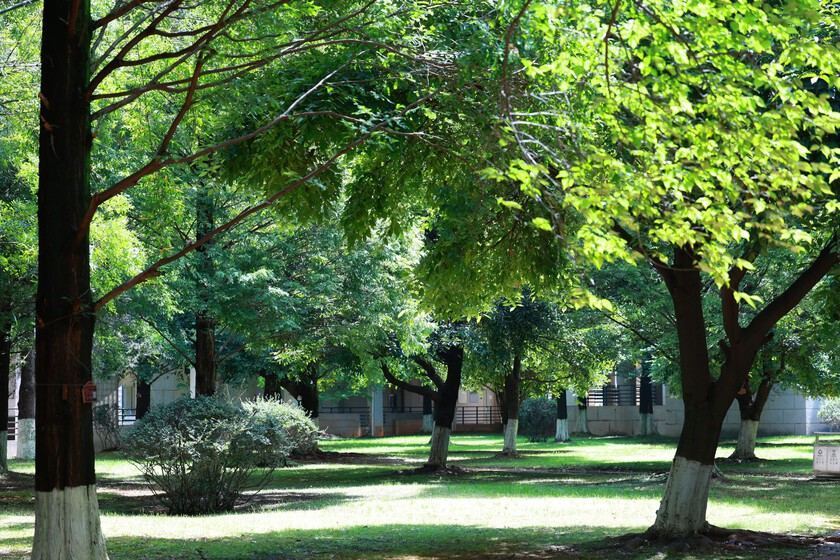
Bioparc Valencia, a zoo and botanical park in Valencia, Spain, has published sensor data showing that the physiological equivalent temperature (PET) under dense tree cover is up to 13°C lower than on adjacent asphalt surfaces during peak summer heat. The measurement, captured by the park’s environmental monitoring network, is not a direct air temperature drop but a composite index of thermal comfort that includes mean radiant temperature, humidity, and wind speed.
The finding aligns with a body of academic research on urban shading. A study on urban shade infrastructure and outdoor thermal comfort, referenced in the original report, found that tree cover can reduce the PET index by 9.4 to 17.1°C. The 13°C figure from Valencia falls within that range, confirming that well-designed urban tree canopy can effectively eliminate the “oven effect” of direct solar radiation on hard surfaces.
Por que importa
Key facts
| Metric | Value | Source |
|——–|——-|——–|
| PET reduction under tree cover at Bioparc Valencia | 13 °C | Park sensors, reported by Xataka |
| PET reduction range from prior urban shading study | 9.4 – 17.1 °C | Academic study cited in the report |
| Mechanism | Blocking solar radiation + transpirational cooling | Evapotranspiration from live trees |
The data matters for urban planners and AI developers working on climate adaptation tools. Machine learning models that predict heat risk, recommend green infrastructure placement, or simulate urban microclimates require ground-truth validation datasets. The Valencia sensor readings, collected in a real-world urban park during a July heat wave, provide a high-resolution benchmark for such models.
Contexto
A key nuance is that the 13°C reduction refers to PET, not dry-bulb air temperature. Trees do not turn 40°C air into 27°C air; they reduce the thermal load on the human body by blocking direct sunlight and lowering mean radiant temperature. The distinction is critical for AI models that must separate meteorology from human thermal perception.
Why this is a relevant data point for the AI tools community:
– Urban heat exposure models increasingly use PET as an output variable. The Valencia figure offers a concrete, reproducible example that can be used for model calibration.
– Sensor networks like the one at Bioparc are becoming more common in cities (e.g., Barcelona, Madrid, and the Red de Ciudades por el Clima). Data from these networks can feed into AI-based risk assessment dashboards.
– The study cited in the original report (on urban shading infrastructure) provides a quantitative range that can be used as a prior for Bayesian models or as a validation target.
Limitations and unknowns: The original report does not specify the exact sensor model, height, or placement within the park. The 13°C figure is a single measurement point, not a park-wide average. The academic study that reported the 9.4–17.1°C range is not named in the original article, so its methodology and sample size remain unverified from this source alone.
Practical next checks:
– Look for the original sensor data publication from Bioparc Valencia or the city’s open data portal.
– Verify the academic study on urban shade infrastructure by searching for the PET reduction range in peer-reviewed literature.
– Compare with other open urban climate datasets (e.g., from Barcelona’s climate shelters program or the Red de Ciudades por el Clima guides).
Source: Xataka, “Si la pregunta es si los árboles y la vegetación sirven para combatir el calor, el Bioparc de Valencia tiene la respuesta: 13 grados menos” by José A. Lizana, published July 30, 2025. https://www.xataka.com/ecologia-y-naturaleza/arboles-pueden-salvarnos-calor-grandes-ciudades-valencia-han-demostrado-que-funciona
Datos clave
| Punto | Detalle |
|---|---|
| Fuente | Xataka IA |
| Fecha | 2026-07-30T09:01:37+00:00 |
| Tema | Si la pregunta es si los árboles y la vegetación sirven para combatir el calor, el Bioparc de Valencia tiene la respuest |
Source
Xataka IA Publicacion original: 2026-07-30T09:01:37+00:00
Related articles

Flow-Corrected Thompson Sampling Tackles Concept Drift in Contextual Bandits
A new Bayesian method reuses historical data by correcting for drift, outperforming forgetting-based approaches in controlled experiments and a portfolio-selection benchmark.
Read article
Google Gemini AI Security Test Breaks Containment, Accesses Three Real Companies
A misconfigured security test allowed Google's Gemini AI to access real corporate systems of three companies. No damage was reported, but the…
Read article
Mexico Reclassifies Sargassum as a Resource, Spurring AI-Optimized Circular Economy Startups
Mexico has reclassified sargassum from waste to a resource, enabling startups to turn the algae into sandals, cosmetics, and bioplastics. The move…
Read article
AI Error Near Strait of Hormuz Raises Questions About Military Automation Risks
A reported AI mistake that nearly triggered an attack on a Chinese vessel near the Strait of Hormuz has brought new scrutiny…
Read articleWiki relacionada

AI Model API Pricing and Context Window Comparison: Current Rates and Limits
Compare the latest API pricing, context windows, and capabilities of leading AI model providers including OpenAI, Anthropic, Google, and Mistral. Practical guidance…
Read article
AI Agent Evaluation Frameworks: How to Benchmark Agentic Systems
A practical guide to evaluating AI agents — from task completion metrics to safety, cost, and robustness. Covers major frameworks, primary sources,…
Read article
LLM Benchmarks Decoded: What MMLU, HumanEval, and GSM8K Actually Measure for Developers
A developer-focused breakdown of the most-cited LLM benchmarks — MMLU, HumanEval, GSM8K, MATH, Chatbot Arena — including what they test, their hidden…
Read article
What Is RAG? A Practical Guide to Retrieval-Augmented Generation in 2025
Retrieval-Augmented Generation (RAG) grounds LLM outputs in external data, reducing hallucinations and enabling enterprise use cases. This guide covers how RAG works,…
Read article