
US Declares Quantum Computing a National Priority, Sets 2028 Target for Research-Grade Systems
New executive orders aim to accelerate quantum development and secure national infrastructure against future threats, with significant implications for AI and cryptography.
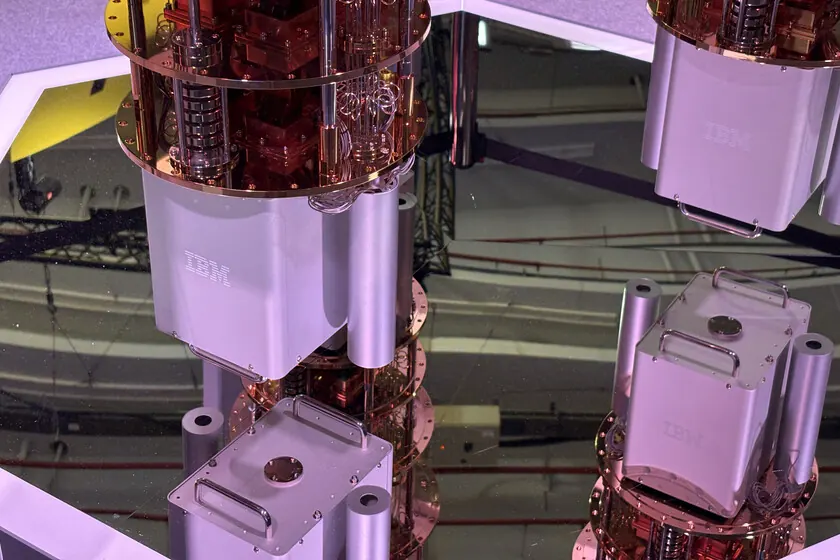
The United States has officially designated quantum computing as a national strategic priority, signing two executive orders aimed at accelerating its development and securing critical infrastructure. The move signals a significant commitment to retaining a technological edge, particularly in the race against China, and acknowledges the transformative potential of quantum technology across various fields, including artificial intelligence.
National Quantum Strategy
The first executive order, titled “Ushering in the next Frontier of Quantum Innovation,” sets an ambitious goal: the development of the first sufficiently powerful quantum computer for scientific research by 2028. This initiative will involve a coordinated effort across multiple government departments, including Energy, Defense, and Commerce, alongside NASA and intelligence agencies. The strategy emphasizes ensuring American leadership in a field poised to reshape AI, materials science, and chemistry.
A key component of this order also mandates the Pentagon to deploy quantum sensors by 2028. These sensors have potential military applications, such as guiding aircraft in GPS-denied environments and enhancing satellite surveillance capabilities for detecting clandestine activities like tunnel or missile silo construction.
Post-Quantum Cryptography Deadline
The second executive order addresses the imminent threat posed by large-scale quantum computers to current encryption methods. It mandates that civilian federal government systems must migrate to post-quantum cryptography by 2031, an acceleration of four years from the previous 2035 deadline set by the Biden administration. Agencies failing to meet this new target will be required to submit explanatory reports to the White House Office of Management and Budget.
This accelerated timeline is driven by the scientific consensus that classical encryption technologies will become vulnerable before large-scale quantum hardware is widely available. Google’s quantum AI group has indicated that a quantum computer with fewer than half a million physical qubits could potentially decipher current cryptocurrency algorithms within minutes, highlighting the urgency of the transition. The National Institute of Standards and Technology (NIST) has already established post-quantum standards, shifting the focus from technical development to administrative implementation.
Strategic Investment and Geopolitical Context
These decrees follow closely on the heels of a $2 billion financial incentive package announced by the Department of Commerce for nine companies in the quantum sector, funded under the CHIPS and Science Act. The executive orders are seen as a clear geopolitical statement, underscoring the US commitment to quantum leadership. Donald Trump, during the signing ceremony, stated, “We are going to invest in American quantum leadership like never before.” Michael Kratsios, Director of the White House Office of Science and Technology Policy, was more specific, predicting that a competent research-grade quantum computer could emerge by 2028, marking the dawn of “a new era of commercial capabilities.”
Implications for AI and Security
The development of powerful quantum computers has profound implications for artificial intelligence. Quantum computing could exponentially accelerate complex AI calculations, leading to breakthroughs in machine learning, drug discovery, and materials science. However, it also poses a significant risk to cybersecurity, as current encryption standards, which protect sensitive government, financial, and critical infrastructure data, could be rendered obsolete. The US government’s proactive stance aims to mitigate these risks by fostering domestic quantum capabilities while simultaneously preparing its digital infrastructure for the post-quantum era.
Key facts
| Aspect | Detail |
|---|---|
| Target Date (Research Quantum Computer) | 2028 |
| Target Date (Quantum Sensors Deployment – Pentagon) | 2028 |
| Target Date (Federal Post-Quantum Cryptography Migration) | 2031 |
| Key Government Body | White House Office of Science and Technology Policy |
| Primary Motivation | National security, economic competitiveness, AI advancement |
This development is critical for ReviewArticle readers as it directly impacts the future of AI, cybersecurity, and technological innovation. The US government’s strategic focus on quantum computing signals a significant acceleration in research and development, with potential spillover effects into AI model training, data security, and the creation of new computational paradigms. The mandated migration to post-quantum cryptography also has direct implications for businesses and individuals relying on secure digital communications.
Source: “Creemos que esto puede ocurrir en 2028”: EEUU acaba de convertir la computación cuántica en prioridad nacional, Xataka, https://www.xataka.com/ordenadores/creemos-que-esto-puede-ocurrir-2028-trump-convierte-computacion-cuantica-prioridad-estado
Source
Xataka IA Publicacion original: 2026-06-23T10:31:01+00:00
Related articles
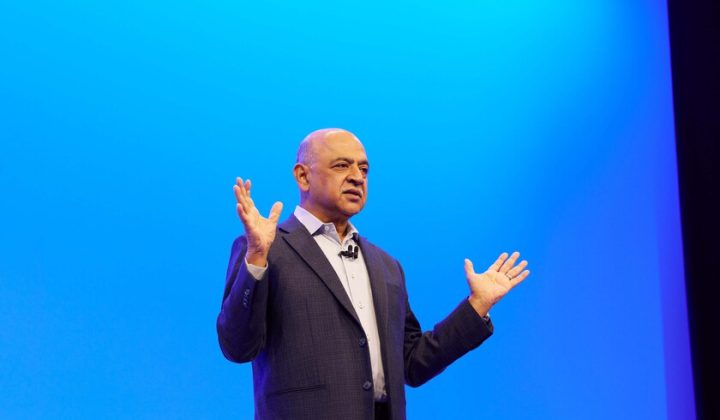
IBM CEO Puts a Number on the Open-Weight AI Value Proposition: 90% of the Performance at 10% of the Token Cost
IBM CEO Arvind Krishna told analysts that open-weight models now deliver about 90% of frontier-model effectiveness while costing between 10% and 25%…
Read article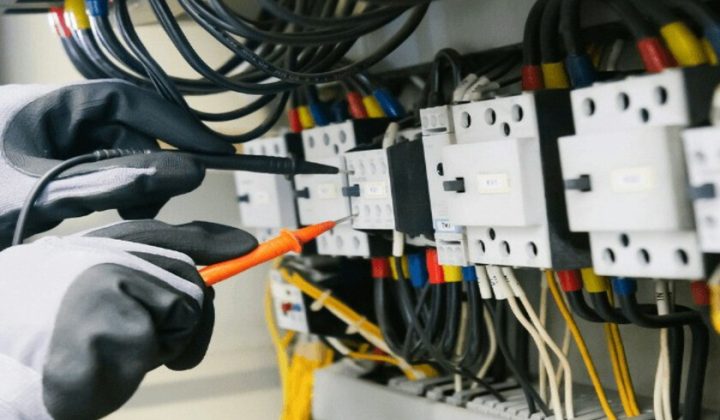
OCU Finds Spanish Homeowner Communities Overpaying Up to €1,500 on Electricity and €3,515 on Gas—Can AI Tools Optimize Shared Energy Bills?
A new OCU analysis of Spanish homeowner community bills reveals widespread overpayment due to non-competitive tariffs and excess contracted power. Could AI-driven…
Read article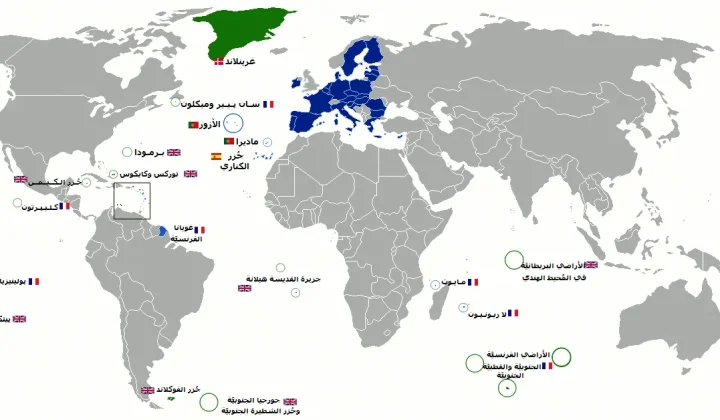
Mayotte fiber dispute does not meet ReviewArticle’s AI news brief
Le Monde reports that France’s competition authority has ordered Orange to suspend part of its fiber-optic rollout in Mayotte. The dispute is…
Read article
DiffEEG Model Uses Diffusion Pre-Training to Improve Seizure Detection from Minimal Labeled Data
Researchers have introduced DiffEEG, a 9.6-million-parameter foundation model that combines denoising diffusion pre-training with reinforcement learning fine-tuning to detect seizure events from…
Read articleWiki relacionada

AI Model API Pricing and Context Window Comparison: Current Rates and Limits
Compare the latest API pricing, context windows, and capabilities of leading AI model providers including OpenAI, Anthropic, Google, and Mistral. Practical guidance…
Read article
AI Agent Evaluation Frameworks: How to Benchmark Agentic Systems
A practical guide to evaluating AI agents — from task completion metrics to safety, cost, and robustness. Covers major frameworks, primary sources,…
Read article
LLM Benchmarks Decoded: What MMLU, HumanEval, and GSM8K Actually Measure for Developers
A developer-focused breakdown of the most-cited LLM benchmarks — MMLU, HumanEval, GSM8K, MATH, Chatbot Arena — including what they test, their hidden…
Read article
What Is RAG? A Practical Guide to Retrieval-Augmented Generation in 2025
Retrieval-Augmented Generation (RAG) grounds LLM outputs in external data, reducing hallucinations and enabling enterprise use cases. This guide covers how RAG works,…
Read article