
Why the 24-Hour Day Is a Convenient Fiction, Not a Scientific Fact
The 24-hour day is an average, not a constant. Earth’s elliptical orbit and axial tilt mean most days are slightly shorter or longer than the standard 86,400 seconds.
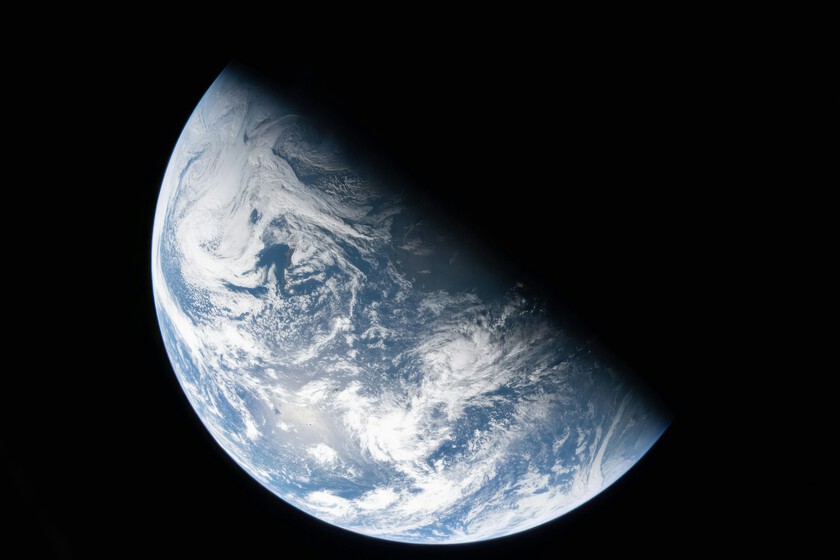
The standard assumption that every day lasts exactly 24 hours is a useful simplification, not a precise measurement. In reality, the length of a solar day—the time between two consecutive noons—varies throughout the year, sometimes by as much as 30 seconds longer or 20 seconds shorter than the average. This variation, caused by the combined effects of Earth’s elliptical orbit and its axial tilt, has direct implications for timekeeping, satellite navigation, and the future of atomic clocks.
Key facts
| Fact | Detail |
|---|---|
| Sidereal day length | 23 hours, 56 minutes, 4.09 seconds (Earth’s 360° rotation relative to stars) |
| Mean solar day | 86,400 seconds (24 hours), the civil standard |
| Maximum daily variation | ~30 seconds longer (early January near perihelion) to ~20 seconds shorter (early July near aphelion) |
| Equation of time extremes | Solar noon can differ from clock noon by up to 16 minutes in early November |
The difference between a sidereal day and a solar day arises because Earth moves about 1° along its orbit each day. To bring the Sun back to the same meridian, the planet must rotate roughly 361°, which takes about four extra minutes. This is why the solar day is longer than the sidereal day, and why the 24-hour figure is an average, not a constant.
Por que importa
Two forces drive the variability of the true solar day. First, Earth’s orbit is elliptical. At perihelion in early January, Earth moves faster, requiring more rotation to catch up to the Sun, lengthening the day. At aphelion in early July, the opposite occurs. Second, the 23.4° tilt of Earth’s axis makes the Sun’s apparent north-south movement uneven, adding another layer of fluctuation. Together, these effects produce the analemma—the figure-eight pattern traced by the Sun’s position when photographed at the same clock time each day.
The difference between true solar time and mean solar time is captured by the equation of time. This correction, which can exceed 16 minutes in early November, is why sundials and clocks rarely agree. The equation of time zeroes out four times per year: around April 15, June 13, September 1, and December 25.
Contexto
Beyond the annual cycle, Earth’s rotation itself is not stable. Lunar tidal friction is slowing the planet by about 2 milliseconds per century. But since 2020, Earth has been spinning slightly faster than expected. On July 5, 2024, the planet recorded its shortest day since atomic timekeeping began, 1.66 milliseconds below 86,400 seconds. A near-repeat occurred in summer 2025. If this acceleration persists, the first negative leap second—subtracting a second from global clocks—may become necessary.
Leap seconds have been the standard fix since 1972, with the last positive leap second added at the end of 2016. However, the General Conference on Weights and Measures voted in 2022 to retire the leap second system by 2035, citing the risk of errors in digital infrastructure. The transition to a new timekeeping standard remains under discussion.
For ReviewArticle’s readers, the practical takeaway is that precise timekeeping is not trivial. GPS satellites, financial trading systems, and network synchronization protocols all rely on a consistent definition of the second. Understanding that the 24-hour day is a statistical average—not a physical constant—helps clarify why atomic clocks and leap seconds exist, and why the upcoming shift away from leap seconds matters for any system that depends on exact time.
Source: Xataka IA – https://www.xataka.com/espacio/que-dias-tengan-24-horas-gran-mentira-que-nos-hemos-contado-para-vivir-felices
Source
Xataka IA Publicacion original: 2026-10-09T04:00:27+00:00
Related articles

Trump Announces Deal for Russia to Resume Diesel Sales to US as Zelensky Warns of ‘Gift to Putin’
The US Treasury’s OFAC issued a temporary license allowing Russian diesel imports through April 2027. President Trump claims the deal will lower…
Read article
Lightweight AI Framework Turns Smartphone Photos of Paper ECGs Into Heart Attack Screenings
A new compute-light framework called ECGLight can digitize paper ECG printouts from a smartphone photo and screen for myocardial infarction in under…
Read article
AWS CEO Warns Over 100 US Data Center Moratoriums Risk “Potentially Irreparable” Damage to AI Leadership
Amazon Web Services CEO Matt Garman warns that more than 100 local moratoriums on data center construction across the US threaten the…
Read article
New Caltech Simulation Suggests Solar System’s End May Come Sooner Than Expected
A new simulation from Caltech researchers indicates that even the gas giants like Jupiter may not survive the Sun’s red giant phase…
Read articleWiki relacionada

AI Model API Pricing and Context Window Comparison: Current Rates and Limits
Compare the latest API pricing, context windows, and capabilities of leading AI model providers including OpenAI, Anthropic, Google, and Mistral. Practical guidance…
Read article
AI Agent Evaluation Frameworks: How to Benchmark Agentic Systems
A practical guide to evaluating AI agents — from task completion metrics to safety, cost, and robustness. Covers major frameworks, primary sources,…
Read article
LLM Benchmarks Decoded: What MMLU, HumanEval, and GSM8K Actually Measure for Developers
A developer-focused breakdown of the most-cited LLM benchmarks — MMLU, HumanEval, GSM8K, MATH, Chatbot Arena — including what they test, their hidden…
Read article
What Is RAG? A Practical Guide to Retrieval-Augmented Generation in 2025
Retrieval-Augmented Generation (RAG) grounds LLM outputs in external data, reducing hallucinations and enabling enterprise use cases. This guide covers how RAG works,…
Read article