
Why thousands of passengers touch an airplane before boarding, according to a psychologist who treats flight anxiety
The ritual of tapping or touching the fuselage before a flight is more than a viral superstition. A psychotherapist specializing in flight anxiety explains the psychological mechanism that drives thousands of travelers to make contact with the aircraft before stepping onboard.
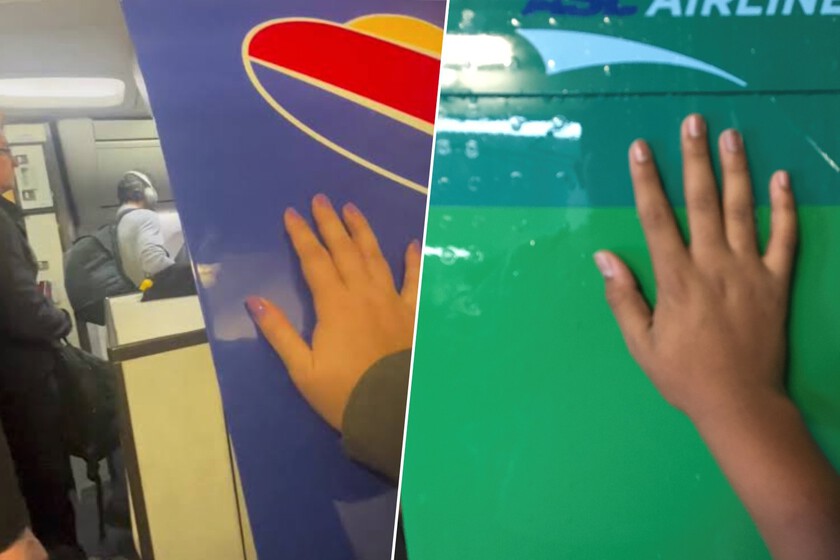
A routine visible at airport gates around the world has drawn attention from both social media users and clinical psychologists: thousands of passengers tap, pat, or place a hand on the fuselage of an airplane before stepping inside. While the gesture may appear to be a simple superstition, a psychotherapist specializing in flight anxiety says the behavior has a clear psychological explanation tied to the human need for control in high-anxiety situations.
Nathan Feiles, a licensed psychotherapist who treats patients with flight phobia, told The Washington Post that nervous passengers frequently adopt rituals before flying. These can include wearing specific clothing, eating a particular snack, repeating certain words, or touching the aircraft. Feiles explained that such actions provide a small sense of control in an experience where passengers must entrust their safety almost entirely to others and to a machine.
Key facts
| Aspect | Detail |
|---|---|
| Behavior | Tapping, patting, or touching the airplane fuselage before boarding |
| Expert source | Nathan Feiles, psychotherapist specializing in flight anxiety (cited in The Washington Post) |
| Psychological function | Provides a sense of control and a calming routine before a high-anxiety event |
| Other expert cited | Patrick Smith, commercial airline pilot and author |
The psychology behind the tap
Feiles described the ritual as a way to establish a symbolic connection with the aircraft. He compared it to petting a horse before mounting it. Some passengers describe the gesture as a form of silent pact with the plane: “I trust you, we are in this together.”
Commercial pilot and author Patrick Smith, who writes about aviation and passenger behavior, interprets the gesture as a very human act of luck and reaffirmation at a moment when even frequent travelers briefly acknowledge their own vulnerability. Smith himself admitted that he sometimes greets the aircraft with a fist bump before boarding.
The behavior has spread visibly on social media. A TikTok video posted by a travel creator shows a passenger touching the plane while the caption reads “I always have to touch the plane for good luck!” The video, set to Stevie Wonder’s “Superstition,” has drawn comments from travelers who say they perform the same ritual.
The line between comfort and compulsion
Travel expert Katherine Dale told the Washington Post that, in her mind, touching the plane means she will arrive safely. She acknowledged that she knows her hand does not keep the aircraft in flight, but joked that she is not willing to test the theory. Other travelers describe the gesture as a way to transmit “good energy” or say it has shifted from a voluntary habit to something they feel they must do to fly comfortably.
Feiles considers these small rituals unproblematic as long as they help the passenger board with greater calm. However, he warned that they can become counterproductive when a person begins to depend on them emotionally. If the inability to complete the ritual triggers anxiety, or if the entire pre-flight preparation consists of imagining possible catastrophes to feel prepared, the strategy intended to calm the passenger ends up feeding the fear.
For the aircraft itself, the taps cause no harm. Smith confirmed that passengers can continue touching the plane before boarding and acknowledged that, despite being a professional pilot, he is not entirely immune to the ritual himself.
What this means for travelers
For readers of ReviewArticle who work in AI, travel technology, or aviation, the phenomenon illustrates a broader point about human behavior in high-stakes environments: even when rational knowledge contradicts a ritual, the emotional payoff of performing it can be powerful enough to sustain the habit. Airlines and travel tech companies designing apps, boarding experiences, or in-flight entertainment systems may find value in understanding how passengers manage anxiety through small, repeatable actions.
The next time you see a traveler tap the fuselage before boarding, the gesture is not random. It is a documented psychological strategy for managing a moment when rational knowledge and emotional instinct diverge.
Source: Xataka IA, “Miles de pasajeros jamás suben a un avión sin tocarlo antes. La psicología tiene una explicación muy clara para este extraño ritual,” https://www.xataka.com/movilidad/miles-pasajeros-jamas-suben-a-avion-tocarlo-antes-psicologia-tiene-explicacion-muy-clara-para-este-extrano-ritual
Source
Xataka IA Publicacion original: 2026-09-05T16:30:27+00:00
Related articles
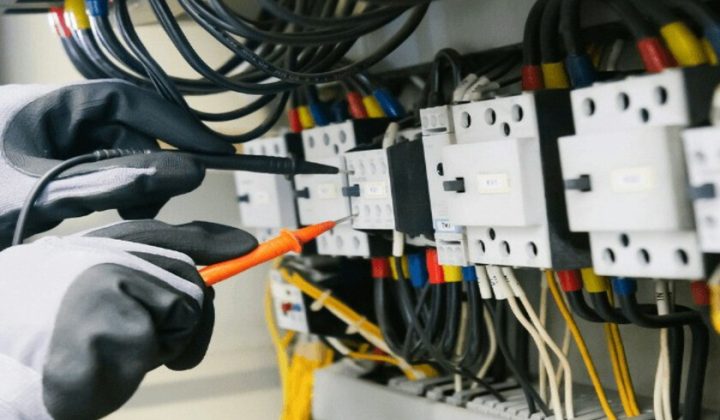
OCU Finds Spanish Homeowner Communities Overpaying Up to €1,500 on Electricity and €3,515 on Gas—Can AI Tools Optimize Shared Energy Bills?
A new OCU analysis of Spanish homeowner community bills reveals widespread overpayment due to non-competitive tariffs and excess contracted power. Could AI-driven…
Read article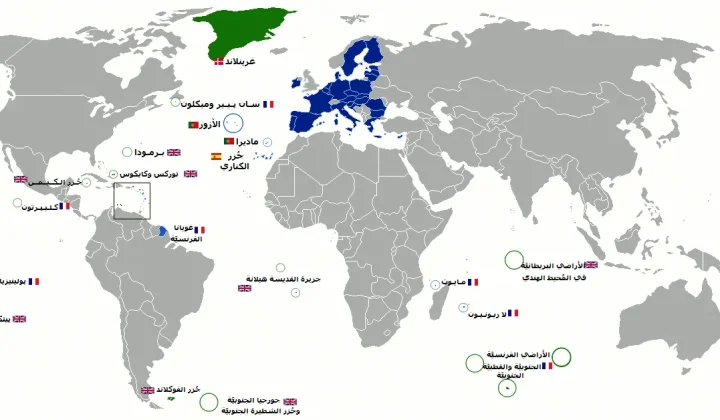
Mayotte fiber dispute does not meet ReviewArticle’s AI news brief
Le Monde reports that France’s competition authority has ordered Orange to suspend part of its fiber-optic rollout in Mayotte. The dispute is…
Read article
DiffEEG Model Uses Diffusion Pre-Training to Improve Seizure Detection from Minimal Labeled Data
Researchers have introduced DiffEEG, a 9.6-million-parameter foundation model that combines denoising diffusion pre-training with reinforcement learning fine-tuning to detect seizure events from…
Read article
The Technology Trap: Why AI Cannot Escape the Unchanging Fundamentals of War
A new Foreign Affairs essay by former Pentagon official Mara Karlin warns that over-reliance on AI and advanced tech in military planning…
Read articleWiki relacionada

AI Model API Pricing and Context Window Comparison: Current Rates and Limits
Compare the latest API pricing, context windows, and capabilities of leading AI model providers including OpenAI, Anthropic, Google, and Mistral. Practical guidance…
Read article
AI Agent Evaluation Frameworks: How to Benchmark Agentic Systems
A practical guide to evaluating AI agents — from task completion metrics to safety, cost, and robustness. Covers major frameworks, primary sources,…
Read article
LLM Benchmarks Decoded: What MMLU, HumanEval, and GSM8K Actually Measure for Developers
A developer-focused breakdown of the most-cited LLM benchmarks — MMLU, HumanEval, GSM8K, MATH, Chatbot Arena — including what they test, their hidden…
Read article
What Is RAG? A Practical Guide to Retrieval-Augmented Generation in 2025
Retrieval-Augmented Generation (RAG) grounds LLM outputs in external data, reducing hallucinations and enabling enterprise use cases. This guide covers how RAG works,…
Read article