
Microshifting: The Emerging Work Model Challenging the 8-Hour Day
A growing trend called "microshifting" is fragmenting the workday into short, non-linear blocks, allowing employees to align work with personal energy levels and life demands, moving beyond traditional 9-to-5 structures.

The traditional 8-hour workday, a relic of the industrial era, is facing a significant challenge from a new work paradigm known as “microshifting.” This approach advocates for fragmenting the workday into short, non-linear blocks tailored to individual energy levels and life demands, rather than adhering to a rigid 9-to-5 schedule.
Early Adopters of Microshifting
The concept is already being practiced by individuals like John D. Connolly, founder of Bifrost Advisors. After two decades in conventional hours, Connolly now works in focused bursts throughout the day, aligning his work with his periods of highest mental acuity. Similarly, Jen Meegan, editor-in-chief at Sheer Havoc, structures her day around her children’s schedules, finding that crucial work often happens during her breaks.
Defining Microshifting
Owl Labs, a videoconferencing technology company, defines microshifting as “structured flexibility with short, non-linear work blocks adapted to an individual’s energy, responsibilities, or productivity patterns.” These blocks typically last between 45 to 90 minutes, interspersed with personal or family time. This contrasts with remote or hybrid work, which primarily altered the “where” of work; microshifting focuses on the “when.” Researcher Jonathan Westover describes it as the “next evolution in work design.”
Historical Roots and Modern Relevance
While the term is recent, the practice shares similarities with timeboxing and the Pomodoro Technique. However, microshifting is driven by personal rhythms rather than external timers. The Guardian wryly notes it as an extreme form of hybrid work, reminiscent of past “taking liberties” with schedules, but now backed by data and organizational support.
The Pandemic’s Influence
The COVID-19 pandemic served as a catalyst for microshifting. Lockdowns forced many to work outside traditional hours, revealing the potential for productivity in unconventional slots. As mandates for returning to the office emerged, many workers sought to retain this newfound autonomy. This desire is occurring alongside a trend dubbed “hybrid creep,” where more employees are returning to the office for four days a week, even without formal requirements.
Data Supporting the Shift
Current data suggests a significant portion of the workforce already incorporates personal activities into work hours, with a preference for meetings concluding before late afternoon. Caregiving emerges as a powerful motivator, with a substantial majority of caregivers expressing interest in microshifting. Fortune highlights that work-life balance has surpassed salary as a primary priority for office workers globally, positioning the “when” of work as the next frontier in flexibility.
Expert Perspectives and Cognitive Science
Academics and business leaders are beginning to validate this intuitive approach. Mark Pacitti of Woozle Research found that reducing work hours led to increased output by focusing on peak performance times. Cognitive science supports this, with Professor Anita Williams Woolley of Carnegie Mellon University explaining that the mind has limits for sustained deep work, and microshifting can prevent burnout. However, caution is advised by Professor Kevin Rockmann of George Mason University, who notes that an overemphasis on individual self-care might shift focus away from team relationships. Aytekin Tank, CEO of Jotform, emphasizes the need for clear rules to prevent microbreaks from disrupting deep work.
Challenges and the Risk of an “Always-On” Culture
A significant downside to microshifting is the potential for an “always-on” culture, where work never truly ends, leading to blurred boundaries. Experts warn that schedule autonomy could morph into an expectation of constant availability, extending workdays to 14-16 hours. Cali Williams Yost, an expert in flexible work design, stresses the necessity of clarity to avoid an “infinite workday.” Pranav Dalal of Office Beacon advocates for clear limits to prevent the model from becoming destructive to team cohesion.
Measuring Success in a New Framework
Microshifting necessitates a cultural shift from measuring hours worked to measuring outcomes. This transition requires organizations to adapt their performance evaluation systems, a change not all are prepared for.
The Clock, Not the Office, as the Problem
The fundamental question microshifting raises is why the 8-hour workday, designed for industrial factory floors over two centuries ago, has persisted for complex knowledge work, parenting, or managing chronic health conditions. The practice, as exemplified by John Connolly and Shellie Garrett, is less about discovering a new technique and more about aligning work with individual realities. As Mark Pacitti summarizes, “This isn’t just what people want. It’s what works best.”
Key facts
| Aspect | Description |
|---|---|
| Term | Microshifting |
| Core Concept | Fragmenting the workday into short, non-linear blocks. |
| Drivers | Personal energy levels, life demands, work-life balance, caregiver needs. |
| Potential Risks | “Always-on” culture, blurred boundaries, difficulty in measuring output. |
Source: Adiós a la jornada de 8 horas: el “microshifting” está hackeando el trabajo para devolvernos el control del reloj – Xataka: https://www.xataka.com/magnet/adios-jornada-8-horas-como-microshifting-esta-hackeando-sistema-para-devolvernos-control-reloj
Source
Xataka IA Publicacion original: 2026-06-14T08:30:17+00:00
Related articles
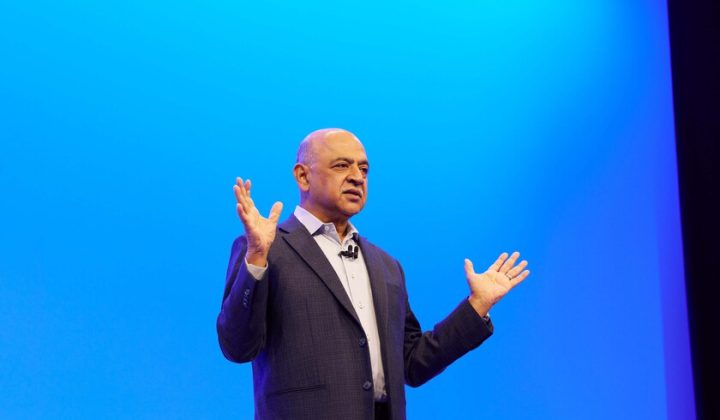
IBM CEO Puts a Number on the Open-Weight AI Value Proposition: 90% of the Performance at 10% of the Token Cost
IBM CEO Arvind Krishna told analysts that open-weight models now deliver about 90% of frontier-model effectiveness while costing between 10% and 25%…
Read article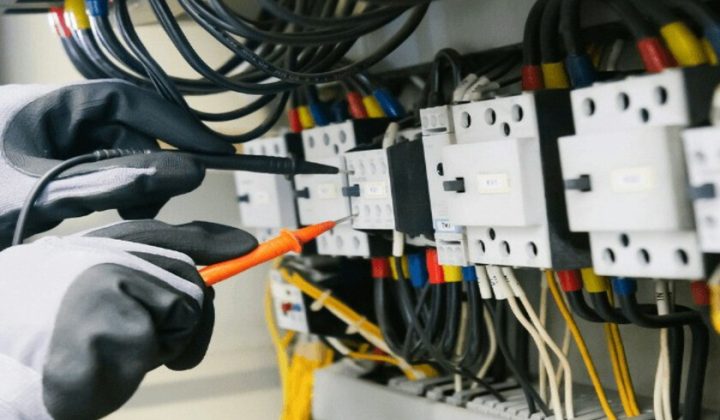
OCU Finds Spanish Homeowner Communities Overpaying Up to €1,500 on Electricity and €3,515 on Gas—Can AI Tools Optimize Shared Energy Bills?
A new OCU analysis of Spanish homeowner community bills reveals widespread overpayment due to non-competitive tariffs and excess contracted power. Could AI-driven…
Read article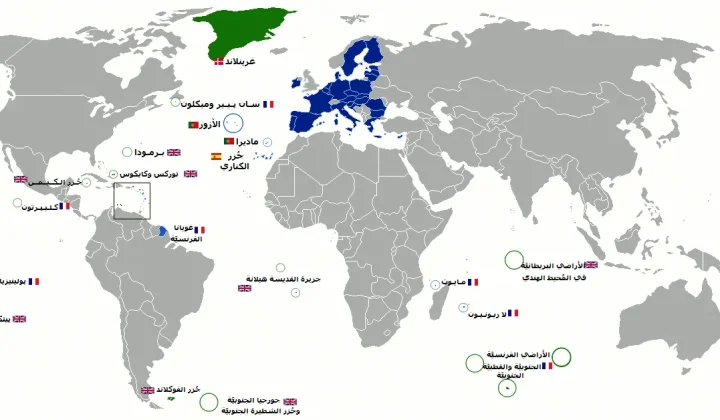
Mayotte fiber dispute does not meet ReviewArticle’s AI news brief
Le Monde reports that France’s competition authority has ordered Orange to suspend part of its fiber-optic rollout in Mayotte. The dispute is…
Read article
DiffEEG Model Uses Diffusion Pre-Training to Improve Seizure Detection from Minimal Labeled Data
Researchers have introduced DiffEEG, a 9.6-million-parameter foundation model that combines denoising diffusion pre-training with reinforcement learning fine-tuning to detect seizure events from…
Read articleWiki relacionada

AI Model API Pricing and Context Window Comparison: Current Rates and Limits
Compare the latest API pricing, context windows, and capabilities of leading AI model providers including OpenAI, Anthropic, Google, and Mistral. Practical guidance…
Read article
AI Agent Evaluation Frameworks: How to Benchmark Agentic Systems
A practical guide to evaluating AI agents — from task completion metrics to safety, cost, and robustness. Covers major frameworks, primary sources,…
Read article
LLM Benchmarks Decoded: What MMLU, HumanEval, and GSM8K Actually Measure for Developers
A developer-focused breakdown of the most-cited LLM benchmarks — MMLU, HumanEval, GSM8K, MATH, Chatbot Arena — including what they test, their hidden…
Read article
What Is RAG? A Practical Guide to Retrieval-Augmented Generation in 2025
Retrieval-Augmented Generation (RAG) grounds LLM outputs in external data, reducing hallucinations and enabling enterprise use cases. This guide covers how RAG works,…
Read article