
Star Catcher Secures $88 Million to Build First Space-Based Power Grid, Targeting Satellite Laser Recharging
Star Catcher has raised $88 million to develop a pioneering space-based electrical grid designed to recharge satellites using lasers. This initiative aims to address the growing energy demands of an increasing number of space launches and extended missions.
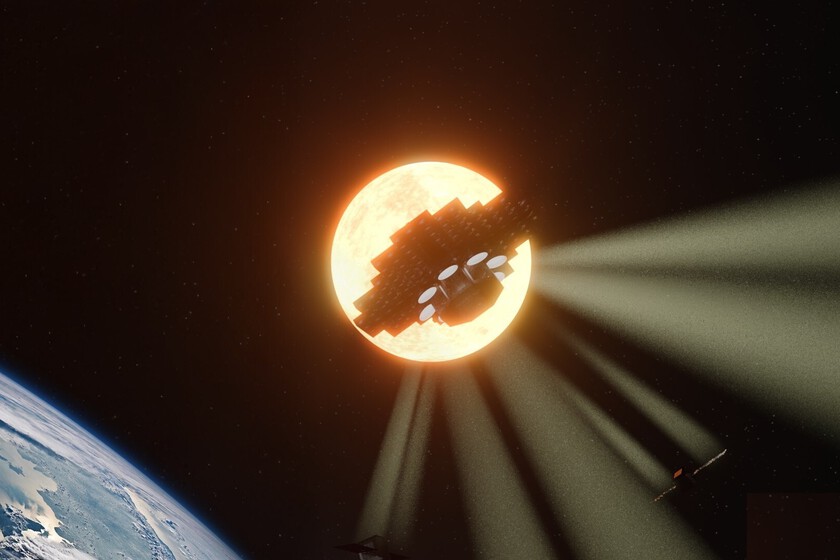
Star Catcher, a US-based company, has announced securing $88 million in funding to develop the world’s first space-based electrical grid. The company plans to use this infrastructure to recharge satellites in orbit via multispectral optical lasers, addressing the increasing energy demands of expanding space missions. The funding comprises a recent $65 million Series A round, supplementing previous capital. Star Catcher aims for its first launch later this year.
The proliferation of space launches and more ambitious missions beyond Earth is intensifying the need for sustainable in-orbit energy solutions. Traditional fuel sources are finite, prompting exploration into alternatives like in-orbit refueling, nuclear power, and advanced solar energy capture. Star Catcher’s approach focuses on the latter, but with a significant distinction from terrestrial solar energy applications.
Key facts:
- Funding: $88 million (including $65 million Series A)
- Technology: Optical beaming (multispectral lasers) for in-orbit satellite recharging
- Infrastructure: Planned constellation of 200 low Earth orbit satellites serving as power nodes
Space-Based Solar Capture and Optical Beaming
Unlike proposals to beam solar energy directly to Earth, which face criticism for potential light pollution and other risks, Star Catcher intends to capture solar energy in space and redirect it to other spacecraft. This system is envisioned as a “space solar power station.”
The core technology behind Star Catcher’s initiative is “optical beaming.” This process involves harnessing solar energy, converting it to power a multispectral optical laser, and then directing this laser energy to a network of satellites. These satellites would then distribute power on demand to other spacecraft requiring a recharge. The company projects deploying a constellation of 200 satellites in low Earth orbit (LEO) to facilitate this power distribution network.
This is not Star Catcher’s first foray into wireless power transmission. The company previously set a world record by wirelessly transmitting 1.1 kW of electricity to NASA’s Kennedy Space Center. The current objective is to extend this capability directly into space for in-orbit applications.
Practical Implications for Satellite Operations
For operators of satellites and future space missions, Star Catcher’s proposed grid could significantly alter mission planning and operational longevity. The ability to recharge satellites in orbit could reduce the need for larger, heavier on-board power systems, potentially extending mission durations and enabling more complex, energy-intensive operations. This could also mitigate the risk of mission termination due to power depletion, a common constraint for many spacecraft.
The technology could be particularly impactful for satellite constellations, scientific probes, and even future in-space manufacturing or exploration efforts, where sustained power is critical. By providing a flexible, on-demand energy source, Star Catcher aims to decouple mission duration from initial fuel or battery capacity, offering new design freedoms for spacecraft engineers. This could accelerate innovation in satellite design and payload capabilities, as power constraints become less restrictive.
Challenges and Risks of Large-Scale Space Infrastructure
While promising, Star Catcher’s ambitious plan introduces several challenges and potential risks. The deployment of a vast constellation of 200 satellites in LEO significantly increases the amount of orbital infrastructure. Experts have raised concerns about the growing number of satellites, particularly regarding the exacerbation of the Kessler Syndrome. This phenomenon describes a scenario where collisions between orbital debris generate more debris, leading to a cascade of further collisions, making LEO untenable. The addition of hundreds of new satellites, even for beneficial purposes, could contribute to this risk.
Furthermore, the environmental impact of launching such a large number of satellites cannot be overlooked. Rocket launches are known sources of atmospheric pollution, depositing various contaminants into the upper atmosphere. A recent study highlighted the significant amount of pollutants released during these launches, which could have long-term environmental consequences in otherwise pristine atmospheric layers. Star Catcher will need to navigate these environmental and orbital debris concerns carefully to ensure its advancements do not inadvertently create new problems for the space environment or future space operations.
The development of such a complex space infrastructure also presents significant engineering hurdles, from the precision required for optical beaming over long distances to ensuring the robustness and durability of the satellite constellation in the harsh space environment. Regulatory frameworks for space-based power grids and laser transmission are also evolving, adding another layer of complexity to deployment and operation.
Source: Xataka IA, https://www.xataka.com/espacio/star-catcher-ha-recaudado-88-millones-dolares-para-construir-primera-red-electrica-espacial-su-plan-recargar-satelites-laseres
Source
Xataka IA Publicacion original: 2026-05-20T17:01:39+00:00
Related articles
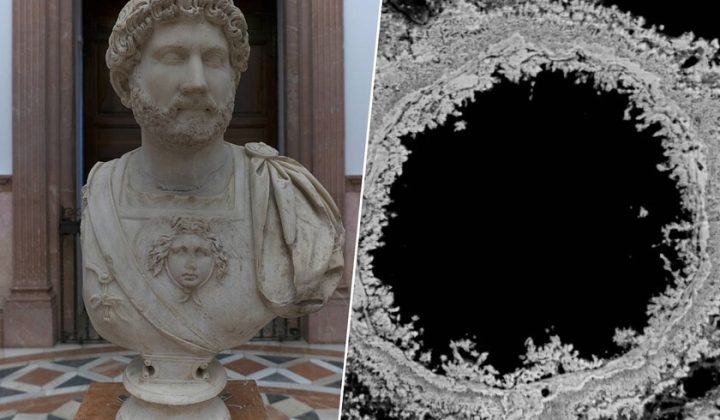
AI-Driven 3D Imaging Reveals New Secret of Roman Concrete Durability from Hadrian’s Toilet
A new study uses advanced 3D imaging to uncover a carbonation mechanism that helped Roman concrete last millennia. The sample came from…
Read article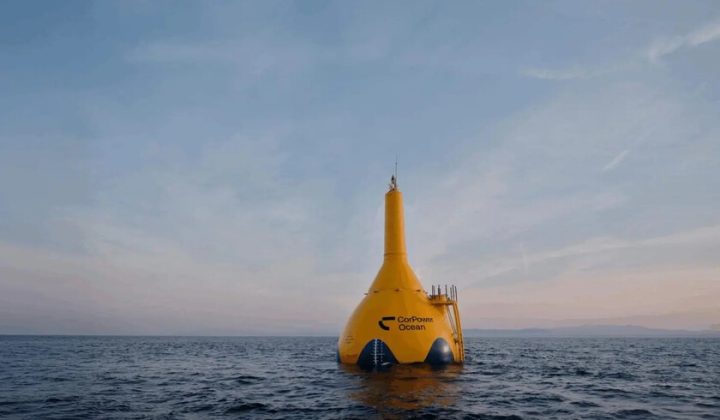
AI data center energy hunger gives wave power a second chance as CorPower prototype passes certification
A Swedish wave energy converter has received the first independent prototype certification for wave power, as AI data centers’ growing electricity demand…
Read article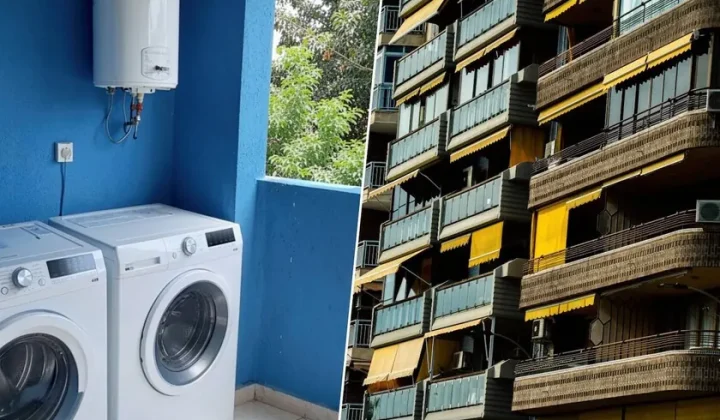
Balcony Washing Machines in Spain: AI Noise Monitoring Tools Could Trigger Fines Up to €3,000
Spanish homeowners installing washing machines on balconies risk fines up to €3,000 under noise regulations. New AI-powered sound monitoring systems used by…
Read article
The Galician Mathematician Who Helped Define the Meter: A Historical AI-Free Profile
Pedro Xosé Rodríguez González, a self-taught mathematician from rural Galicia, played a key role in the expedition that fixed the length of…
Read articleWiki relacionada

What Is a Context Window in AI Models? A Practical Guide
Understand how context windows define the memory and reasoning scope of large language models, with real limits, comparisons, and practical implications for…
Read article
AI Model Evaluation Benchmarks: A Practical Guide for Developers
Compare AI models with confidence. This guide explains the most common benchmarks—MMLU, HumanEval, GPQA, and others—what they measure, their limits, and how…
Read article
AI Agent Evaluation Benchmarks: What They Measure and How to Use Them
A practical guide to the major benchmarks for evaluating AI agent performance, including GAIA, AgentBench, and WebArena, with source-backed comparisons and limitations.
Read articleUnderstanding Retrieval-Augmented Generation (RAG) in AI
Retrieval-Augmented Generation (RAG) combines large language models with external knowledge bases, allowing AI systems to generate more informed and accurate responses by…
Read article