
Mexican Axolotl’s Journey from Endangered Species to National Icon: A Banknote’s Impact
The iconic axolotl, once primarily known to specialists, has become a symbol of national pride and conservation awareness in Mexico, thanks to its prominent appearance on the 50-peso banknote.
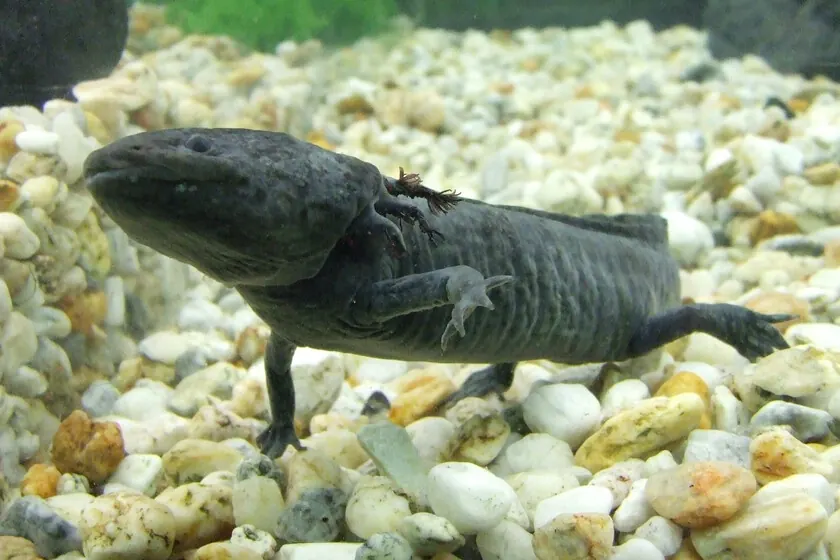
The humble axolotl, an amphibian native to Mexico, has undergone a remarkable transformation from a species known primarily to scientists and local inhabitants to a national icon. This shift in public perception, largely credited to its appearance on Mexico’s 50-peso banknote, has ignited widespread fascination and, crucially, brought renewed attention to the urgent need for its conservation.
A Symbol on Currency
The journey began in 2021 when the Banco de México (Banxico) introduced the 50-peso banknote featuring the axolotl. This design choice, informed by specialists from Xochimilco, aimed to faithfully represent the unique species and its native chinampero ecosystem. What started as an educational and symbolic gesture quickly escalated into an unexpected cultural phenomenon. The banknote’s aesthetic appeal, combined with the amphibian’s endearing and enigmatic image, resonated deeply with millions, weaving together themes of tenderness, cultural identity, and national pride.
Collector Frenzy and Economic Impact
The banknote’s debut triggered an immediate surge in popularity. Collectors, families, and individuals began to preserve the 50-peso notes, treating them as treasured keepsakes. By 2025, a Banxico report revealed that an estimated 9.8 million Mexicans were collecting these banknotes. This widespread preservation has effectively removed a significant amount of currency from circulation. Calculations suggest that approximately 490 million pesos, equivalent to over $26 million USD, are being held by collectors, demonstrating the profound economic and cultural value placed on this particular design. The banknote’s success was further cemented when it received international recognition as the “Banknote of the Year,” validating the notion that the axolotl’s image had tapped into a collective sentiment far beyond monetary value.
The Real-Life Inspiration: “Gorda”
Behind the iconic image is a real axolotl named “Gorda.” Selected through a meticulous documentation and photography process, Gorda became an unlikely national figure. She currently resides at Axolotitlán, the National Axolotl Museum, in a carefully maintained habitat. While no longer constantly on display due to her advanced age, visitors can still identify her by distinctive white spots on her head. Gorda’s fame has spawned a thriving market for axolotl-themed merchandise, from plush toys to apparel, further embedding the creature into daily life. However, her story also underscores a critical message from specialists: admiration must translate into responsibility. The axolotl is an extremely fragile species, dependent on a specific environment, and its newfound fame is only meaningful if it spurs greater conservation efforts.
Biological Marvels and Critical Danger
The axolotl, scientifically known as Ambystoma mexicanum, possesses extraordinary biological characteristics. It exhibits remarkable regenerative capabilities, able to regrow limbs, tissues, and even parts of its brain. Its unique method of respiration, utilizing gills, skin, and mouth, along with its neotenic state (retaining larval features into adulthood), makes it a biological marvel.
Despite these unique traits, the axolotl faces an extreme risk of extinction. Its natural habitat, the ancient lake system of Xochimilco near Mexico City, is under severe threat from decades of rapid urbanization, water pollution, and the proliferation of invasive species. These factors have decimated native populations since the 1980s. Furthermore, misguided interventions, such as the release of axolotls without scientific protocols, often lead to immediate mortality due to thermal shock, poor water quality, or inter-species competition. Conservationists emphasize that protecting the axolotl requires stringent environmental controls, genetic evaluations, slow acclimatization processes, and comprehensive protection of its canal systems.
Restoring Xochimilco: A Path Forward
The survival of the axolotl is inextricably linked to the ecological health of Xochimilco. Scientists and chinamperos are collaborating on restoration projects that revive ancestral agricultural techniques. These revitalized chinampas, or floating gardens, are designed to serve as safe micro-ecosystems where axolotls can thrive away from invasive species and in cleaner waters. The ultimate goal is not to create artificial reserves but to restore the natural balance of the environment, enabling the species to survive without perpetual human intervention. Xochimilco’s importance extends beyond its historical and tourist value; it functions as a vital living system that regulates floods, stabilizes temperatures, supports traditional agriculture, and sustains biodiversity. The axolotl’s plight is a visible indicator of a much larger ecological crisis: the disappearance of its home would have cascading consequences for the entire region’s ecological functions.
National Campaign and Lingering Criticisms
The axolotl’s visibility has been amplified by recent initiatives. Since May 2026, the government of Mexico City, under Mayor Clara Brugada, has embraced the axolotl as a symbol for the FIFA World Cup 2026 hosted in part by Mexico. The Tren Ligero (Light Rail) has been renamed “El Ajolote,” with significant investment in its renovation. Public spaces, including bridges, pedestrian crossings, buses, and urban furniture, have been decorated with axolotl imagery in what the media has dubbed “ajolotización.” A mascot for the tournament, “Ajolotín,” has also been introduced. While these efforts have generated viral memes and widespread public engagement, they have also drawn criticism regarding public spending and the paradox of celebrating the axolotl’s image while the actual species remains critically endangered.
The enduring impact of the 50-peso banknote lies in its power to shift public perception. The axolotl has become a recognizable symbol, evoking curiosity, affection, and a sense of shared identity. The true measure of its success, however, will be whether this collective enthusiasm can be channeled into sustained conservation action. The banknote provided visibility; the restoration of Xochimilco will determine the axolotl’s future.
Key facts
| Feature | Detail |
|—|—|
| Species | Axolotl (Ambystoma mexicanum) |
| Cultural Symbol | Featured on Mexican 50-peso banknote since 2021 |
| Conservation Status | Critically Endangered |
| Primary Habitat | Xochimilco, Mexico |
| Estimated Banknotes Collected | 9.8 million (as of 2025) |
The axolotl’s journey from an endangered species to a national symbol highlights how cultural artifacts can intersect with conservation awareness. For ReviewArticle readers, this story illustrates the potent impact of public engagement driven by design and symbolism, underscoring the challenges and opportunities in bridging popular fascination with critical environmental action.
Source: México necesitaba desesperadamente que a los mexicanos les importaran los axolotes. Así que los puso en los billetes – Xataka: https://www.xataka.com/magnet/mexico-necesitaba-desesperadamente-que-a-mexicanos-les-importaran-axolotes-asi-que-puso-billetes
Datos clave
| Punto | Detalle |
|---|---|
| Fuente | Xataka IA |
| Fecha | 2026-06-22T07:31:08+00:00 |
| Tema | México necesitaba desesperadamente que a los mexicanos les importaran los axolotes. Así que los puso en los billetes |
Source
Xataka IA Publicacion original: 2026-06-22T07:31:08+00:00
Related articles

IBM CEO Puts a Number on the Open-Weight AI Value Proposition: 90% of the Performance at 10% of the Token Cost
IBM CEO Arvind Krishna told analysts that open-weight models now deliver about 90% of frontier-model effectiveness while costing between 10% and 25%…
Read article
OCU Finds Spanish Homeowner Communities Overpaying Up to €1,500 on Electricity and €3,515 on Gas—Can AI Tools Optimize Shared Energy Bills?
A new OCU analysis of Spanish homeowner community bills reveals widespread overpayment due to non-competitive tariffs and excess contracted power. Could AI-driven…
Read article
Mayotte fiber dispute does not meet ReviewArticle’s AI news brief
Le Monde reports that France’s competition authority has ordered Orange to suspend part of its fiber-optic rollout in Mayotte. The dispute is…
Read article
DiffEEG Model Uses Diffusion Pre-Training to Improve Seizure Detection from Minimal Labeled Data
Researchers have introduced DiffEEG, a 9.6-million-parameter foundation model that combines denoising diffusion pre-training with reinforcement learning fine-tuning to detect seizure events from…
Read articleWiki relacionada

AI Model API Pricing and Context Window Comparison: Current Rates and Limits
Compare the latest API pricing, context windows, and capabilities of leading AI model providers including OpenAI, Anthropic, Google, and Mistral. Practical guidance…
Read article
AI Agent Evaluation Frameworks: How to Benchmark Agentic Systems
A practical guide to evaluating AI agents — from task completion metrics to safety, cost, and robustness. Covers major frameworks, primary sources,…
Read article
LLM Benchmarks Decoded: What MMLU, HumanEval, and GSM8K Actually Measure for Developers
A developer-focused breakdown of the most-cited LLM benchmarks — MMLU, HumanEval, GSM8K, MATH, Chatbot Arena — including what they test, their hidden…
Read article
What Is RAG? A Practical Guide to Retrieval-Augmented Generation in 2025
Retrieval-Augmented Generation (RAG) grounds LLM outputs in external data, reducing hallucinations and enabling enterprise use cases. This guide covers how RAG works,…
Read article