
Italian Alps Reforestation Project Backfires, Halving Biodiversity
A 90-year-old reforestation effort in Italy's Alps, intended to stabilize the mountains, has led to a drastic decline in local biodiversity, with plant species reduced by over 50% compared to native forests.
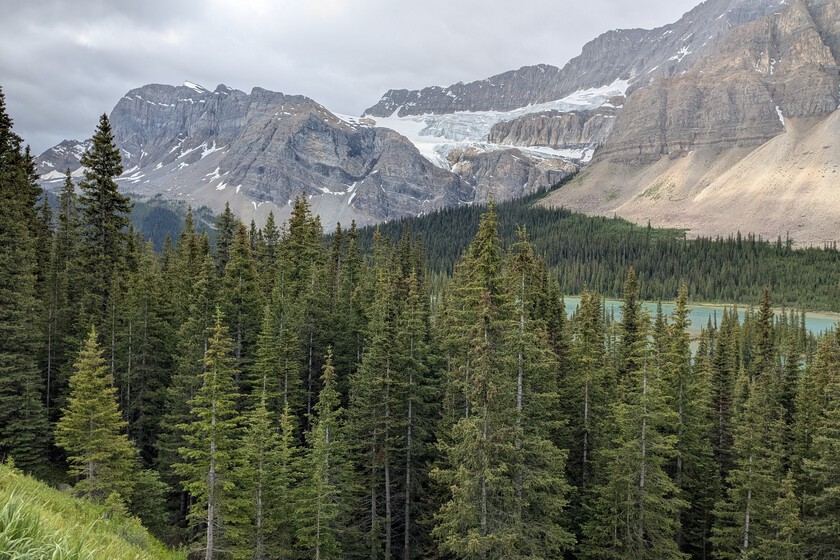
A large-scale reforestation initiative launched in the Italian Alps nearly a century ago, aimed at stabilizing the mountains and providing timber, has resulted in a significant and unintended loss of local biodiversity. A recent study published in the journal Ecology reveals that extensive monocultures of Norway spruce, planted in the 1930s, have led to a reduction of over 50% in plant species diversity compared to the region’s native forests.
Historical Ambitions and Unforeseen Consequences
The reforestation program, initiated during Benito Mussolini’s era, involved clearing vast areas of alpine meadows and indigenous forests to establish dense, uniform rows of Norway spruce (Picea abies). This fast-growing conifer was chosen for its straight trunk and commercially valuable timber, with the stated goals of combating erosion, securing future wood supplies, and projecting an image of national order and productivity. For decades, these extensive spruce plantations were hailed as a success in forest engineering.
Study Reveals Dramatic Biodiversity Decline
A comprehensive study, led by ecologist Gianalberto Losapio, examined two sites in the Italian Prealps near Lake Como: Monte Bisbino and Alpe del Vicerè. Researchers meticulously compared the ecological conditions within the Norway spruce monocultures to adjacent native deciduous forests and traditional alpine pastures. Over a five-month field study, the team identified 136 plant species and 201 arthropod species across these distinct habitats.
The findings were stark. The Norway spruce plantations averaged only seven plant species per surveyed plot, a sharp contrast to the 18.5 species found in native forests and the 37 species recorded in alpine pastures. This indicates a reduction of more than 50% in plant diversity compared to natural forests and nearly 75% compared to pastures.
The Ecological Trap of Monoculture
The core flaw in the reforestation strategy lay in the assumption that planting more trees automatically translated to greater ecological value. While monocultures are efficient for timber production, they create significant ecological imbalances. The dominance of a single species eliminates landscape complexity, disrupting the intricate relationships between plants, insects, and microorganisms essential for a healthy ecosystem.
This reduction in species variety compromises the ecosystem’s resilience, making it more susceptible to diseases, pests, and extreme environmental events. The diverse alpine environments were replaced by monotonous blocks of conifers, leading to a drastic simplification of the ecological network. What was intended as ecological restoration ultimately became a trade-off of biodiversity for timber productivity.
The Impact of Persistent Shade
A key factor contributing to the diminished biodiversity is the perennial nature of the Norway spruce. Unlike deciduous trees such as beech, maple, and chestnut, which shed their leaves in spring, allowing sunlight to reach the forest floor, spruce trees maintain a dense canopy year-round. This constant shade prevents many native alpine plants, which rely on early spring light for flowering and growth before the canopy closes, from surviving. This creates a persistent exclusion of understory species.
Soil Acidification and Slowed Nutrient Cycles
The ecological damage extends beneath the surface. The accumulation of Norway spruce needles over decades has led to soil acidification. While researchers noted a 25% increase in organic carbon within these plantations, this did not signify enhanced fertility. Instead, it pointed to slower decomposition rates, indicating reduced biological activity and a less efficient nutrient cycle. The altered balance of carbon and nitrogen suggests a compromised ecosystem where organic matter accumulates rather than being effectively recycled.
Reduced Functional Uniformity and Ecosystem Fragility
Beyond species counts, the study assessed “functional uniformity,” which measures the distribution of ecological roles within a plant community. In the spruce plantations, this index was 30% lower than in natural forests. This imbalance signifies a less stable and more vulnerable ecosystem, with entire ecological functions missing and many environmental niches left vacant. While the forest structure remained, its operational capacity was severely diminished.
Furthermore, the plantations did not facilitate the development of a new, adapted ecosystem. The study’s authors discovered that these monocultures did not generate a unique community specialized to the spruce environment. Instead, they found a “mutilated version” of the original forest, characterized by fewer and less diverse native species, rather than a new ecological equilibrium.
Arthropod Resilience and Subsurface Changes
The diversity of soil arthropods showed less dramatic variation between the monocultures and natural forests. Scientists attribute this relative resilience to the mobility of these organisms and their ability to move between adjacent habitats. However, experts caution that changes in soil chemistry suggest alterations in microbial activity and the finer underground life networks, even if not directly measured. The surface may appear partially recovered, but the subsurface tells a different story.
Global Implications for Reforestation Efforts
The experience in the Italian Alps serves as a critical lesson for current global reforestation initiatives. A significant proportion of worldwide forest restoration efforts reportedly follow a similar model: rapid, cost-effective, and uniform planting to meet climate and accounting targets. Studies cited in the research indicate that half of the areas designated for forest restoration globally consist of monocultures of non-native species.
While this approach offers short-term efficiency and appeals to governments and corporations, the Italian Alps case demonstrates that the ecological costs can take decades to emerge. By the time the damage becomes evident, it is often too late to reverse, with many displaced species failing to return.
This development is pertinent to ReviewArticle readers as it highlights a critical flaw in many large-scale environmental restoration projects. The study illustrates how seemingly well-intentioned efforts, when based on simplified ecological models like monoculture, can lead to severe and long-lasting negative consequences for biodiversity and ecosystem health. It underscores the importance of ecological complexity and the integration of native species in any climate mitigation or restoration strategy.
Source: Italia plantó millones de abetos para proteger los Alpes. 90 años después han descubierto que la biodiversidad se ha reducido a la mitad (Xataka IA), https://www.xataka.com/ecologia-y-naturaleza/italia-planto-millones-abetos-para-proteger-alpes-90-anos-despues-hemos-descubierto-que-biodiversidad-se-ha-reducido-a-mitad
Datos clave
| Punto | Detalle |
|---|---|
| Fuente | Xataka IA |
| Fecha | 2026-06-25T08:01:32+00:00 |
| Tema | Italia plantó millones de abetos para proteger los Alpes. 90 años después han descubierto que la biodiversidad se ha red |
Source
Xataka IA Publicacion original: 2026-06-25T08:01:32+00:00
Related articles

IBM CEO Puts a Number on the Open-Weight AI Value Proposition: 90% of the Performance at 10% of the Token Cost
IBM CEO Arvind Krishna told analysts that open-weight models now deliver about 90% of frontier-model effectiveness while costing between 10% and 25%…
Read article
OCU Finds Spanish Homeowner Communities Overpaying Up to €1,500 on Electricity and €3,515 on Gas—Can AI Tools Optimize Shared Energy Bills?
A new OCU analysis of Spanish homeowner community bills reveals widespread overpayment due to non-competitive tariffs and excess contracted power. Could AI-driven…
Read article
Mayotte fiber dispute does not meet ReviewArticle’s AI news brief
Le Monde reports that France’s competition authority has ordered Orange to suspend part of its fiber-optic rollout in Mayotte. The dispute is…
Read article
DiffEEG Model Uses Diffusion Pre-Training to Improve Seizure Detection from Minimal Labeled Data
Researchers have introduced DiffEEG, a 9.6-million-parameter foundation model that combines denoising diffusion pre-training with reinforcement learning fine-tuning to detect seizure events from…
Read articleWiki relacionada

AI Model API Pricing and Context Window Comparison: Current Rates and Limits
Compare the latest API pricing, context windows, and capabilities of leading AI model providers including OpenAI, Anthropic, Google, and Mistral. Practical guidance…
Read article
AI Agent Evaluation Frameworks: How to Benchmark Agentic Systems
A practical guide to evaluating AI agents — from task completion metrics to safety, cost, and robustness. Covers major frameworks, primary sources,…
Read article
LLM Benchmarks Decoded: What MMLU, HumanEval, and GSM8K Actually Measure for Developers
A developer-focused breakdown of the most-cited LLM benchmarks — MMLU, HumanEval, GSM8K, MATH, Chatbot Arena — including what they test, their hidden…
Read article
What Is RAG? A Practical Guide to Retrieval-Augmented Generation in 2025
Retrieval-Augmented Generation (RAG) grounds LLM outputs in external data, reducing hallucinations and enabling enterprise use cases. This guide covers how RAG works,…
Read article