
Nvidia’s Q1 FY2027 Earnings: Gaming Becomes ‘Pocket Change’ as Data Center Revenue Soars to $75.2 Billion
Nvidia's first-quarter fiscal year 2027 earnings reveal a dramatic shift in its business, with data center revenue reaching $75.2 billion, dwarfing its traditional gaming segment. The company's overall revenue hit $81.6 billion, signaling its near-total transformation into an AI powerhouse.

Nvidia has reported a monumental shift in its revenue streams for the first fiscal quarter of 2027, with its data center segment generating an unprecedented $75.2 billion. This figure represents a 92% year-over-year increase and now constitutes the overwhelming majority of the company’s total revenue of $81.6 billion. In stark contrast, the gaming segment, once Nvidia’s core business, contributed $6.4 billion, now representing less than 8% of total revenue and increasingly categorized as “pocket change” in relative terms.
This financial quarter underscores Nvidia’s successful transformation from a gaming-centric GPU manufacturer to the undisputed leader in AI infrastructure. The company’s overall revenue growth of 85% year-over-year, reaching a scale comparable to the GDP of entire nations like Croatia, Panama, or Uruguay, highlights the accelerating demand for its AI-enabling technologies. Wall Street expectations were surpassed, and Nvidia projects even higher revenues of $91 billion for the upcoming quarter, indicating sustained momentum despite the law of large numbers suggesting a natural deceleration in percentage growth.
Key facts:
- Total Revenue: $81.6 billion | 85%
- Data Center Revenue: $75.2 billion | 92%
- Gaming Revenue: $6.4 billion | 29%
Data Center Dominance and Networking Growth
The $75.2 billion from the data center business is not solely driven by GPU sales to hyperscalers. A significant portion, $14.4 billion, originated from Nvidia’s networking solutions, which witnessed an astonishing 199% year-over-year growth. This tripling of networking revenue reflects the immense demand for high-speed interconnect infrastructure crucial for building large-scale AI clusters. As organizations race to deploy increasingly complex AI models, the requirement for seamless and efficient data flow between thousands of GPUs makes Nvidia’s integrated networking solutions a critical component, further solidifying its ecosystem lock-in.
For developers and product operators, this means that the availability and performance of AI compute are increasingly dependent on integrated hardware and software stacks like Nvidia’s. The growth in networking emphasizes that simply acquiring GPUs is insufficient; the entire interconnect fabric must be optimized for AI workloads. Teams building large language models or deploying complex AI services will continue to rely heavily on Nvidia’s comprehensive data center offerings, from GPUs to InfiniBand and Ethernet solutions, to achieve scalable and performant AI deployments.
Strategic Investments and Future Outlook
Nvidia’s strategic foresight extends beyond its core product sales. The company has invested over $26 billion in AI startups, demonstrating a proactive approach to fostering the broader AI ecosystem. These investments, which include recent agreements with OpenAI and stakes in companies like Corning, position Nvidia to benefit from the innovation fueled by its own hardware.
During investor calls, CEO Jensen Huang revealed a notable development concerning Anthropic, a prominent AI research company. While Anthropic has historically made minimal use of Nvidia solutions, Huang indicated that “quite significant” compute capacity would be deployed for Anthropic over the next year. This suggests that even as competition in the AI chip space intensifies, Nvidia continues to secure major contracts with leading AI developers, reinforcing its market position. For teams evaluating AI infrastructure, this signals Nvidia’s continued ability to attract and serve even the most advanced AI players, suggesting a robust and evolving roadmap for its data center products.
Challenges and Geopolitical Landscape
Despite the impressive financial performance, Nvidia faces geopolitical challenges, particularly concerning the Chinese market. Although the Trump administration theoretically authorized chip exports to China with a 25% government commission, Huang stated that revenues from China have been “zero” thus far due to ongoing uncertainty about import permissions. The company’s Q2 FY2027 forecast does not factor in any revenue from China, highlighting the potential for even more extraordinary numbers if this market eventually opens up.
This geopolitical hurdle means that while Nvidia’s growth is currently explosive, it is not yet fully tapping into one of the world’s largest technology markets. For global enterprises and developers, this situation underscores the complexities of AI supply chains and the impact of international policy on hardware availability and pricing. Teams operating in or targeting the Chinese market must remain aware of these regulatory dynamics and their potential effects on access to cutting-edge AI hardware.
Shareholder Returns and Reporting Changes
Nvidia has also demonstrated strong confidence in its future through significant shareholder returns. The company returned approximately $20 billion to shareholders this quarter through buybacks and dividends. The board of directors has further approved an additional $80 billion for stock repurchases, quadrupling previous authorizations. The dividend has also been increased from $0.01 to $0.25 per share, signaling robust financial health and a positive outlook.
In a move reflecting its new strategic focus, Nvidia has reorganized its financial reporting. Previously, revenue was segmented into data centers, networking, gaming, professional visualization, and automotive. Now, all gaming-related revenues, along with those from PCs, consoles, workstations, robots, cars, and other devices, are consolidated under a new “Edge Computing” category. This change formally acknowledges that gaming, as a standalone reporting segment, has become a minor component of Nvidia’s overall business strategy, emphasizing its overwhelming commitment to AI and data center solutions. For product managers and investors, this revised reporting structure provides clearer insight into the company’s AI-first strategy and its operational priorities.
Source: Xataka IA – “Hubo una época en que Nvidia era una empresa de gaming. Ese negocio es ahora calderilla para la dueña y señora de la IA” (https://www.xataka.com/empresas-y-economia/hubo-epoca-que-nvidia-era-empresa-gaming-ese-negocio-ahora-calderilla-para-duena-senora-ia)
Source
Xataka IA Publicacion original: 2026-05-21T08:21:21+00:00
Related articles

China’s Matchmaking App Raises Questions About AI’s Role in Solving Demographic Crisis
A government-backed dating app in China, described as a “kind of Tinder for young people,” has drawn attention amid the country’s falling…
Read article
China’s New AI Billionaires: DeepSeek Founder Tops $36 Billion as Low-Profile Tech Elite Rises
A new generation of Chinese tech billionaires, led by DeepSeek’s Liang Wenfeng and CXMT’s Zhu Yiming, is building AI and semiconductor fortunes…
Read article
How an Algorithm Engineered an Instant Influencer With 400,000 Followers in Three Days
At a live-streamed boxing event in Spain, a young woman with zero social-media posts gained hundreds of thousands of followers in hours.…
Read article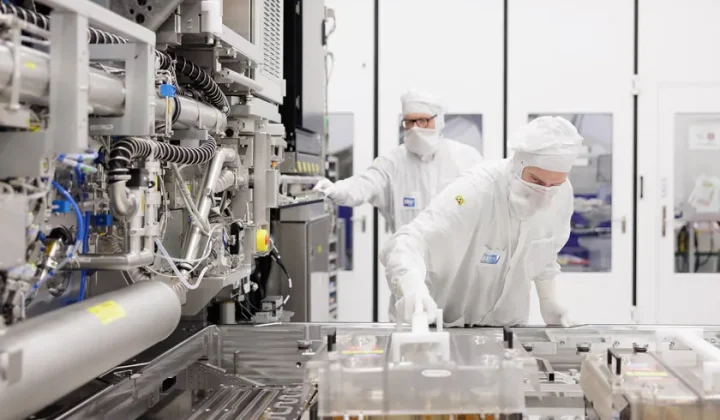
China Begins Mass Production of Domestic Lithography Machines, Threatening AI Chip Supply Chain
A Chinese government-backed company has started manufacturing immersion DUV lithography machines, potentially reducing dependence on ASML and reshaping the AI hardware supply…
Read articleWiki relacionada

What Is RAG? A Practical Guide to Retrieval-Augmented Generation in 2025
Retrieval-Augmented Generation (RAG) grounds LLM outputs in external data, reducing hallucinations and enabling enterprise use cases. This guide covers how RAG works,…
Read article
Retrieval-Augmented Generation (RAG) – How It Works, Why It Matters, and Where It Falls Short
A practical guide to Retrieval-Augmented Generation (RAG): how it reduces LLM hallucinations, the components needed, real-world developer workflows, and key limitations to…
Read article
Mistral AI Models and API: A Developer Overview
Mistral AI offers a family of open-weight and proprietary models for developers, from Mistral 7B to Mistral Large. This guide covers model…
Read article
What Is Retrieval-Augmented Generation (RAG)? A Developer’s Guide
Retrieval-augmented generation (RAG) combines LLMs with external knowledge retrieval to reduce hallucinations, keep facts current, and enable enterprise-grade AI workflows. This guide…
Read article