
Microgravity Lettuce May Be More Prone to Salmonella Contamination, Study Finds
New research suggests that lettuce grown in microgravity could pose a higher risk of bacterial contamination, impacting astronaut health and future space colonization efforts.
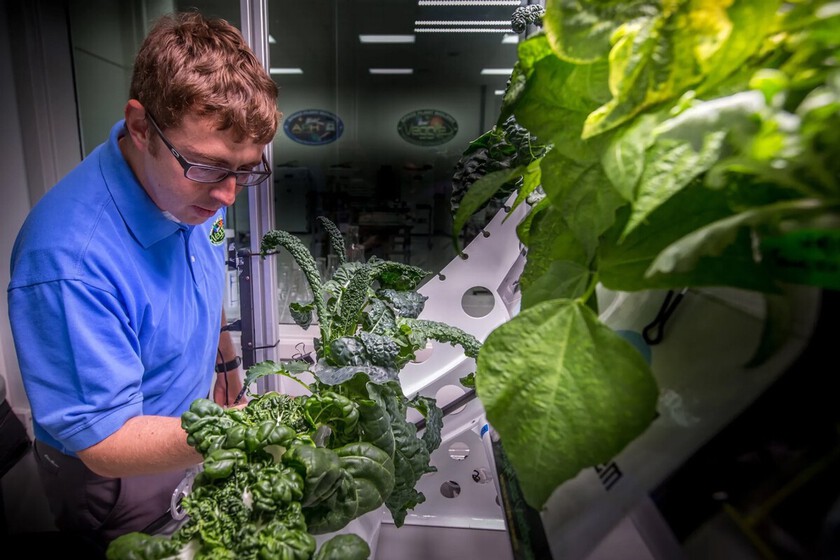
Astronauts consuming fresh produce grown aboard the International Space Station (ISS) and other orbital habitats may face an increased risk of foodborne illness. Recent findings from the University of Delaware suggest that lettuce cultivated in microgravity environments is more susceptible to contamination by bacteria like Salmonella. This discovery has significant implications for astronaut health and the feasibility of sustainable agriculture in future space colonies.
For nearly a decade, astronauts on the ISS have been supplementing their diets with vegetables grown in microgravity, including lettuce, peppers, and radishes. Similarly, astronauts on the Chinese space station are now cultivating lettuce, cherry tomatoes, and scallions. Until now, the safety of these “space salads” was largely assumed.
The new research challenges this assumption by demonstrating a heightened vulnerability of microgravity-grown vegetables to bacterial pathogens.
Increased Susceptibility to Salmonella
A team of researchers at the University of Delaware has identified that lettuce and other vegetables grown in microgravity are more prone to contamination by bacteria such as Salmonella. Previous hypotheses suggested that plants in microgravity might open their stomata – the small pores on leaves and stems – more readily, potentially allowing pathogens to enter.
However, recent work from the same laboratory indicates that the entry of Salmonella enterica into plant tissue is not solely dependent on stomatal density. Instead, the study found that the variety of lettuce being cultivated, combined with the microgravity environment itself, are the most significant predictors of contamination risk.
Friend Bacteria Lose Protective Effect
Further complicating matters, an earlier investigation explored the use of a beneficial bacterium, Bacillus subtilis (B. subtilis), as a potential solution to mitigate pathogen risks. On Earth, B. subtilis aids plants in combating pathogens. Yet, in experiments conducted in a simulated microgravity environment, this “friendly” bacterium failed to protect the plants. This suggests that the unique conditions of space significantly alter the interactions between plants and the microbes they encounter.
Implications for Space Exploration
The findings are crucial for several reasons. Firstly, they cast doubt on the complete safety of current space-grown salads consumed by astronauts. Secondly, and perhaps more importantly for the future, this research sheds light on the inherent challenges of establishing agriculture in future space colonies, such as those planned for Mars.
A Potential Solution: Red Lettuce Varieties
Despite the concerning results, the research points towards a potential solution: the use of red lettuce varieties. It is hypothesized that red lettuce’s higher content of phenols and antioxidants may offer a degree of protection against Salmonella. Early data suggests that selecting lettuce varieties with these traits could significantly enhance food safety in space agriculture.
As Earth faces challenges of population growth and diminishing arable land, space is increasingly viewed as a viable frontier for food production. However, ensuring the safety of these crops will be paramount to prevent outbreaks of foodborne illnesses like salmonellosis. Future space farmers will need rigorous hygiene practices, including thorough handwashing, alongside advancements in crop selection and cultivation techniques.
Key facts
| Aspect | Detail |
| :———————– | :———————————————————————– |
| Research Institution | University of Delaware |
| Primary Concern | Increased susceptibility of microgravity-grown lettuce to Salmonella |
| Potential Solution | Cultivating red lettuce varieties with higher phenol and antioxidant content |
| Impact | Astronaut health, future space colonization agriculture |
Source: Malas noticias para los astronautas que suelen comer sano. Ahora hemos descubierto que son más propensas a enfermarnos – Xataka, https://www.xataka.com/espacio/llevamos-anos-cultivando-lechugas-espacio-ahora-hemos-descubierto-que-propensas-a-enfermarnos-1
Datos clave
| Punto | Detalle |
|---|---|
| Fuente | Xataka IA |
| Fecha | 2026-06-28T07:30:13+00:00 |
| Tema | Llevamos años cultivando lechugas en el espacio. Ahora hemos descubierto que son más propensas a enfermarnos |
Source
Xataka IA Publicacion original: 2026-06-28T07:30:13+00:00
Related articles

IBM CEO Puts a Number on the Open-Weight AI Value Proposition: 90% of the Performance at 10% of the Token Cost
IBM CEO Arvind Krishna told analysts that open-weight models now deliver about 90% of frontier-model effectiveness while costing between 10% and 25%…
Read article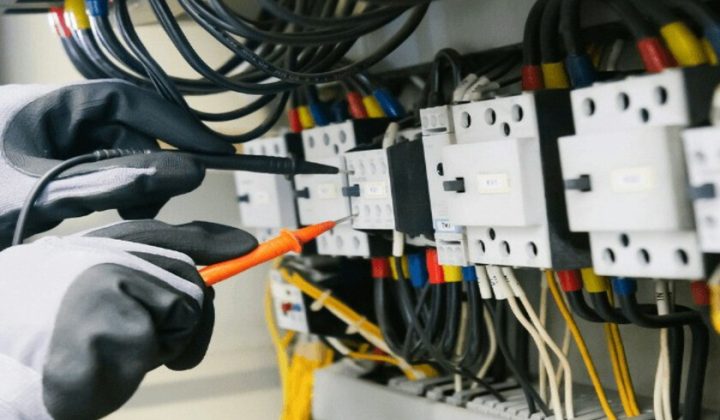
OCU Finds Spanish Homeowner Communities Overpaying Up to €1,500 on Electricity and €3,515 on Gas—Can AI Tools Optimize Shared Energy Bills?
A new OCU analysis of Spanish homeowner community bills reveals widespread overpayment due to non-competitive tariffs and excess contracted power. Could AI-driven…
Read article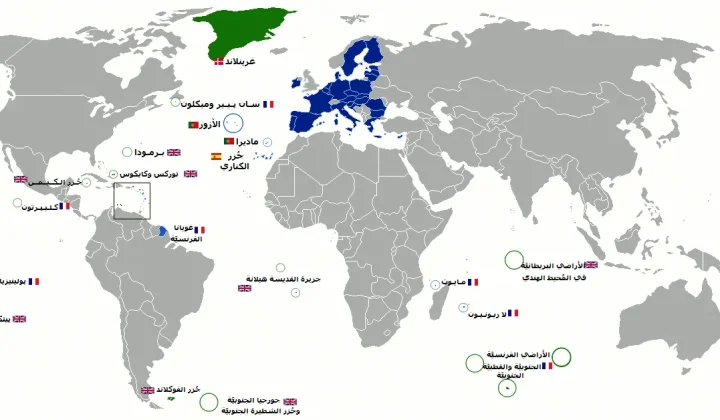
Mayotte fiber dispute does not meet ReviewArticle’s AI news brief
Le Monde reports that France’s competition authority has ordered Orange to suspend part of its fiber-optic rollout in Mayotte. The dispute is…
Read article
DiffEEG Model Uses Diffusion Pre-Training to Improve Seizure Detection from Minimal Labeled Data
Researchers have introduced DiffEEG, a 9.6-million-parameter foundation model that combines denoising diffusion pre-training with reinforcement learning fine-tuning to detect seizure events from…
Read articleWiki relacionada

AI Model API Pricing and Context Window Comparison: Current Rates and Limits
Compare the latest API pricing, context windows, and capabilities of leading AI model providers including OpenAI, Anthropic, Google, and Mistral. Practical guidance…
Read article
AI Agent Evaluation Frameworks: How to Benchmark Agentic Systems
A practical guide to evaluating AI agents — from task completion metrics to safety, cost, and robustness. Covers major frameworks, primary sources,…
Read article
LLM Benchmarks Decoded: What MMLU, HumanEval, and GSM8K Actually Measure for Developers
A developer-focused breakdown of the most-cited LLM benchmarks — MMLU, HumanEval, GSM8K, MATH, Chatbot Arena — including what they test, their hidden…
Read article
What Is RAG? A Practical Guide to Retrieval-Augmented Generation in 2025
Retrieval-Augmented Generation (RAG) grounds LLM outputs in external data, reducing hallucinations and enabling enterprise use cases. This guide covers how RAG works,…
Read article