
Urban Forests Reclassified as Essential Infrastructure Amidst Climate Crisis
Scientific consensus is shifting, advocating for urban trees to be treated with the same priority as utilities like electricity and water, given their critical role in mitigating heatwaves and floods.
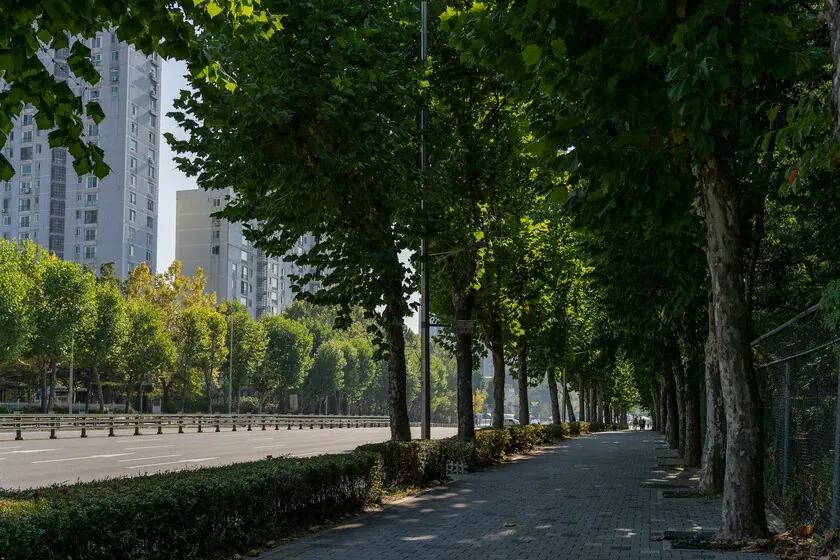
The traditional view of urban trees as mere aesthetic additions to city landscapes is being challenged by a growing body of scientific evidence and expert opinion. With the escalating frequency and intensity of heatwaves, urban forests are increasingly being recognized not just as decorative elements, but as essential infrastructure, on par with power grids and water systems.
A recent essay published in PLOS Climate advocates for a fundamental reevaluation of how cities manage and prioritize their green spaces. The authors argue for legislative action to classify urban forests as critical infrastructure, essential for climate resilience. This perspective aligns with the stark warnings from bodies like the United Nations’ Intergovernmental Panel on Climate Change (IPCC), which has repeatedly emphasized the indispensable role of sustainable urban planning and green infrastructure in adapting to and mitigating global warming.
Mitigating Urban Heat and Flooding
The physical benefits of urban forests in combating the harsh realities of climate change are substantial. Scientific reviews highlight that a significant presence of forest mass within cities directly addresses two of the most pressing climate-related symptoms: extreme heat and torrential rainfall.
Trees combat the urban heat island effect through evapotranspiration and by providing thermal shade, leading to a considerable reduction in surface temperatures. Simultaneously, their root systems and canopy structure act as natural sponges. They play a crucial role in regulating stormwater runoff, thereby preventing catastrophic flooding. Furthermore, they function as natural filters, significantly improving air quality in densely populated areas.
Public Health Imperatives
The impact of urban greenery extends far beyond thermodynamic regulation, directly influencing public health. Numerous studies compiled in publications like ScienceDirect have demonstrated that a lack of trees in urban environments constitutes a public health issue.
Research published in 2023 has detailed the physiological, psychological, and immunological mechanisms through which green cities enhance human well-being. Exposure to urban ecosystems has been shown to reduce chronic stress and bolster immune responses. Moreover, evidence suggests a strong correlation between exposure to diverse urban ecosystems and a reduced incidence of cardiovascular diseases, underscoring the health benefits of biodiverse urban environments.
Shifting Expert Perspectives
Experts in environmental engineering and management are increasingly vocal about the need to elevate the status of urban trees. Daniel Jato, a professor at the UIV’s School of Engineering and Environmental Management, noted that “in the current context, marked by increasingly frequent, intense, and early heatwaves, perhaps the role of urban trees could have been emphasized even more.” This sentiment reflects a broader shift in understanding, where the functional, life-sustaining role of urban flora is finally being given the strategic importance it warrants.
The reclassification of urban forests as essential infrastructure implies a need for dedicated funding, robust protection policies, and integrated planning that places trees at the core of urban development, rather than as an afterthought. This strategic shift is crucial for building cities that are not only more livable but also more resilient to the undeniable impacts of a changing climate.
Key facts:
| Aspect | Details |
| :———————- | :—————————————————————————————————– |
| Core Argument | Urban forests should be classified as essential infrastructure due to climate change impacts. |
| Key Benefits | Mitigate urban heat island effect, reduce flooding, improve air quality, enhance public health. |
| Supporting Evidence | PLOS Climate essay, IPCC reports, academic reviews on urban forests and public health studies. |
| Expert Opinion | Calls for greater emphasis on the role of urban trees in managing frequent and intense heatwaves. |
This development matters to ReviewArticle readers as it signifies a critical evolution in how technology and nature intersect within urban environments. The recognition of urban forests as infrastructure highlights a growing trend towards nature-based solutions and sustainable urban planning, areas increasingly influenced by AI-driven environmental monitoring, climate modeling, and smart city technologies. Understanding this shift is key to grasping the future of urban resilience and the integration of ecological principles into technological development.
Source: Los expertos apuntan que nos faltan árboles: “Con olas de calor cada vez más frecuentes, podría darse más importancia al arbolado urbano” – Xataka, https://www.xataka.com/ecologia-y-naturaleza/expertos-apuntan-que-nos-faltan-arboles-olas-calor-cada-vez-frecuentes-podria-darse-importancia-al-arbolado-urbano
Datos clave
| Punto | Detalle |
|---|---|
| Fuente | Xataka IA |
| Fecha | 2026-07-04T17:30:43+00:00 |
| Tema | Los expertos apuntan que nos faltan árboles: "Con olas de calor cada vez más frecuentes, podría darse más importancia al |
Source
Xataka IA Publicacion original: 2026-07-04T17:30:43+00:00
Related articles

Nepal’s “Flood-Proof” Google Maps Landmark Is Not a Verified Safety Rating
A house that survived a destructive Himalayan flood reportedly appeared on Google Maps as a “flood-proof” attraction. The viral label should not…
Read article
Perplexity Deploys GPT-6 Astra for End-to-End Production and Communication Systems
Perplexity has integrated OpenAI’s GPT-6 Astra to handle communications, software changes, and production monitoring, reducing the need for frequent human check-ins compared…
Read article
Privacy Reports Put AI Smart Glasses Under Scrutiny in France
French association e-Enfance says it has received more than 20 reports involving women allegedly recorded without their knowledge by connected glasses, bringing…
Read article
Snowflake Publishes GTM Blueprint for Closing the AI-to-Revenue Gap
Snowflake’s sales and marketing teams share a repeatable RAMP framework and four revenue leaks they fixed to turn AI pilots into measurable…
Read articleWiki relacionada

AI Model API Pricing and Context Window Comparison: Current Rates and Limits
Compare the latest API pricing, context windows, and capabilities of leading AI model providers including OpenAI, Anthropic, Google, and Mistral. Practical guidance…
Read article
AI Agent Evaluation Frameworks: How to Benchmark Agentic Systems
A practical guide to evaluating AI agents — from task completion metrics to safety, cost, and robustness. Covers major frameworks, primary sources,…
Read article
LLM Benchmarks Decoded: What MMLU, HumanEval, and GSM8K Actually Measure for Developers
A developer-focused breakdown of the most-cited LLM benchmarks — MMLU, HumanEval, GSM8K, MATH, Chatbot Arena — including what they test, their hidden…
Read article
What Is RAG? A Practical Guide to Retrieval-Augmented Generation in 2025
Retrieval-Augmented Generation (RAG) grounds LLM outputs in external data, reducing hallucinations and enabling enterprise use cases. This guide covers how RAG works,…
Read article