
China’s Tech Revolution: From “Cheap Knockoffs” to Premium Innovation
An examination of China's dramatic shift in technological perception, moving from a reputation for low-quality copies to a leader in premium innovation across sectors like smartphones, drones, and electric vehicles.
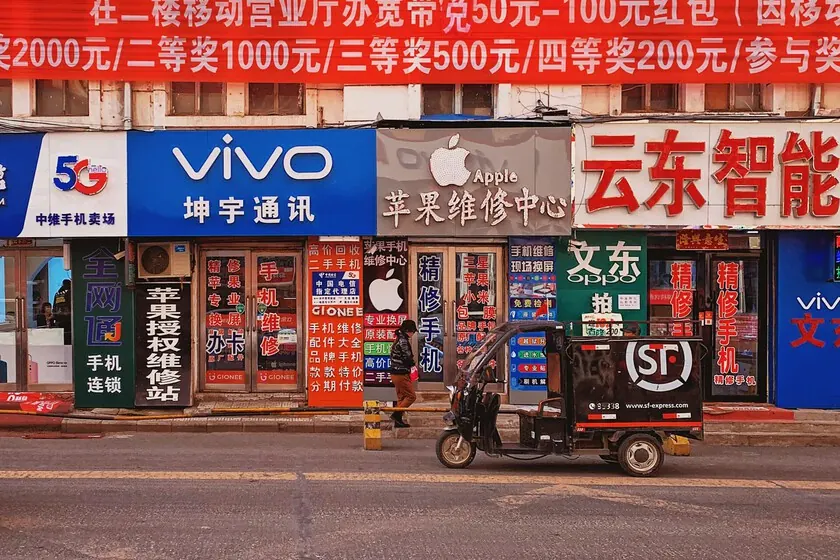
The perception of “Made in China” products has undergone a seismic shift. Once synonymous with cheap, low-quality imitations, Chinese technology is now a formidable force, competing at the premium level in global markets. This transformation, spanning sectors from smartphones and drones to electric vehicles, is not accidental but the result of a deliberate evolution driven by a unique blend of entrepreneurial spirit and strategic planning.
The Genesis: From Shanzhai to Skill Acquisition
In the mid-2000s, the term “shanzhai” emerged to describe small workshops that specialized in reverse-engineering and copying Western electronic products, like early iPhones and iPods. These operations, often lacking extensive resources, formed a collaborative ecosystem, sharing designs and suppliers. This culture of imitation, while viewed with disdain in the West, served as an accelerated industrial training ground within China.
Julio Ceballos, a business consultant specializing in China, explains that shanzhai forced mastery in reverse engineering, product modularization, and the development of an ultra-flexible supply chain. This pragmatic approach to survival and learning laid the groundwork for future innovation. For mobile phones specifically, the advent of single-chip platforms and design houses significantly lowered the barrier to entry, enabling rapid iteration, testing, and incremental improvement.
The Apple Factor and the Premium Pivot
A significant turning point in China’s technological ascent was its deep integration with global tech giants, most notably Apple. When Apple established its manufacturing presence in China with partners like Foxconn, it brought with it an obsessive focus on quality and perfection. Patrick McGee, author of “Apple in China,” notes that Apple’s relentless demands for high-quality components and flawless execution pushed Chinese manufacturers to unprecedented levels of excellence.
This was particularly evident in the smartphone market, where brands like Xiaomi and OnePlus transitioned from budget offerings to premium devices. Products like the Xiaomi Mi 10 Pro, approaching the €1,000 mark, and the OnePlus 8 signaled a new era of Chinese technological ambition. This shift was not just about competing on price but about establishing category leadership in product quality.
Beyond Smartphones: Drones, Appliances, and EVs
The drive for quality extended beyond mobile devices. DJI rapidly dominated the drone market, creating a new product category. In home appliances, brands like Midea, Roborock, and Dreame have established strong positions in microwaves, robot vacuums, and other small appliances.
However, it is in the electric vehicle (EV) sector where China’s transformation has been most pronounced. China is now the world leader in EV sales, not only in volume but also in making EVs popular. The launch of vehicles like the Xiaomi SU7 captured global attention, showcasing Chinese innovation in design, battery technology, software integration, and manufacturing scale. This success is underpinned by a long-term state plan that heavily subsidized the entire EV supply chain, from raw materials to charging infrastructure.
The Industrial Moat and the Future Landscape
China’s rise as the “world’s factory” initially stemmed from its low-cost labor. However, as labor costs increased and competition from countries like Vietnam emerged in lower-cost sectors, China strategically shifted towards automation and higher productivity. The country now installs hundreds of thousands of industrial robots annually.
At the high-tech end, the focus is on manufacturing better, faster, and in greater quantities. China has cultivated “stranglehold” positions in critical industries like lithium-ion batteries, solar panels, high-end electronics, and rare earth minerals. This strategic control over key supply chains makes China a formidable and difficult-to-negotiate trading partner.
Challenges and Perceptions
Despite these advancements, a Western perception of Chinese products still sometimes lags behind reality. According to Ceballos, China needs to build “trust, narrative, and consistency.” This involves conveying durability, security, privacy, and regulatory stability. While Germany sells industrial identity, China is still shedding its historical image as merely a manufacturing hub.
McGee points out that “Made in China” may never achieve the universal quality association of Swiss or German brands because China aims to cover the entire spectrum, from ultra-premium to cheap counterfeits (exemplified by platforms like Temu). For China, quality is a key lever in its broader strategy of controlling global production and supply chains, rather than an end in itself.
Key Facts
| Aspect | Description |
|—|—|
| Origin of “Shanzhai” | Mid-2000s term for Chinese workshops copying Western electronics. |
| Key Driver of Quality Improvement | Integration with global tech companies like Apple, demanding high standards. |
| Leading Sectors | Smartphones, drones, electric vehicles, home appliances, batteries, solar panels. |
| Future Strategy | Focus on automation, productivity, and control of critical global supply chains. |
The ongoing evolution of China’s technological landscape presents both opportunities and challenges for global industries. As the nation continues to innovate and solidify its position in critical supply chains, understanding this transformation is crucial for businesses and consumers alike.
Source: El gran pendulazo del “made in China”: cómo la tecnología china ha pasado de ser sinónimo de barata y mala a premium by Amparo Babiloni, Xataka (https://www.xataka.com/especiales/gran-pendulazo-made-in-china-como-tecnologia-china-ha-pasado-ser-sinonimo-barata-mala-a-premium)
Datos clave
| Punto | Detalle |
|---|---|
| Fuente | Xataka IA |
| Fecha | 2026-07-05T09:31:32+00:00 |
| Tema | El gran pendulazo del "made in China": cómo la tecnología china ha pasado de ser sinónimo de barata y mala a premium |
Source
Xataka IA Publicacion original: 2026-07-05T09:31:32+00:00
Related articles

Nepal’s “Flood-Proof” Google Maps Landmark Is Not a Verified Safety Rating
A house that survived a destructive Himalayan flood reportedly appeared on Google Maps as a “flood-proof” attraction. The viral label should not…
Read article
Perplexity Deploys GPT-6 Astra for End-to-End Production and Communication Systems
Perplexity has integrated OpenAI’s GPT-6 Astra to handle communications, software changes, and production monitoring, reducing the need for frequent human check-ins compared…
Read article
Privacy Reports Put AI Smart Glasses Under Scrutiny in France
French association e-Enfance says it has received more than 20 reports involving women allegedly recorded without their knowledge by connected glasses, bringing…
Read article
Snowflake Publishes GTM Blueprint for Closing the AI-to-Revenue Gap
Snowflake’s sales and marketing teams share a repeatable RAMP framework and four revenue leaks they fixed to turn AI pilots into measurable…
Read articleWiki relacionada

AI Model API Pricing and Context Window Comparison: Current Rates and Limits
Compare the latest API pricing, context windows, and capabilities of leading AI model providers including OpenAI, Anthropic, Google, and Mistral. Practical guidance…
Read article
AI Agent Evaluation Frameworks: How to Benchmark Agentic Systems
A practical guide to evaluating AI agents — from task completion metrics to safety, cost, and robustness. Covers major frameworks, primary sources,…
Read article
LLM Benchmarks Decoded: What MMLU, HumanEval, and GSM8K Actually Measure for Developers
A developer-focused breakdown of the most-cited LLM benchmarks — MMLU, HumanEval, GSM8K, MATH, Chatbot Arena — including what they test, their hidden…
Read article
What Is RAG? A Practical Guide to Retrieval-Augmented Generation in 2025
Retrieval-Augmented Generation (RAG) grounds LLM outputs in external data, reducing hallucinations and enabling enterprise use cases. This guide covers how RAG works,…
Read article