
Microsoft’s AI Core VP on Building Scalable Enterprise Agents
Jay Parikh, Microsoft's VP of AI Core, discusses the challenges and solutions for enterprises deploying AI agents at scale, focusing on reliability, ROI, and Microsoft's end-to-end development system.

Microsoft is pushing beyond the basic “harness” for AI agents, aiming to provide enterprises with a comprehensive system for building, deploying, and running these autonomous systems at scale. Jay Parikh, Microsoft’s Vice President of AI Core, shared insights into this evolution during a recent session at Microsoft Build, highlighting the critical need for demonstrable Return on Investment (ROI) and the challenges of ensuring reliability in increasingly intelligent and autonomous AI models.
The conversation, captured on The Stack Overflow Podcast, delved into the architectural considerations and practical implementation strategies that Microsoft is developing to meet enterprise demands for AI agent deployment. Parikh emphasized that building an agent is only the first step; the real challenge lies in creating an end-to-end system that supports the entire lifecycle of an AI agent within an enterprise environment.
Key facts
| Aspect | Details |
|---|---|
| Speaker | Jay Parikh, VP of AI Core, Microsoft |
| Event | Microsoft Build |
| Focus | Building, deploying, and running AI agents at scale for enterprises. |
| Key Challenges | Demonstrable ROI, reliability, correctness, and managing autonomous AI systems. |
| Microsoft’s Approach | Developing an end-to-end agent development system beyond just the harness. |
Enterprise Readiness for AI Agents
Parikh articulated that enterprises require more than just a framework to connect a large language model (LLM) to external tools. They need robust systems that can manage the complexities of agent execution, including error handling, state management, and ensuring predictable outcomes. The focus is shifting towards practical applications where AI agents can deliver tangible business value, necessitating a clear path to ROI.
This means that the technology needs to move beyond experimental phases and into production-ready solutions. For businesses, the adoption of AI agents hinges on their ability to integrate seamlessly into existing workflows, enhance productivity, and provide measurable improvements. Microsoft’s AI Core team is reportedly working on a system that addresses these enterprise-grade requirements, aiming to simplify the complexities involved in managing autonomous AI.
Ensuring Reliability and Correctness
As AI models become more intelligent and autonomous, the question of their reliability and correctness becomes paramount. Parikh suggested that Microsoft is developing methods to evaluate and ensure that these agents perform as intended, especially in critical business scenarios. This involves not only the accuracy of the AI’s outputs but also its ability to operate within defined parameters and adhere to safety and security guidelines.
The development of these evaluation mechanisms is crucial for building trust in AI agents. Enterprises are hesitant to delegate significant tasks to systems that may produce unpredictable or erroneous results. Therefore, Microsoft’s efforts to build an “end-to-end agent development system that goes past just the harness” implies a focus on sophisticated monitoring, testing, and validation tools.
Implications for Developers and Businesses
For developers, this means a potential shift in focus from purely building agent logic to understanding and leveraging more comprehensive development platforms. The ability to efficiently deploy, monitor, and maintain AI agents will become a key skill. For businesses, it signals a move towards more sophisticated AI integration, where agents can act as intelligent assistants or automated workers, driving efficiency and innovation across various departments.
The insights from Jay Parikh at Microsoft Build underscore a significant trend in the AI landscape: the maturation of AI agent technology from research concepts to practical enterprise solutions. The emphasis on scalability, ROI, and reliability indicates that the next phase of AI adoption will be driven by robust platforms that empower organizations to harness the full potential of autonomous systems.
Source: Stack Overflow Blog, “Building more than just an agent harness”, https://stackoverflow.blog/2026/07/10/building-more-than-just-an-agent-harness/
Source
Stack Overflow Blog Publicacion original: 2026-07-10T07:40:00+00:00
Related articles
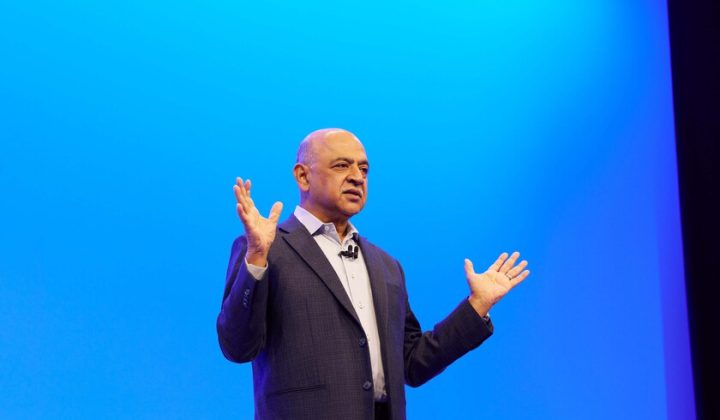
IBM CEO Puts a Number on the Open-Weight AI Value Proposition: 90% of the Performance at 10% of the Token Cost
IBM CEO Arvind Krishna told analysts that open-weight models now deliver about 90% of frontier-model effectiveness while costing between 10% and 25%…
Read article
OCU Finds Spanish Homeowner Communities Overpaying Up to €1,500 on Electricity and €3,515 on Gas—Can AI Tools Optimize Shared Energy Bills?
A new OCU analysis of Spanish homeowner community bills reveals widespread overpayment due to non-competitive tariffs and excess contracted power. Could AI-driven…
Read article
Mayotte fiber dispute does not meet ReviewArticle’s AI news brief
Le Monde reports that France’s competition authority has ordered Orange to suspend part of its fiber-optic rollout in Mayotte. The dispute is…
Read article
DiffEEG Model Uses Diffusion Pre-Training to Improve Seizure Detection from Minimal Labeled Data
Researchers have introduced DiffEEG, a 9.6-million-parameter foundation model that combines denoising diffusion pre-training with reinforcement learning fine-tuning to detect seizure events from…
Read articleWiki relacionada

AI Model API Pricing and Context Window Comparison: Current Rates and Limits
Compare the latest API pricing, context windows, and capabilities of leading AI model providers including OpenAI, Anthropic, Google, and Mistral. Practical guidance…
Read article
AI Agent Evaluation Frameworks: How to Benchmark Agentic Systems
A practical guide to evaluating AI agents — from task completion metrics to safety, cost, and robustness. Covers major frameworks, primary sources,…
Read article
LLM Benchmarks Decoded: What MMLU, HumanEval, and GSM8K Actually Measure for Developers
A developer-focused breakdown of the most-cited LLM benchmarks — MMLU, HumanEval, GSM8K, MATH, Chatbot Arena — including what they test, their hidden…
Read article
What Is RAG? A Practical Guide to Retrieval-Augmented Generation in 2025
Retrieval-Augmented Generation (RAG) grounds LLM outputs in external data, reducing hallucinations and enabling enterprise use cases. This guide covers how RAG works,…
Read article