
Starlink’s Emergency Satellite SMS in Spain Wildfires Shows the Pre-Condition for AI-Driven Disaster Response
Wildfires in central Spain destroyed cell towers, leaving 100,000 people without phone service. Starlink activated free SMS via satellite-to-phone LTE, a technology still in testing. The infrastructure could eventually support AI-powered triage, location sharing, and automated coordination in emergencies.

Wildfires burning across the Spanish regions of Madrid, Ávila and Toledo have forced the evacuation or confinement of nearly 100,000 people, and destroyed terrestrial communications infrastructure. In response, Starlink activated free satellite-to-phone SMS service for affected residents, using standard LTE phones without additional hardware.
The emergency service, confirmed by Starlink on its official X account, is available to customers of MasOrange, Movistar, and Vodafone. Users in the fire zones reported seeing a network labeled “Orange Space X” on their phone interfaces, indicating a direct connection to Starlink’s low-Earth orbit satellites. The service works automatically, requires no app or antenna, and is limited to SMS and a small amount of data — not voice calls or web browsing.
| Detail | Information |
|---|---|
| Affected population | ~100,000 evacuated or confined |
| Operators involved | MasOrange, Movistar, Vodafone (via roaming agreement) |
| Service limit | SMS only, no voice or data |
| Other emergency use | Starlink activated similar free connectivity after a major earthquake earlier in 2026 |
How the emergency activation worked
The fire destroyed cell towers and fiber optic cables, isolating many communities. While Movistar, Orange, and Vodafone worked to restore ground networks, a pre-existing testing program between Orange and Starlink was repurposed for emergency use. According to BandaAncha, Orange had been conducting trials in Valladolid under a special license from the Spanish Ministry to use terrestrial frequencies from space. That trial infrastructure was rapidly extended to the fire zone, with roaming agreements opened to other carriers.
The Spanish Ministry, together with Orange, Movistar, and Starlink, coordinated the activation. Starlink’s satellites communicate directly with standard LTE phones, a technology that is still months away from commercial launch. The service works best with a clear view of the sky, as the satellites require direct line-of-sight in low Earth orbit.
The direct-to-cell LTE infrastructure as a platform for AI
The technology behind this emergency activation — direct satellite-to-phone LTE — is a precondition for advanced AI‑powered disaster response tools. Once the SMS link is established, the same channel can be used to run automated chatbots that triage victims, collect location data, or coordinate rescue teams. For example, an AI agent could send a mass message asking evacuees to reply with “safe” or “needs help,” then parse replies to generate a real‑time heatmap of needs. Such systems already exist in prototype forms for ground networks but lack the satellite backhaul for remote or post‑disaster zones.
Starlink’s current deployment, while limited to plain SMS, demonstrates that the underlying connectivity layer can be activated on demand. The next step — integrating a lightweight AI inference engine on the satellite or a ground‑based server — is a logical extension. SpaceX has not publicly confirmed any AI plans, but the necessary bandwidth and latency (SMS is low‑bandwidth) are compatible with rule‑based or small‑language‑model bots.
Implications for technology sovereignty and AI governance
The event also highlights a dependency concern: the direct‑to‑cell service relies on a private US company, SpaceX, operated by a non‑European entity. European projects such as OneWeb, SES, and Hispasat are building satellite constellations, but none yet offers consumer direct‑to‑phone LTE. If AI‑powered emergency response becomes standard, European governments will need to decide whether to build sovereign alternatives or license the technology from SpaceX. The Spanish government’s decision to grant a temporary license and accelerate the trial shows the regulatory flexibility possible during crises, but it also raises questions about long‑term control over critical communications infrastructure and the data that flows through it.
What remains unclear
Several details are unconfirmed. Starlink and the operators have not disclosed the exact number of users who accessed the service, nor the duration of the activation. The company has not said whether the trial will be extended to other regions or commercialized sooner. No official statement has been released on whether the technology will be opened to third‑party AI developers in the future. The Spanish Ministry has not commented on any data‑sharing rules that would apply if an AI service were deployed over the same link.
Source: Xataka IA – “Ante los incendios que arrasan Madrid, Ávila y Toledo, Starlink apoya gratis con su servicio de internet satelital” (https://www.xataka.com/telefono-movil/incendios-que-arrasan-madrid-avila-toledo-starlink-apoya-gratis-su-servicio-internet-satelital). Additional details on the trial program from BandaAncha.
Source
Xataka IA Publicacion original: 2026-07-27T11:20:24+00:00
Related articles
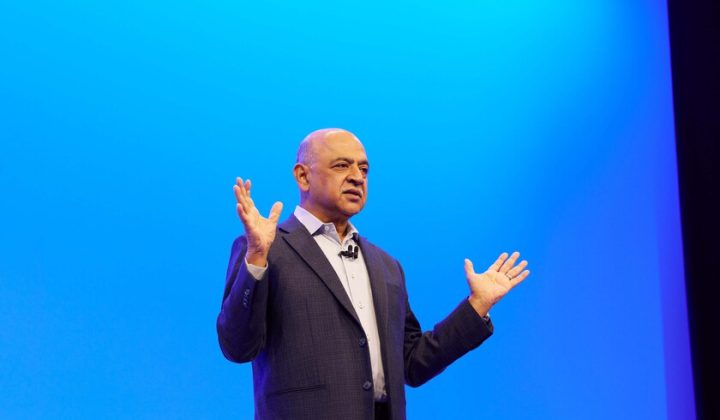
IBM CEO Puts a Number on the Open-Weight AI Value Proposition: 90% of the Performance at 10% of the Token Cost
IBM CEO Arvind Krishna told analysts that open-weight models now deliver about 90% of frontier-model effectiveness while costing between 10% and 25%…
Read article
OCU Finds Spanish Homeowner Communities Overpaying Up to €1,500 on Electricity and €3,515 on Gas—Can AI Tools Optimize Shared Energy Bills?
A new OCU analysis of Spanish homeowner community bills reveals widespread overpayment due to non-competitive tariffs and excess contracted power. Could AI-driven…
Read article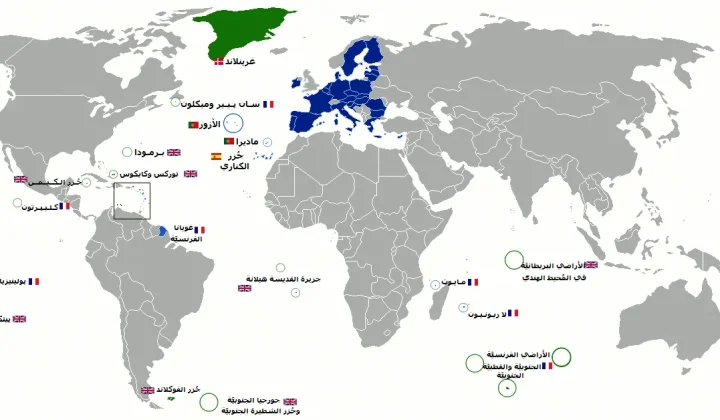
Mayotte fiber dispute does not meet ReviewArticle’s AI news brief
Le Monde reports that France’s competition authority has ordered Orange to suspend part of its fiber-optic rollout in Mayotte. The dispute is…
Read article
DiffEEG Model Uses Diffusion Pre-Training to Improve Seizure Detection from Minimal Labeled Data
Researchers have introduced DiffEEG, a 9.6-million-parameter foundation model that combines denoising diffusion pre-training with reinforcement learning fine-tuning to detect seizure events from…
Read articleWiki relacionada

AI Model API Pricing and Context Window Comparison: Current Rates and Limits
Compare the latest API pricing, context windows, and capabilities of leading AI model providers including OpenAI, Anthropic, Google, and Mistral. Practical guidance…
Read article
AI Agent Evaluation Frameworks: How to Benchmark Agentic Systems
A practical guide to evaluating AI agents — from task completion metrics to safety, cost, and robustness. Covers major frameworks, primary sources,…
Read article
LLM Benchmarks Decoded: What MMLU, HumanEval, and GSM8K Actually Measure for Developers
A developer-focused breakdown of the most-cited LLM benchmarks — MMLU, HumanEval, GSM8K, MATH, Chatbot Arena — including what they test, their hidden…
Read article
What Is RAG? A Practical Guide to Retrieval-Augmented Generation in 2025
Retrieval-Augmented Generation (RAG) grounds LLM outputs in external data, reducing hallucinations and enabling enterprise use cases. This guide covers how RAG works,…
Read article