
Alibaba’s Qwen3.8-Max Takes Aim at U.S. Frontier AI Models Despite Chip Curbs
Alibaba has unveiled Qwen3.8-Max, a 2.4-trillion-parameter open-weight model that it says matches U.S. rivals in key benchmarks — a fresh sign that chip export controls have not stopped China’s AI labs.

Alibaba has introduced Qwen3.8-Max, the company’s most ambitious AI model to date, in a move that strengthens the argument that U.S. export controls on advanced chips have not kept Chinese labs out of the frontier-model race.
The announcement, reported by Xataka on August 3, 2026, arrives weeks after other Chinese releases such as GLM-5.2 and Kimi K3. Alibaba claims Qwen3.8-Max can compete with leading U.S. models, but those results come from internal benchmarks and have not yet been confirmed by independent testing.
What Alibaba announced
Qwen3.8-Max is a multimodal model with a context window of one million tokens. According to Alibaba, it uses a Mixture-of-Experts architecture with 2.4 trillion total parameters, activating around 95 billion parameters per request. That is close to Kimi K3’s reported 2.8 trillion total parameters, and far larger than models Alibaba was shipping about ten months ago.
The company also said it will release Qwen3.8-27B next week and open the weights for both models. That marks a return to the open-weight philosophy Alibaba had temporarily set aside in earlier releases.
| Item | Detail |
|---|---|
| Model | Qwen3.8-Max |
| Parameters | 4T total, ~95B active per request |
| Context window | 1M tokens |
| Form | Multimodal, MoE architecture |
| Claimed rivals | Fable 5, GPT-5.6 Sol |
| Open release | Qwen3.8-27B and weights next week, per Alibaba |
| Verification | Internal benchmarks only so far |
How the benchmarks look
Alibaba’s internal tests show Qwen3.8-Max trading blows with Fable 5 and GPT-5.6 Sol, according to the Xataka report. It trails in some benchmarks but beats both models in others. The model is said to perform especially well in software engineering, terminal use, visual perception, and control of computers and mobile devices.
That matters because those tests are designed to measure agent-style work, not just chat responses. The demo video highlights tasks such as chip design and contract drafting while a human steps away. In other words, Alibaba is positioning the model as a coworker that can operate tools and complete long-running tasks, not simply answer questions.
Independent labs have not yet verified those claims. Until they do, the benchmark numbers should be treated as vendor-reported results.
What this says about chip restrictions
The U.S. began restricting China’s access to advanced chips and semiconductor manufacturing equipment in 2022, and later expanded those controls in the name of national security. The intended effect was to make it much harder for Chinese labs to build competitive AI systems.
If Qwen3.8-Max performs anywhere near Alibaba’s claims, the strategy has clearly not stopped Chinese frontier-model development. The report argues that the restrictions pushed China to reduce its dependence on U.S. technology and close the gap faster than many expected. It is now unclear whether U.S. frontier models are decisively more powerful than Kimi K3 or Qwen3.8-Max.
The bigger picture is not limited to Alibaba. Z.ai shipped GLM-5.2 recently, Moonshot AI followed with Kimi K3, and DeepSeek V4 has a new Flash beta focused on price-performance. The pace of Chinese releases has accelerated sharply in the past two months.
Why open weights matter for developers
For developers, the planned Qwen3.8-27B release is the more practical piece of news. A 27-billion-parameter open-weight model is far easier to run locally on PCs and laptops than a 2.4-trillion-parameter system. Alibaba’s decision to release weights again means teams can deploy a private AI model without depending on a hosted API.
That also changes the competitive picture. Chinese labs have historically competed as the cheaper open-source alternative to U.S. models. If Qwen3.8-Max really approaches Fable 5 or GPT-5.6 Sol at a fraction of the price, the old split between premium U.S. models and budget Chinese models starts to break down.
There is also a business angle. Alibaba has its own cloud infrastructure, and Qwen models can serve as a gateway into Alibaba Cloud. If customers adopt Qwen for its performance or price, they may end up using Alibaba’s cloud services as well. That puts Alibaba in a stronger position against API-only model providers.
What remains unclear
The biggest open question is verification. Alibaba’s claimed benchmark results need to be checked by independent evaluators before they can be treated as fact. Past model announcements have sometimes looked stronger in vendor tests than in third-party testing.
It is also unclear what “open weights” will mean in practice: which license terms will apply, whether the largest model will be fully usable outside Alibaba’s cloud, and what hardware will be needed to run even the smaller 27B version effectively.
Finally, the chip-control story is more nuanced than a simple failure. U.S. export rules may still raise costs and add friction to Chinese AI development, even if they have not prevented major releases. The long-term impact will only become visible as more models ship and more independent results come in.
For now, the practical next step is to wait for the Qwen3.8-27B release, check the license, and watch for third-party benchmark runs. The gap between Chinese and U.S. frontier models is getting harder to measure — and harder to assume.
Source: https://www.xataka.com/robotica-e-ia/eeuu-restringio-chips-para-frenar-ia-china-alibaba-acaba-ensenar-poco-que-ha-funcionado
Source
Xataka IA Publicacion original: 2026-08-03T10:45:43+00:00
Related articles
IBM CEO Puts a Number on the Open-Weight AI Value Proposition: 90% of the Performance at 10% of the Token Cost
IBM CEO Arvind Krishna told analysts that open-weight models now deliver about 90% of frontier-model effectiveness while costing between 10% and 25%…
Read article
OCU Finds Spanish Homeowner Communities Overpaying Up to €1,500 on Electricity and €3,515 on Gas—Can AI Tools Optimize Shared Energy Bills?
A new OCU analysis of Spanish homeowner community bills reveals widespread overpayment due to non-competitive tariffs and excess contracted power. Could AI-driven…
Read article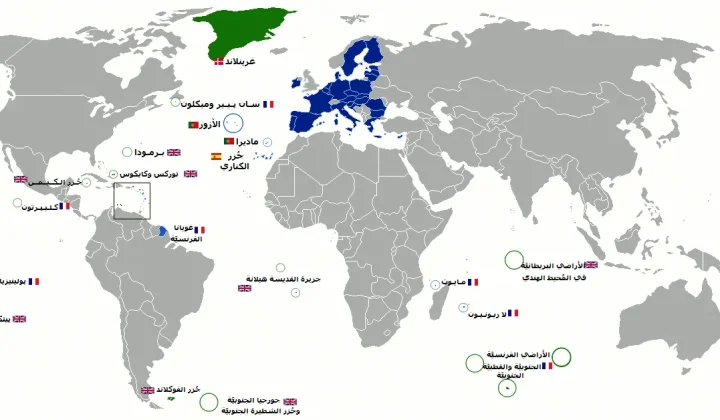
Mayotte fiber dispute does not meet ReviewArticle’s AI news brief
Le Monde reports that France’s competition authority has ordered Orange to suspend part of its fiber-optic rollout in Mayotte. The dispute is…
Read article
DiffEEG Model Uses Diffusion Pre-Training to Improve Seizure Detection from Minimal Labeled Data
Researchers have introduced DiffEEG, a 9.6-million-parameter foundation model that combines denoising diffusion pre-training with reinforcement learning fine-tuning to detect seizure events from…
Read articleWiki relacionada

AI Model API Pricing and Context Window Comparison: Current Rates and Limits
Compare the latest API pricing, context windows, and capabilities of leading AI model providers including OpenAI, Anthropic, Google, and Mistral. Practical guidance…
Read article
AI Agent Evaluation Frameworks: How to Benchmark Agentic Systems
A practical guide to evaluating AI agents — from task completion metrics to safety, cost, and robustness. Covers major frameworks, primary sources,…
Read article
LLM Benchmarks Decoded: What MMLU, HumanEval, and GSM8K Actually Measure for Developers
A developer-focused breakdown of the most-cited LLM benchmarks — MMLU, HumanEval, GSM8K, MATH, Chatbot Arena — including what they test, their hidden…
Read article
What Is RAG? A Practical Guide to Retrieval-Augmented Generation in 2025
Retrieval-Augmented Generation (RAG) grounds LLM outputs in external data, reducing hallucinations and enabling enterprise use cases. This guide covers how RAG works,…
Read article