
Taliban Rule at Five Years: Rising Unrest, Falling Economy, and a Growing Resistance
Five years after seizing Kabul, the Taliban face mounting armed resistance, a worsening humanitarian crisis, and deepening international isolation. The UN reports a 57.7% year-on-year increase in verified security incidents.
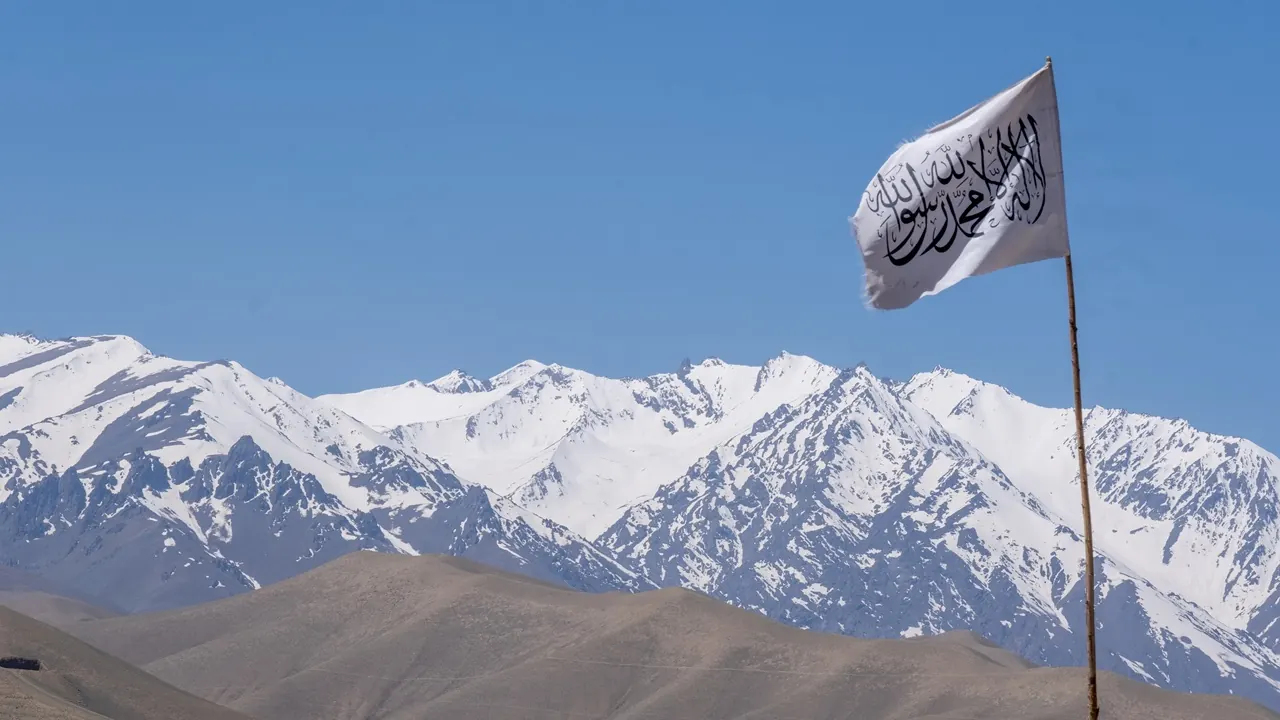
Five years after the Taliban captured Kabul on August 15, 2021, a detailed assessment published by The National Interest and corroborated by United Nations data paints a picture of a regime that has failed to deliver on its core promises. Instead of stability, the country is experiencing a sharp rise in armed opposition, a deepening economic crisis, and growing international isolation.
This analysis, grounded in official UN reporting and economic data, examines the key findings and what they mean for regional security and the future of Afghanistan.
Key facts
| Metric | Data | Source |
|---|---|---|
| Years since Taliban takeover | 5 (August 15, 2021) | The National Interest |
| Annual increase in verified security incidents (2025-2026) | 7% | UN Secretary-General report |
| Population in dire need of humanitarian assistance (2026) | 9 million (nearly 45%) | UN 2026 appeal |
| GDP per capita change (2025) | -5.6% | World Bank |
Armed resistance and insecurity are on the rise
The most significant shift identified is the surge in armed opposition. For the first four years of Taliban rule, anti-Taliban resistance existed but was largely fragmented and lacked national momentum. The analysis argues that 2025 and 2026 have broken that pattern.
The United Nations Secretary-General’s own reporting confirms this. Between February and April 2026, armed opposition groups claimed responsibility for 18 attacks across 10 Afghan provinces, 16 of which were independently verified by UN monitors. Overall, the UN reported a 57.7% year-on-year increase in security incidents from 2025. The analysis notes this is likely a conservative floor, as it only captures incidents the UN could verify.
A new generation of resistance is emerging, led by former officers of the Afghanistan National Defense and Security Forces (ANDSF) who came of age during the post-2001 era. These groups are more localized and younger than previous resistance movements. While they are not yet a national force capable of holding major urban centers, the trend line is clear: the Taliban can no longer act as if no serious internal challenge exists.
Humanitarian and economic crisis deepens
The Taliban’s economic record is equally bleak. The World Bank reports that while headline growth inched upward in 2025, GDP per capita fell by 5.6%. This was driven by refugee inflows from Pakistan and Iran that outpaced the economy’s ability to absorb them.
The human cost is staggering. The UN’s 2026 humanitarian appeal estimated that 21.9 million people—nearly 45% of Afghanistan’s population—are in dire need of assistance. The analysis describes the situation for women and girls as “gender apartheid,” a term formalized by a UN special rapporteur in 2023, which has only worsened in subsequent years.
Regional and international fallout
The Taliban’s rule has not brought the promised peace. The group has turned against its former benefactor, Pakistan, by exporting the Tehreek-e-Taliban Pakistan (TTP) insurgency back across the border. According to the Global Terrorism Index, Pakistan is now the country most affected by terrorism in the world in 2026, driven largely by this newfound animosity. Washington’s own accounting found that terrorism-related attacks and casualties inside Pakistan rose more than 50% in 2023 alone, a trend that has continued.
Internationally, Afghanistan has become a safe haven for multiple terrorist groups. The analysis notes that the Taliban have squandered every opportunity to form a functional government or win popular legitimacy.
What this means for policy and security observers
For those tracking global security, AI-driven geopolitical risk models, or the intersection of technology and conflict, this analysis provides a critical data point. The failure of the Taliban to stabilize Afghanistan has direct consequences for regional security, counter-terrorism efforts, and humanitarian planning. The rise of a new, younger resistance, combined with verified UN data on increasing violence, suggests the situation is not static and is likely to deteriorate further.
Source: The National Interest – Five Years of Taliban Misrule
Source
nationalinterest.org Publicacion original: 2026-08-15T04:01:00+00:00
Related articles
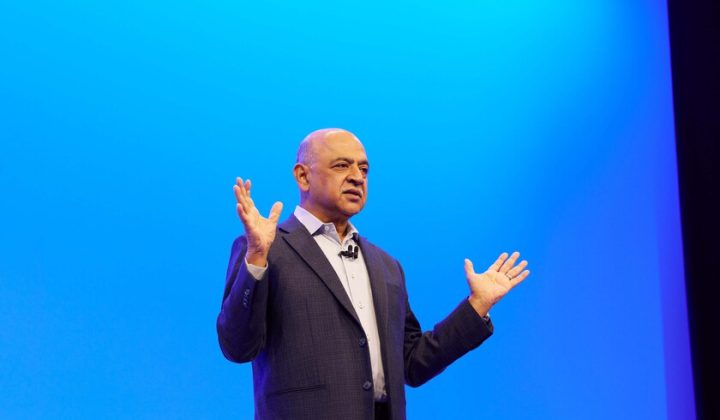
IBM CEO Puts a Number on the Open-Weight AI Value Proposition: 90% of the Performance at 10% of the Token Cost
IBM CEO Arvind Krishna told analysts that open-weight models now deliver about 90% of frontier-model effectiveness while costing between 10% and 25%…
Read article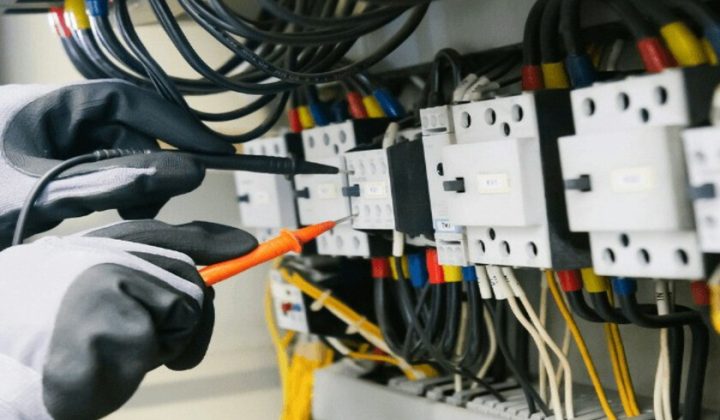
OCU Finds Spanish Homeowner Communities Overpaying Up to €1,500 on Electricity and €3,515 on Gas—Can AI Tools Optimize Shared Energy Bills?
A new OCU analysis of Spanish homeowner community bills reveals widespread overpayment due to non-competitive tariffs and excess contracted power. Could AI-driven…
Read article
Mayotte fiber dispute does not meet ReviewArticle’s AI news brief
Le Monde reports that France’s competition authority has ordered Orange to suspend part of its fiber-optic rollout in Mayotte. The dispute is…
Read article
DiffEEG Model Uses Diffusion Pre-Training to Improve Seizure Detection from Minimal Labeled Data
Researchers have introduced DiffEEG, a 9.6-million-parameter foundation model that combines denoising diffusion pre-training with reinforcement learning fine-tuning to detect seizure events from…
Read articleWiki relacionada

AI Model API Pricing and Context Window Comparison: Current Rates and Limits
Compare the latest API pricing, context windows, and capabilities of leading AI model providers including OpenAI, Anthropic, Google, and Mistral. Practical guidance…
Read article
AI Agent Evaluation Frameworks: How to Benchmark Agentic Systems
A practical guide to evaluating AI agents — from task completion metrics to safety, cost, and robustness. Covers major frameworks, primary sources,…
Read article
LLM Benchmarks Decoded: What MMLU, HumanEval, and GSM8K Actually Measure for Developers
A developer-focused breakdown of the most-cited LLM benchmarks — MMLU, HumanEval, GSM8K, MATH, Chatbot Arena — including what they test, their hidden…
Read article
What Is RAG? A Practical Guide to Retrieval-Augmented Generation in 2025
Retrieval-Augmented Generation (RAG) grounds LLM outputs in external data, reducing hallucinations and enabling enterprise use cases. This guide covers how RAG works,…
Read article