
Soviet nuclear lighthouses: the automated Arctic network that became a radiation risk
Short of keepers and power lines, the USSR automated Arctic lighthouses with radioactive generators. After the collapse, the abandoned beacons turned into a radiation cleanup problem with modern lessons.
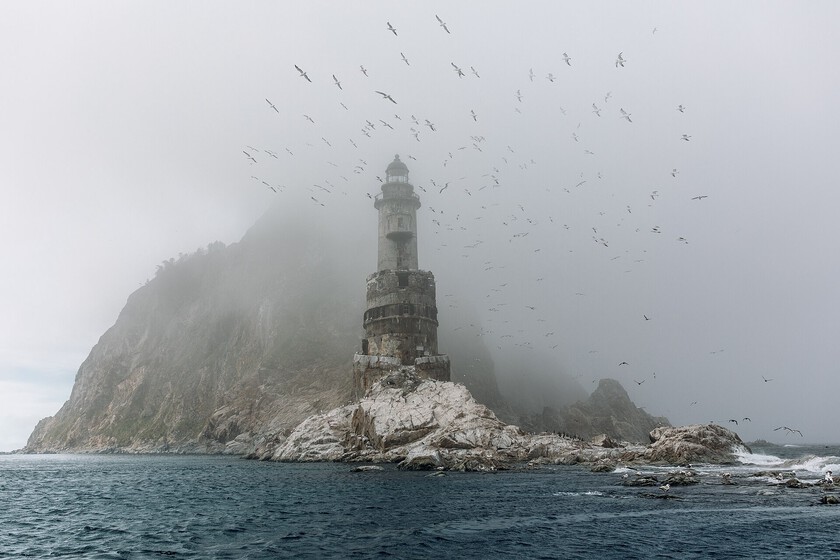
In the middle of the twentieth century, the Soviet Union had a practical problem along its Arctic coast: it needed navigation beacons along roughly 24,000 km of shoreline, but not enough workers were willing to live in frozen towers far from any settlement. Moscow’s answer was not to improve the working conditions. It was to remove the keepers entirely and power the lighthouses with radioactive generators.
That decision, reconstructed by Carlos Prego for Xataka and based on reporting by Tom Hale at IFL Science, has become one of the most cited examples of autonomous infrastructure that was not built to be decommissioned. With melting ice making the Arctic again relevant as a shipping corridor, the story is more than a Cold War curiosity.
The Arctic route demanded a different kind of keeper
The Northern Sea Route became strategically important after industrialization. In summer, when ice cleared, it offered a shipping corridor between Asia and Europe. Moscow controlled more than 24,000 km of Arctic coastline, but the lighthouses needed along that route sat in places with no permanent housing, no regular crews, and no electrical grid. Even Stalinist authorities did not consider it realistic to staff the towers.
The first lighthouses in the region appeared in the 1930s. The shift to radioisotope power came later, mostly in the 1960s, when the USSR began replacing manually operated beacons with nuclear generators.
How RTGs solved the manpower problem
The chosen solution was the radioisotope thermoelectric generator, or RTG. These devices used strontium-90, cesium-137, or cerium-144, and converted heat from radioactive decay into electricity. According to the Xataka report, each RTG could provide a steady voltage of 7 to 30 volts and up to 80 watts of power, while remaining active for decades.
The Norwegian environmental group Bellona notes that strontium-90 has a decay period of about three decades. That meant Arctic lighthouses could run for years without inspections. The fuel concept was similar in spirit to the power systems used on Voyager, Cassini, and New Horizons, although the United States and the Soviet Union used different materials.
Conflicting counts of radioactive beacons
The number of RTG-powered lighthouses is not firmly established. Hale says there were hundreds of automated towers, including close to 200 RTG-powered lighthouses in the Murmansk and Arkhangelsk regions when the USSR collapsed in 1991. The number on the far northern coast was never fully inventoried.
Bellona estimated in 2003 that Russia had about 1,000 RTGs, most of them powering lighthouses. The group calculated that 80% operated along the Northern Sea Route. A more recent analysis cited by Xataka and published by The Barents Observer gives a lower figure, describing hundreds of navigation beacons on the Russian Arctic coast. The gap between these estimates remains unresolved.
Radiation incidents after the USSR collapsed
After 1991, many of these sites were simply left behind. The generators did not stop being dangerous just because the state that installed them disappeared.
In 1999, an RTG from an old lighthouse showed up in a bus stop in Kingisepp, not far from the Estonian border, emitting radiation. In 2001, loggers in the Inguri valley found hot ceramic pieces later identified as two Soviet RTGs. In 2003, Bellona reported two vandalized generators on the Kola Peninsula. Murmansk authorities called the incident a “radioactive accident.” The likely motive was theft of valuable metals such as stainless steel, lead, and aluminum, but the vandals also took depleted-uranium shielding used to protect the strontium-90 core.
Cleanup and the shift to solar alternatives
Norway launched an initiative in the late 1990s to remove problematic RTGs in northwestern Russia. Within a decade, workers collected about 60 old generators from the Kola Peninsula. In the early 2000s, the United States also offered help to replace nuclear lighthouses, as officials already discussed moving to cheaper alternatives such as solar batteries.
The history is not only about cold war technology. It is a concrete case of what happens when autonomous systems are deployed without a clear end-of-life owner.
The automation lesson for remote systems
For engineers working on remote beacons, unattended sensors, or AI-assisted monitoring, the Soviet RTG story is a reminder that “set-and-forget” is not a maintenance plan. The generators did what they were designed to do: produce steady power for decades without a human on site. What failed was the surrounding system — inventory, access control, decommissioning, and accountability after the operating organization collapsed.
Modern remote systems still need a defined owner for their full lifecycle. The hardware may run unattended, but the risk does not disappear.
What remains unclear
The exact number of RTGs still deployed, lost, or awaiting disposal is not public. Available estimates conflict: IFL Science reports hundreds of towers, Bellona counted about 132 on the northern coast in the early 1990s and later estimated around 1,000 RTGs across Russia, and The Barents Observer analysis refers to hundreds of navigation beacons. No complete official inventory has been published.
The record also depends heavily on journalistic and NGO reporting, not on Russian government documents. That makes the scale of the remaining problem hard to verify precisely.
Source: Carlos Prego, “La URSS quiso conquistar el océano Ártico levantando faros nucleares en lugares remotos. Para sorpresa de nadie, acabó mal,” Xataka, August 15, 2026, https://www.xataka.com/magnet/urss-quiso-conquistar-oceano-artico-levantando-faros-nucleares-lugares-remotos-para-sorpresa-nadie-acabo-mal
Datos clave
| Punto | Detalle |
|---|---|
| Fuente | Xataka IA |
| Fecha | 2026-08-15T14:00:38+00:00 |
| Tema | La URSS quiso conquistar el océano Ártico levantando faros nucleares en lugares remotos. Para sorpresa de nadie, acabó m |
Source
Xataka IA Publicacion original: 2026-08-15T14:00:38+00:00
Related articles

IBM CEO Puts a Number on the Open-Weight AI Value Proposition: 90% of the Performance at 10% of the Token Cost
IBM CEO Arvind Krishna told analysts that open-weight models now deliver about 90% of frontier-model effectiveness while costing between 10% and 25%…
Read article
OCU Finds Spanish Homeowner Communities Overpaying Up to €1,500 on Electricity and €3,515 on Gas—Can AI Tools Optimize Shared Energy Bills?
A new OCU analysis of Spanish homeowner community bills reveals widespread overpayment due to non-competitive tariffs and excess contracted power. Could AI-driven…
Read article
Mayotte fiber dispute does not meet ReviewArticle’s AI news brief
Le Monde reports that France’s competition authority has ordered Orange to suspend part of its fiber-optic rollout in Mayotte. The dispute is…
Read article
DiffEEG Model Uses Diffusion Pre-Training to Improve Seizure Detection from Minimal Labeled Data
Researchers have introduced DiffEEG, a 9.6-million-parameter foundation model that combines denoising diffusion pre-training with reinforcement learning fine-tuning to detect seizure events from…
Read articleWiki relacionada

AI Model API Pricing and Context Window Comparison: Current Rates and Limits
Compare the latest API pricing, context windows, and capabilities of leading AI model providers including OpenAI, Anthropic, Google, and Mistral. Practical guidance…
Read article
AI Agent Evaluation Frameworks: How to Benchmark Agentic Systems
A practical guide to evaluating AI agents — from task completion metrics to safety, cost, and robustness. Covers major frameworks, primary sources,…
Read article
LLM Benchmarks Decoded: What MMLU, HumanEval, and GSM8K Actually Measure for Developers
A developer-focused breakdown of the most-cited LLM benchmarks — MMLU, HumanEval, GSM8K, MATH, Chatbot Arena — including what they test, their hidden…
Read article
What Is RAG? A Practical Guide to Retrieval-Augmented Generation in 2025
Retrieval-Augmented Generation (RAG) grounds LLM outputs in external data, reducing hallucinations and enabling enterprise use cases. This guide covers how RAG works,…
Read article