
European Workers Report Remote Work Hindering Career Advancement Due to Reduced Visibility
A new study indicates that remote work may be limiting career progression for European employees, as managers tend to favor those they see in person for promotions and salary increases.

A significant portion of European workers feel that remote work arrangements are diminishing their professional opportunities, primarily due to a lack of visibility with their managers. This sentiment is increasingly leading to concerns that in-office employees are being favored for promotions and salary increases simply because they are physically present.
The debate surrounding productivity in remote versus in-office settings continues, with some experts noting a polarization of opinions. However, new research suggests a tangible disadvantage for remote workers, stemming from a simple, yet impactful, factor: proximity. Employees not physically located near their supervisors or headquarters are reporting fewer opportunities, not due to performance issues, but because they are less visible.
Impact of Visibility on Promotions
A study published in the journal Work, Employment and Society, which analyzed data from 1,000 UK managers, experimentally demonstrated that when managers lack direct performance data on remote employees, these individuals are significantly less likely to be promoted or receive pay raises. Crucially, this penalty disappears when objective performance data, identical to that of in-office employees, is provided to managers.
This finding resonates with a recent study by Deel, a global HR platform. Their research indicated that 36% of workers in Europe are concerned that physical distance is harming their careers. Furthermore, over half (52%) reported experiencing anxiety at the thought of their commute exceeding an hour, suggesting a desire for greater flexibility in location. Despite this, many young professionals are opting for office roles, partly due to these career concerns.
Workers’ Desire for Flexibility vs. Managerial Preferences
The Deel study also revealed that many European employees are open to relocating further from city centers or even to different countries. These moves are motivated by factors such as more affordable housing and proximity to family. Some are even willing to work unconventional hours to accommodate international time differences.
However, a significant number of professionals feel that performance alone is insufficient for career growth. They have observed that managers, consciously or not, tend to reward employees they see more frequently, with informal office interactions often translating into career opportunities. This dynamic creates a perceived divide between those who are physically present and those who are not.
The Dell Example
An illustrative case is Dell, which openly informed employees that those unwilling to return to the office would forgo opportunities for internal advancement. The company also mandated in-person attendance for employees living within an hour’s commute of an office. This approach, as reported by Forbes, has contributed to a bifurcation of the workforce into two groups: those perceived as promotable due to their proximity, and those excluded from key decisions because they chose to live elsewhere.
Rethinking Traditional Models
Experts involved in the Deel report caution that companies assuming constant in-person availability misunderstand their workforce and limit their talent pool. As remote and hybrid work become more common, traditional notions of office proximity require a fundamental reevaluation. Expanding hiring approaches and workplace culture is seen as a necessary step to tap into new talent streams, especially for organizations facing skill shortages.
The desire for remote work is often driven by a wish to live closer to nature (31%), reduce living expenses (28%), and spend more time with family (26%). This aspiration, however, often clashes with what many managers perceive as a need for control, even if it’s not strictly necessary for operational efficiency.
Managerial Bias in Hiring
A substantial majority of managers (60%) indicated they would prioritize hiring candidates within their own time zone or a reasonable commuting distance. A similar percentage (58%) admitted this mindset complicates their ability to find the necessary skills, highlighting a potential disconnect between management preferences and strategic talent acquisition.
Datos clave
| Aspect | Finding |
|—|—|
| Concern about career impact of remote work | 36% of European workers |
| Anxiety about long commutes | 52% of European workers |
| Managerial preference for proximity | 60% of managers prioritize local hires |
| Impact of visibility on promotions | Remote workers less likely to be promoted without objective data |
This development matters to ReviewArticle readers as it highlights a significant, emerging challenge in the modern workplace. While remote and hybrid work offer flexibility, the research suggests a potential for unintended consequences that could disadvantage a large segment of the workforce. Understanding these dynamics is crucial for both employees navigating their careers and employers striving to create equitable and effective work environments.
Fuente: Muchos trabajadores europeos afirman que teletrabajar les está quitando oportunidades: sus jefes ascienden a la gente a la que ven – Xataka
Datos clave
| Punto | Detalle |
|---|---|
| Fuente | Xataka IA |
| Fecha | 2026-05-30T18:00:45+00:00 |
| Tema | Muchos trabajadores europeos afirman que teletrabajar les está quitando oportunidades: sus jefes ascienden a la gente a |
Source
Xataka IA Publicacion original: 2026-05-30T18:00:45+00:00
Related articles
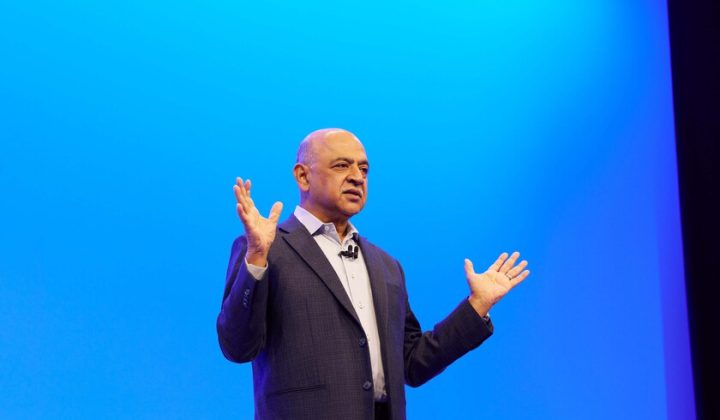
IBM CEO Puts a Number on the Open-Weight AI Value Proposition: 90% of the Performance at 10% of the Token Cost
IBM CEO Arvind Krishna told analysts that open-weight models now deliver about 90% of frontier-model effectiveness while costing between 10% and 25%…
Read article
OCU Finds Spanish Homeowner Communities Overpaying Up to €1,500 on Electricity and €3,515 on Gas—Can AI Tools Optimize Shared Energy Bills?
A new OCU analysis of Spanish homeowner community bills reveals widespread overpayment due to non-competitive tariffs and excess contracted power. Could AI-driven…
Read article
Mayotte fiber dispute does not meet ReviewArticle’s AI news brief
Le Monde reports that France’s competition authority has ordered Orange to suspend part of its fiber-optic rollout in Mayotte. The dispute is…
Read article
DiffEEG Model Uses Diffusion Pre-Training to Improve Seizure Detection from Minimal Labeled Data
Researchers have introduced DiffEEG, a 9.6-million-parameter foundation model that combines denoising diffusion pre-training with reinforcement learning fine-tuning to detect seizure events from…
Read articleWiki relacionada

AI Model API Pricing and Context Window Comparison: Current Rates and Limits
Compare the latest API pricing, context windows, and capabilities of leading AI model providers including OpenAI, Anthropic, Google, and Mistral. Practical guidance…
Read article
AI Agent Evaluation Frameworks: How to Benchmark Agentic Systems
A practical guide to evaluating AI agents — from task completion metrics to safety, cost, and robustness. Covers major frameworks, primary sources,…
Read article
LLM Benchmarks Decoded: What MMLU, HumanEval, and GSM8K Actually Measure for Developers
A developer-focused breakdown of the most-cited LLM benchmarks — MMLU, HumanEval, GSM8K, MATH, Chatbot Arena — including what they test, their hidden…
Read article
What Is RAG? A Practical Guide to Retrieval-Augmented Generation in 2025
Retrieval-Augmented Generation (RAG) grounds LLM outputs in external data, reducing hallucinations and enabling enterprise use cases. This guide covers how RAG works,…
Read article