
AI Fuels Demand Surge, Straining Gas Turbine Industry and Prompting New Investment
The insatiable energy demands of artificial intelligence are creating unprecedented strain on conventional power generation, leading to significant delays in gas turbine deployment and attracting substantial investment in new energy infrastructure solutions.
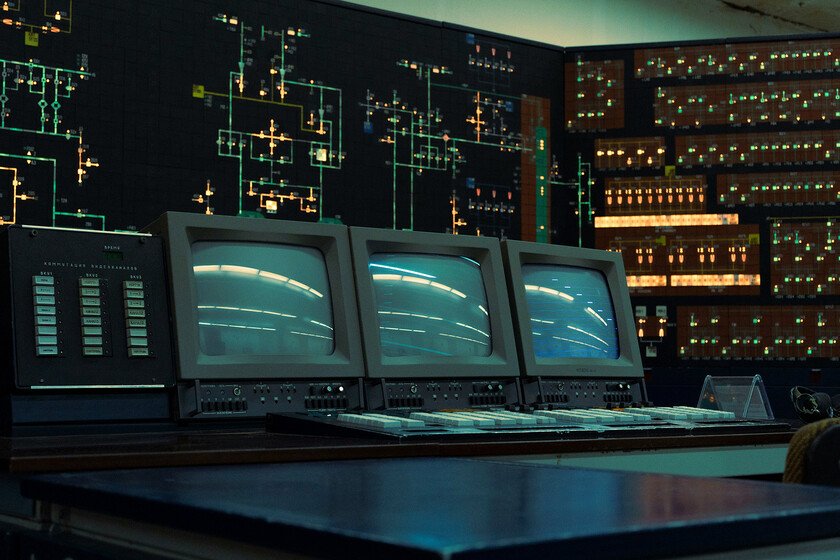
The rapid expansion of artificial intelligence has created an unexpected bottleneck in a seemingly unrelated industry: gas turbines. The immense electricity consumption of AI data centers is driving a surge in demand for power generation, leading to significant delays in the deployment of even conventional gas turbines, with waitlists extending into the early 2030s. This energy crunch is also spurring new investment strategies focused on rebuilding the physical economy and developing robust energy infrastructure.
Mike Schroepfer, former Chief Technology Officer at Meta, has launched Gigascale Capital with $250 million to invest in founders “rebuilding the physical economy.” This initiative comes at a time when the “Climate Tech” sector has faced skepticism from investors due to unfulfilled business promises. Schroepfer’s approach, however, is not driven by environmental ideology but by market competitiveness, focusing on solutions that are cheaper, faster, and more reliable.
The Energy Demand Dilemma
Artificial intelligence’s growing appetite for electricity is fundamentally altering the energy landscape. Data centers, the backbone of AI operations, require vast amounts of power, overwhelming existing electrical grids. This has led to a structural shift, where many companies are now exploring self-generation of electricity, a trend Schroepfer refers to as “Bring-Your-Own-Power” (BYOP), which he believes will become a critical competitive advantage for energy-intensive industries.
However, even traditional power generation methods are struggling to keep up. The lead times for gas turbines, a workhorse of the electricity sector, now stretch to the early 2030s. This scarcity is not just a result of green technology adoption but a broader issue of insufficient energy supply. Factors contributing to this strain include accelerated electrification, industrial reshoring, the widespread deployment of AI, and increasingly extreme weather events, all pressuring aging physical infrastructure.
Gigascale Capital’s Strategic Focus
Founded in 2023 by Schroepfer, Victoria Beasley, and Evaline Tsai, Gigascale Capital emerged from Schroepfer’s extensive study of the climate sector during the pandemic. The fund has already built a portfolio of over 25 companies across diverse areas such as clean energy, grid infrastructure, critical minerals, advanced manufacturing, and “physical AI”—AI applications for real-world systems.
Schroepfer’s investment thesis is rooted in the principle that technological adoption scales when solutions are economically superior. He draws a parallel to the solar industry, which saw a massive increase in production capacity because its cost decreased. Gigascale Capital backs companies that offer demonstrable improvements in cost, speed, and reliability, with climate impact being a positive byproduct of more efficient systems.
Investing in the Future of Power
The fund’s portfolio highlights its focus on next-generation energy solutions and AI infrastructure. Companies like Commonwealth Fusion Systems and Xcimer Energy are pursuing nuclear fusion, while Radiant is working on commercial microreactor deployments. In the AI infrastructure space, Arbor Energy is set to supply clean energy to data centers, and Fractile is developing AI processors designed for reduced power consumption. Additionally, Heron Power, co-founded by former Tesla VP Drew Baglino, is innovating in industrial power electronics, and Dioxycle is exploring circular economy solutions by converting captured CO2 into ethylene.
The irony of the current situation is that while the world has long discussed decarbonization for environmental reasons, it is the urgent and escalating demand from AI that is forcing a rapid transformation of the energy system. As investors shy away from the “Climate Tech” label, the sheer scale of energy needs presented by AI is creating a unique market opportunity, validating the need for practical, efficient, and scalable energy solutions. Schroepfer, with his background in building energy-consuming AI systems, is strategically positioned to capitalize on this burgeoning demand.
Datos clave
| Aspect | Detail |
|—|—|
| Investment Fund | Gigascale Capital |
| Fund Size | $250 million |
| Founder | Mike Schroepfer (ex-Meta CTO) |
| Focus Areas | Rebuilding physical economy, clean energy, AI infrastructure |
| Market Driver | AI’s increasing energy consumption |
This development is critical for ReviewArticle readers as it highlights a tangible, real-world consequence of AI’s rapid advancement. The strain on energy infrastructure and the subsequent investment in new power solutions demonstrate the profound economic and industrial shifts AI is catalyzing, moving beyond theoretical discussions to practical, large-scale challenges and opportunities.
Fuente: Xataka – La IA ha provocado el colapso incluso de una industria no relacionada con la IA: las turbinas de gas – https://www.xataka.com/energia/cuando-todos-huyen-se-queda-ex-cto-meta-ex-vicepresidente-tesla-se-alian-para-evitar-que-ia-apague-mundo
Datos clave
| Punto | Detalle |
|---|---|
| Fuente | Xataka IA |
| Fecha | 2026-06-07T09:31:09+00:00 |
| Tema | La IA ha provocado el colapso incluso de una industria no relacionada con la IA: las turbinas de gas |
Source
Xataka IA Publicacion original: 2026-06-07T09:31:09+00:00
Related articles
IBM CEO Puts a Number on the Open-Weight AI Value Proposition: 90% of the Performance at 10% of the Token Cost
IBM CEO Arvind Krishna told analysts that open-weight models now deliver about 90% of frontier-model effectiveness while costing between 10% and 25%…
Read article
OCU Finds Spanish Homeowner Communities Overpaying Up to €1,500 on Electricity and €3,515 on Gas—Can AI Tools Optimize Shared Energy Bills?
A new OCU analysis of Spanish homeowner community bills reveals widespread overpayment due to non-competitive tariffs and excess contracted power. Could AI-driven…
Read article
Mayotte fiber dispute does not meet ReviewArticle’s AI news brief
Le Monde reports that France’s competition authority has ordered Orange to suspend part of its fiber-optic rollout in Mayotte. The dispute is…
Read article
DiffEEG Model Uses Diffusion Pre-Training to Improve Seizure Detection from Minimal Labeled Data
Researchers have introduced DiffEEG, a 9.6-million-parameter foundation model that combines denoising diffusion pre-training with reinforcement learning fine-tuning to detect seizure events from…
Read articleWiki relacionada

AI Model API Pricing and Context Window Comparison: Current Rates and Limits
Compare the latest API pricing, context windows, and capabilities of leading AI model providers including OpenAI, Anthropic, Google, and Mistral. Practical guidance…
Read article
AI Agent Evaluation Frameworks: How to Benchmark Agentic Systems
A practical guide to evaluating AI agents — from task completion metrics to safety, cost, and robustness. Covers major frameworks, primary sources,…
Read article
LLM Benchmarks Decoded: What MMLU, HumanEval, and GSM8K Actually Measure for Developers
A developer-focused breakdown of the most-cited LLM benchmarks — MMLU, HumanEval, GSM8K, MATH, Chatbot Arena — including what they test, their hidden…
Read article
What Is RAG? A Practical Guide to Retrieval-Augmented Generation in 2025
Retrieval-Augmented Generation (RAG) grounds LLM outputs in external data, reducing hallucinations and enabling enterprise use cases. This guide covers how RAG works,…
Read article