
Elon Musk Eyes Moon as Satellite Factory Launched by Catapults
A new analysis explores the potential for using electromagnetic catapults on the Moon to launch satellites, a concept that aligns with Elon Musk's long-term vision for space-based data centers and AI.
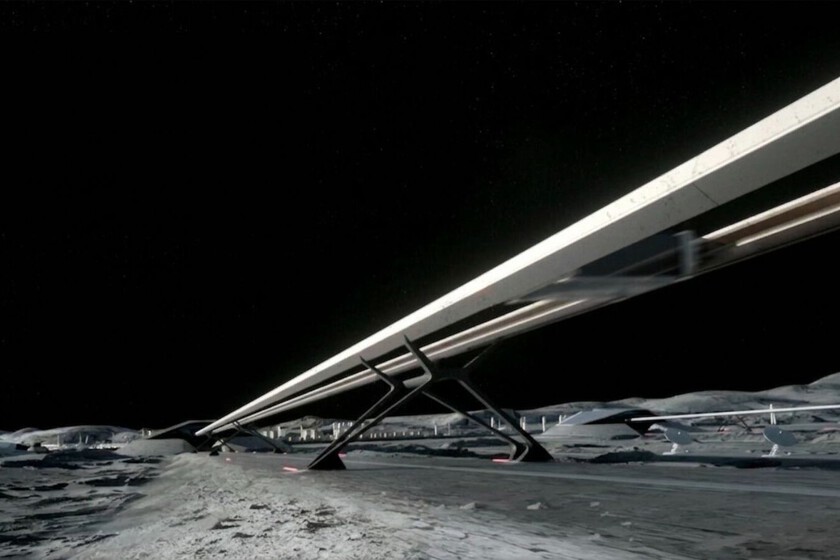
Elon Musk’s ambitious plans for space may extend beyond Earth orbit, with a recent analysis suggesting the potential for the Moon to become a manufacturing hub for satellites launched via electromagnetic catapults. This concept, initially proposed decades ago, is gaining traction due to its alignment with Musk’s vision for establishing space-based data centers and producing AI satellites off-world.
The idea of using electromagnetic mass drivers, or catapults, on the Moon for launches was first conceptualized by scientist Gerard O’Neill in the 1970s. His vision was to leverage lunar resources for constructing space colonies. Today, both public and private space agencies are revisiting this concept, driven by the potential to overcome Earth-based launch limitations.
Expert Concerns and Potential Applications
An independent analysis by cislunar security expert Andre Sonntag highlights the significant risks associated with the advancement of lunar catapult technology. While current capabilities are limited to launching small payloads, Sonntag warns that optimized systems could be repurposed for launching destructive probes, inert projectiles, or even nuclear warheads. The difficulty in detecting launches from the Moon could also circumvent conventional early warning systems, posing a considerable security threat.
The technology involves a track lined with sequential electromagnets. A metallic carriage carrying the payload is accelerated along the track, gaining momentum from each activated magnet. The goal is to reach the lunar escape velocity of approximately 2.4 kilometers per second, propelling the payload into space without the need for propellant.
Advantages of Lunar Launching
Launching from the Moon offers distinct advantages over Earth-based rocket launches. The absence of an atmosphere on the Moon eliminates the risk of atmospheric friction that would ignite a rapidly accelerating vehicle. Furthermore, the Moon’s lower gravity requires a lower escape velocity for this system compared to Earth.
Elon Musk’s Vision for Lunar Manufacturing
While Sonntag’s report does not name specific entities, Elon Musk has publicly discussed the use of mass drivers in February. His long-standing interest in establishing space-based data centers and manufacturing AI satellites on the Moon could be significantly facilitated by such technology. Lunar manufacturing would bypass Earth’s constraints related to energy, thermal management, and launch logistics. The vacuum of space would serve as an effective coolant, and solar energy could power operations. Additionally, a lunar launch site would offer access to a less congested launch schedule compared to Earth.
International Regulations and Future Challenges
The United Nations Outer Space Treaty explicitly prohibits the establishment of military bases on celestial bodies and nuclear launches from space. However, Sonntag points out that enforcing these regulations on the Moon would be exceptionally challenging, raising concerns about potential misuse of advanced lunar launch capabilities, particularly given the interest from figures like Elon Musk.
While launching functional satellites with current catapult technology remains in the realm of science fiction, the rapid advancement of technology suggests this could become a reality. The analysis underscores the need for proactive preparation, anticipating that entities lacking ethical considerations on Earth may exhibit the same in space.
Datos clave
| Aspecto | Descripción |
|—|—|
| Concepto | Uso de catapultas electromagnéticas en la Luna para lanzar satélites. |
| Propulsor original | Gerard O’Neill en los años 70 para la construcción de colonias espaciales. |
| Beneficios lunares | Ausencia de atmósfera, menor gravedad, menor congestión de lanzamientos. |
| Preocupaciones | Potencial uso militar, dificultad de detección y verificación de tratados. |
The implications of this development are significant for the future of space exploration and industry. If realized, a lunar satellite factory could dramatically alter the economics and logistics of space-based operations, from communication networks to AI infrastructure. However, it also raises critical questions about space governance, security, and the potential militarization of the Moon.
Fuente: Elon Musk no quiere solo llegar a la Luna, también quiere convertirla en una fábrica de satélites lanzados con catapultas – Xataka (https://www.xataka.com/espacio/elon-musk-no-quiere-solo-llegar-a-luna-tambien-quiere-convertirla-fabrica-satelites-lanzados-catapultas)
Datos clave
| Punto | Detalle |
|---|---|
| Fuente | Xataka IA |
| Fecha | 2026-06-01T08:00:41+00:00 |
| Tema | Elon Musk no quiere solo llegar a la Luna, también quiere convertirla en una fábrica de satélites lanzados con catapulta |
Source
Xataka IA Publicacion original: 2026-06-01T08:00:41+00:00
Related articles
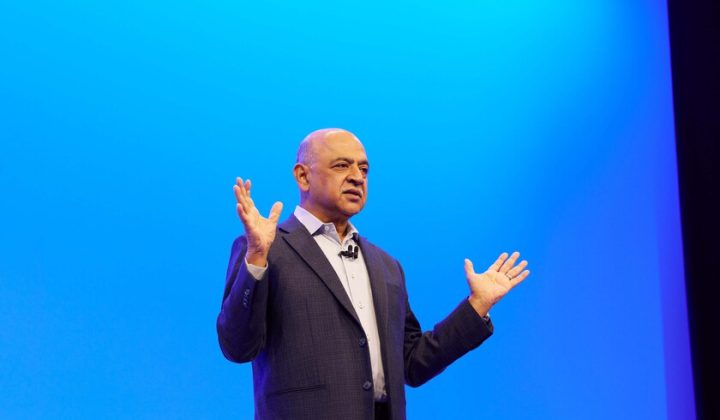
IBM CEO Puts a Number on the Open-Weight AI Value Proposition: 90% of the Performance at 10% of the Token Cost
IBM CEO Arvind Krishna told analysts that open-weight models now deliver about 90% of frontier-model effectiveness while costing between 10% and 25%…
Read article
OCU Finds Spanish Homeowner Communities Overpaying Up to €1,500 on Electricity and €3,515 on Gas—Can AI Tools Optimize Shared Energy Bills?
A new OCU analysis of Spanish homeowner community bills reveals widespread overpayment due to non-competitive tariffs and excess contracted power. Could AI-driven…
Read article
Mayotte fiber dispute does not meet ReviewArticle’s AI news brief
Le Monde reports that France’s competition authority has ordered Orange to suspend part of its fiber-optic rollout in Mayotte. The dispute is…
Read article
DiffEEG Model Uses Diffusion Pre-Training to Improve Seizure Detection from Minimal Labeled Data
Researchers have introduced DiffEEG, a 9.6-million-parameter foundation model that combines denoising diffusion pre-training with reinforcement learning fine-tuning to detect seizure events from…
Read articleWiki relacionada

AI Model API Pricing and Context Window Comparison: Current Rates and Limits
Compare the latest API pricing, context windows, and capabilities of leading AI model providers including OpenAI, Anthropic, Google, and Mistral. Practical guidance…
Read article
AI Agent Evaluation Frameworks: How to Benchmark Agentic Systems
A practical guide to evaluating AI agents — from task completion metrics to safety, cost, and robustness. Covers major frameworks, primary sources,…
Read article
LLM Benchmarks Decoded: What MMLU, HumanEval, and GSM8K Actually Measure for Developers
A developer-focused breakdown of the most-cited LLM benchmarks — MMLU, HumanEval, GSM8K, MATH, Chatbot Arena — including what they test, their hidden…
Read article
What Is RAG? A Practical Guide to Retrieval-Augmented Generation in 2025
Retrieval-Augmented Generation (RAG) grounds LLM outputs in external data, reducing hallucinations and enabling enterprise use cases. This guide covers how RAG works,…
Read article