
EU Appliance Manufacturing Faces Extinction as Spain Loses 17 Factories
The European Union's appliance manufacturing sector is in steep decline, with Spain alone witnessing the closure or relocation of 17 factories in the past two decades. This trend raises concerns about strategic dependencies and the erosion of industrial knowledge.
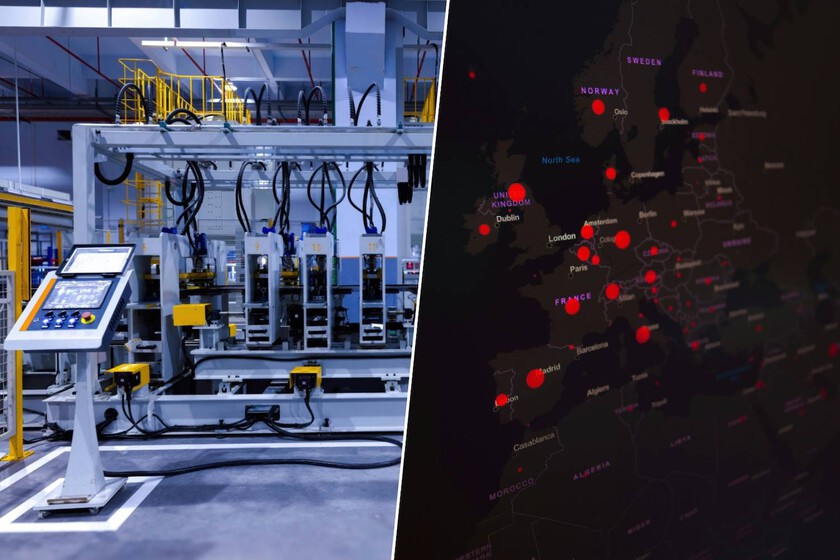
The once-robust appliance manufacturing industry within the European Union is facing a severe crisis, with Spain experiencing a significant contraction. Over the last two decades, 17 manufacturing plants have either closed down or been relocated, leaving only a handful operating in the country. This trend, detailed by APPLIA, the Spanish Association of Manufacturers and Importers of Household Appliances, highlights a broader struggle for EU-based production against global competition.
The remaining Spanish appliance industry generates approximately 4.5 billion euros annually and employs 8,000 people. These figures are considered modest for a country of Spain’s size, underscoring the precarious state of the sector.
Por que importa
Key Facts
| Aspect | Detail |
|---|---|
| Factories Lost in Spain | 17 (in the last two decades) |
| Remaining Plants in Spain | Approximately a dozen |
| APPLIA Data | Association of Manufacturers and Importers of Household Appliances |
| Market Growth | European appliance market projected to grow from $112.33 billion (2024) to $147.98 billion (2033) |
The primary driver behind this decline is delocalization, with manufacturers seeking more cost-effective production bases outside the EU. Higher production costs, coupled with stringent regulatory and environmental standards within the Union, make it increasingly challenging to compete. Asia, in particular, has emerged as a favored relocation destination.
Augusto Río, spokesperson for APPLIA and Sales Director at BSH Spain, noted that while some European regulations are intended to improve the industrial environment, their implementation often complicates domestic manufacturing. A key example is the Carbon Border Adjustment Mechanism (CBAM). While intended to level the playing field, the CBAM taxes imported raw materials like steel. However, it does not apply to finished appliances imported into the EU that were manufactured using that same steel abroad. This creates a loophole where products made with taxed materials outside the EU can enter the market without incurring the same cost burden as domestically produced goods.
Contexto
The consequences of this industrial erosion are multifaceted. The most immediate is job loss, impacting local economies that relied on stable, quality employment. Beyond employment, the EU risks becoming strategically dependent on third countries for essential household goods. This reliance can leave the bloc vulnerable to supply chain disruptions and geopolitical pressures.
Furthermore, the decline of manufacturing facilities hinders the crucial ecosystem of research, development, and innovation. Without a strong industrial base, technical knowledge tends to migrate elsewhere, severing the feedback loop essential for technological advancement.
Paradoxically, this decline does not stem from a lack of consumer demand. Market research indicates that the European appliance market is expected to grow significantly, from $112.33 billion in 2024 to $147.98 billion by 2033, with an annual growth rate exceeding 3%. However, the leading players in this expanding market are increasingly international. The top five include Germany’s BSH, Sweden’s Electrolux, UK’s Dyson, USA’s Whirlpool, and China’s Haier. Chinese manufacturer Midea’s acquisition of Spain’s Grupo Teka further illustrates this shift.
Historically, appliance manufacturing in Spain, from the mid-20th century onwards, was a symbol of economic development and the adoption of a mass-consumption lifestyle. Brands like Balay, Corberó, and Fagor were integral to Spanish households, fostering a strong sense of national identity linked to industrial production. The globalization of the late 20th and early 21st centuries, however, led multinational corporations to shift production to regions with lower labor and environmental costs.
Additional legal asymmetries also contribute to the challenge. Spain, for instance, mandates a three-year manufacturing warranty, exceeding the EU’s general two-year requirement. Furthermore, the obligation to stock spare parts for a decade creates inventory costs that imported goods often bypass.
The strategy for survival for the remaining European manufacturers involves differentiating on quality and value-added features rather than competing on price. The German “Mittelstand” model serves as an example. Santiago Torrent, executive president of CNA Group (owner of the Cata brand), emphasizes focusing on quality, innovation, durability, and enhanced performance, including post-sale services and repairs, in line with the EU’s growing Right to Repair directive.
However, this value-added strategy requires significant time, investment, and a market willing to pay a premium for European-made products, which may be challenging in the current inflationary environment. Moreover, China has expressed strong opposition to European protectionist tariff measures, signaling potential retaliatory actions. Europe’s deep reliance on China for critical components like semiconductors and batteries also limits its ability to implement aggressive trade policies without risking self-inflicted harm.
Source: El electrodoméstico Made in UE está en peligro de extinción: España ha perdido 17 fábricas en dos décadas – Xataka: https://www.xataka.com/empresas-y-economia/electrodomestico-made-in-ue-esta-peligro-extincion-espana-ha-perdido-17-fabricas-dos-decadas
Source
Xataka IA Publicacion original: 2026-06-28T12:30:12+00:00
Related articles

IBM CEO Puts a Number on the Open-Weight AI Value Proposition: 90% of the Performance at 10% of the Token Cost
IBM CEO Arvind Krishna told analysts that open-weight models now deliver about 90% of frontier-model effectiveness while costing between 10% and 25%…
Read article
OCU Finds Spanish Homeowner Communities Overpaying Up to €1,500 on Electricity and €3,515 on Gas—Can AI Tools Optimize Shared Energy Bills?
A new OCU analysis of Spanish homeowner community bills reveals widespread overpayment due to non-competitive tariffs and excess contracted power. Could AI-driven…
Read article
Mayotte fiber dispute does not meet ReviewArticle’s AI news brief
Le Monde reports that France’s competition authority has ordered Orange to suspend part of its fiber-optic rollout in Mayotte. The dispute is…
Read article
DiffEEG Model Uses Diffusion Pre-Training to Improve Seizure Detection from Minimal Labeled Data
Researchers have introduced DiffEEG, a 9.6-million-parameter foundation model that combines denoising diffusion pre-training with reinforcement learning fine-tuning to detect seizure events from…
Read articleWiki relacionada

AI Model API Pricing and Context Window Comparison: Current Rates and Limits
Compare the latest API pricing, context windows, and capabilities of leading AI model providers including OpenAI, Anthropic, Google, and Mistral. Practical guidance…
Read article
AI Agent Evaluation Frameworks: How to Benchmark Agentic Systems
A practical guide to evaluating AI agents — from task completion metrics to safety, cost, and robustness. Covers major frameworks, primary sources,…
Read article
LLM Benchmarks Decoded: What MMLU, HumanEval, and GSM8K Actually Measure for Developers
A developer-focused breakdown of the most-cited LLM benchmarks — MMLU, HumanEval, GSM8K, MATH, Chatbot Arena — including what they test, their hidden…
Read article
What Is RAG? A Practical Guide to Retrieval-Augmented Generation in 2025
Retrieval-Augmented Generation (RAG) grounds LLM outputs in external data, reducing hallucinations and enabling enterprise use cases. This guide covers how RAG works,…
Read article