
Germany Proposes Raising Retirement Age to 70 to Shore Up Pensions
Facing demographic shifts and a strained pension system, Germany is considering a significant reform, including gradually increasing the retirement age to 70 by 2090, mirroring historical pension policies.

Germany is contemplating a significant reform of its pension system, aiming to prevent a potential collapse driven by demographic changes. The proposed measures, spearheaded by Chancellor Friedrich Merz, include a gradual increase in the statutory retirement age, potentially reaching 70 by the year 2090. This move echoes historical pension policies, as Germany first established public pensions with a retirement age of 70 in 1889 under Otto von Bismarck.
Demographic Challenges
The German pension system, one of the oldest globally, is facing considerable strain. A declining birth rate and an aging population mean fewer workers are contributing to support an increasing number of retirees. Current statistics from the German Federal Statistical Office indicate there are 33 pensioners for every 100 people of working age. Projections suggest this ratio could worsen significantly by 2070, with as many as 61 pensioners for every 100 contributors, meaning less than two workers per retiree. Furthermore, by 2035, it is anticipated that one in four Germans will be over the age of 67. The current pay-as-you-go system, where today’s workers fund today’s pensions, is unsustainable under these demographic pressures, especially with the baby boomer generation reaching retirement age.
Gradual Increase in Retirement Age
The most prominent proposal involves linking the legal retirement age to life expectancy. As Germans are living longer, the plan suggests that individuals should also contribute to the pension system for longer. The current retirement age is 67, aligning with Spain. However, under the new plan, this age would incrementally rise: to 67.5 years by 2041, 68 by 2051, and eventually reach 70 by the end of 2090. This approach is designed to be a progressive adaptation to demographic shifts rather than an abrupt change, aiming to cushion the impact of a large cohort retiring in the coming decade. Chancellor Merz has stated that the reforms are intended to provide assurance to younger generations, emphasizing that the system will not collapse under the proposed comprehensive package.
Reforming Early Retirement
In conjunction with extending the standard retirement age, the reform package also proposes stricter conditions for early retirement, particularly the “Rente mit 63” scheme, which allows individuals to retire at 63 without penalty if they have contributed for 45 years. An estimated 270,000 Germans currently utilize this early retirement option annually. Unions, however, have voiced concerns, particularly from manual labor sectors, arguing that the proposal overlooks the physical demands of jobs in factories or construction compared to office-based work. To address this, the government is considering facilitating earlier retirement for those unable to continue working due to health reasons, while making the automatic early retirement for those with long careers more conditional.
Investing Pension Funds in Capital Markets
Beyond age-related adjustments, the reform package includes a significant shift in how pension funds are managed. Germany is looking to adopt a model similar to Sweden’s, where a portion of employee contributions is invested in capital markets. The proposal suggests starting with an additional 0.5% of salary, gradually increasing to 2%, with each worker having an individual account. Merz estimates this could channel at least 30 billion euros annually into the markets. Critics, however, caution about the inherent risks of stock market volatility, noting that a sharp downturn at a critical time could jeopardize the pension system’s liquidity.
Key Facts
| Aspect | Detail |
|---|---|
| Proposed Retirement Age | Gradually increasing to 70 by 2090 |
| Current Retirement Age | 67 |
| Driving Factor | Demographic changes: aging population, fewer workers per retiree |
| Additional Measure | Stricter early retirement rules, investment in capital markets |
| Historical Precedent | Retirement age of 70 established in 1889 by Otto von Bismarck |
This development is relevant to ReviewArticle readers as it highlights a significant policy shift in a major European economy addressing a challenge that is increasingly influenced by technological advancements and societal changes. The debate around retirement age, pension sustainability, and investment strategies for long-term financial security is a critical aspect of the broader economic and social landscape impacted by AI and automation trends, which often influence labor market dynamics and workforce longevity.
Source: Alemania ha recuperado una medida de 1889 para evitar el colapso de sus pensiones: trabajar hasta los 70 años, Xataka, https://www.xataka.com/empresas-y-economia/alemania-ha-encontrado-salida-para-sus-jubilaciones-trabajar-70-anos-2090
Source
Xataka IA Publicacion original: 2026-06-25T13:31:32+00:00
Related articles
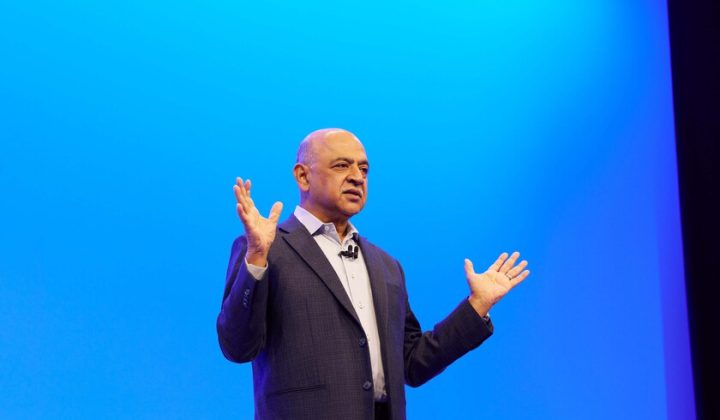
IBM CEO Puts a Number on the Open-Weight AI Value Proposition: 90% of the Performance at 10% of the Token Cost
IBM CEO Arvind Krishna told analysts that open-weight models now deliver about 90% of frontier-model effectiveness while costing between 10% and 25%…
Read article
OCU Finds Spanish Homeowner Communities Overpaying Up to €1,500 on Electricity and €3,515 on Gas—Can AI Tools Optimize Shared Energy Bills?
A new OCU analysis of Spanish homeowner community bills reveals widespread overpayment due to non-competitive tariffs and excess contracted power. Could AI-driven…
Read article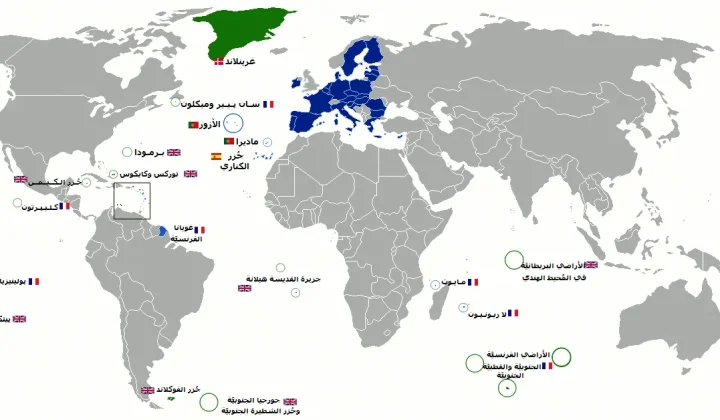
Mayotte fiber dispute does not meet ReviewArticle’s AI news brief
Le Monde reports that France’s competition authority has ordered Orange to suspend part of its fiber-optic rollout in Mayotte. The dispute is…
Read article
DiffEEG Model Uses Diffusion Pre-Training to Improve Seizure Detection from Minimal Labeled Data
Researchers have introduced DiffEEG, a 9.6-million-parameter foundation model that combines denoising diffusion pre-training with reinforcement learning fine-tuning to detect seizure events from…
Read articleWiki relacionada

AI Model API Pricing and Context Window Comparison: Current Rates and Limits
Compare the latest API pricing, context windows, and capabilities of leading AI model providers including OpenAI, Anthropic, Google, and Mistral. Practical guidance…
Read article
AI Agent Evaluation Frameworks: How to Benchmark Agentic Systems
A practical guide to evaluating AI agents — from task completion metrics to safety, cost, and robustness. Covers major frameworks, primary sources,…
Read article
LLM Benchmarks Decoded: What MMLU, HumanEval, and GSM8K Actually Measure for Developers
A developer-focused breakdown of the most-cited LLM benchmarks — MMLU, HumanEval, GSM8K, MATH, Chatbot Arena — including what they test, their hidden…
Read article
What Is RAG? A Practical Guide to Retrieval-Augmented Generation in 2025
Retrieval-Augmented Generation (RAG) grounds LLM outputs in external data, reducing hallucinations and enabling enterprise use cases. This guide covers how RAG works,…
Read article