
Why Spanish Firefighters Are Deploying Donkeys Alongside AI Cameras
A nonprofit in Catalonia uses rescued donkeys to clear brush and create natural firebreaks, complementing drone- and AI-based detection systems that struggle with Spain’s rugged terrain.
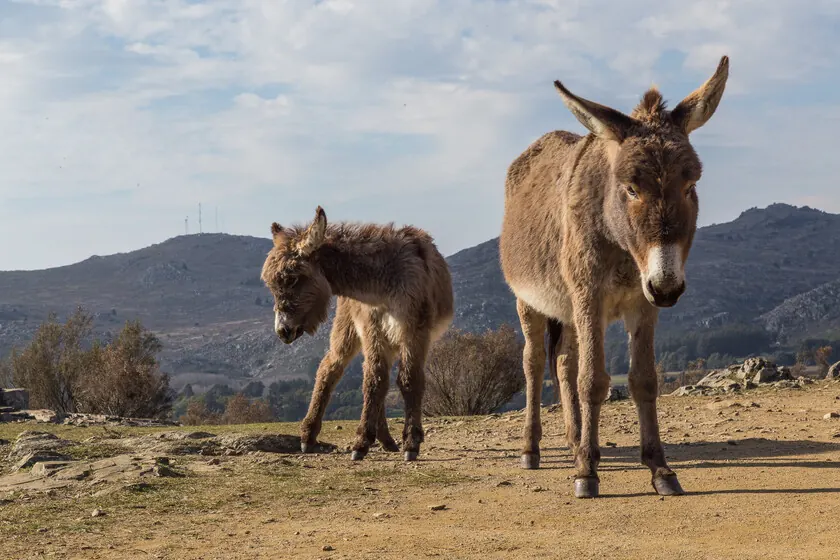
Spain has expanded its wildfire prevention toolkit to include drones, satellite imagery and AI-equipped cameras, but in the hills of Catalonia the most effective tool is often a herd of donkeys. The Tivissa Donkey Firefighters, a nonprofit founded in 2020, uses rescued donkeys to graze dry brush and create natural firebreaks in terrain that is too steep or remote for machinery.
The initiative highlights a practical limit of current AI-based wildfire detection: even the best camera networks and computer vision models cannot remove the dry vegetation that fuels a blaze. Instead, they detect smoke or heat after a fire starts. The donkey program intervenes earlier by reducing available fuel.
Key facts
| Aspect | Detail |
|---|---|
| Organization | Tivissa Donkey Firefighters (Tivissa, Tarragona, Spain) |
| Start year | 2020, based on a pilot after the 2013 Tivissa fire |
| Herd size | About 60 animals as of 2026 |
| Complement to | AI-equipped drones, satellites and wildfire detection cameras |
How the program works
The donkeys are released in herds into public and private forests where they feed on dry grass, shrubs and undergrowth. Unlike goats or sheep, donkeys are heavier and trample the vegetation they eat, which compacts the soil and reduces the amount of flammable material on the ground. The animals also move slowly but steadily, covering large areas over weeks.
Joan Cedó Sans, who founded the program, told Diari de Tarragona that the idea came after the 2013 Tivissa fire came close to his property. “I thought the animals could help clear the undergrowth and prevent fires,” he said. The herd started with three donkeys from a Swiss couple who needed to rehome them.
Where AI tools face limits
Spain’s wildfire detection infrastructure includes AI-powered cameras from companies such as Libelium and Delsat, as well as satellite analysis from the Copernicus program. These systems are effective at spotting smoke and tracking fire spread, but they cannot remove the dry fuel that accumulates in abandoned farmland and forests. Rural depopulation has left large areas unmanaged, making them more prone to large fires.
“The work donkeys do, neither goats nor sheep can do,” Cedó told CNN. He cited the animals’ weight and appetite for dry, tough vegetation that other grazers avoid.
Comparable initiatives in other regions
Donkey-based prevention is not unique to Catalonia. In Andalusia, the El Burrito Feliz association has deployed donkeys near Doñana National Park since 2014. In Galicia and the Basque Country, similar projects use horses and cattle. In 2022, Barcelona experimented with 200 sheep and goats to manage undergrowth in Collserola Natural Park, a model already tested in Portugal.
For ReviewArticle readers, the case is a reminder that AI deployment in wildfire prevention depends on ground-level logistics. Detection is only one part of the chain; fuel management remains a physical, labor-intensive task that sometimes calls for four-legged tools rather than silicon.
Source: Xataka – “España tiene cada vez más bosques y menos recursos para prevenir los incendios. Su solución: burros bomberos” (Carlos Prego, July 24, 2026) – https://www.xataka.com/magnet/pregunta-cual-nuestra-gran-arma-frente-a-incendios-espana-respuesta-se-abre-paso-burros-bomberos
Source
Xataka IA Publicacion original: 2026-07-24T13:00:40+00:00
Related articles

IBM CEO Puts a Number on the Open-Weight AI Value Proposition: 90% of the Performance at 10% of the Token Cost
IBM CEO Arvind Krishna told analysts that open-weight models now deliver about 90% of frontier-model effectiveness while costing between 10% and 25%…
Read article
OCU Finds Spanish Homeowner Communities Overpaying Up to €1,500 on Electricity and €3,515 on Gas—Can AI Tools Optimize Shared Energy Bills?
A new OCU analysis of Spanish homeowner community bills reveals widespread overpayment due to non-competitive tariffs and excess contracted power. Could AI-driven…
Read article
Mayotte fiber dispute does not meet ReviewArticle’s AI news brief
Le Monde reports that France’s competition authority has ordered Orange to suspend part of its fiber-optic rollout in Mayotte. The dispute is…
Read article
DiffEEG Model Uses Diffusion Pre-Training to Improve Seizure Detection from Minimal Labeled Data
Researchers have introduced DiffEEG, a 9.6-million-parameter foundation model that combines denoising diffusion pre-training with reinforcement learning fine-tuning to detect seizure events from…
Read articleWiki relacionada

AI Model API Pricing and Context Window Comparison: Current Rates and Limits
Compare the latest API pricing, context windows, and capabilities of leading AI model providers including OpenAI, Anthropic, Google, and Mistral. Practical guidance…
Read article
AI Agent Evaluation Frameworks: How to Benchmark Agentic Systems
A practical guide to evaluating AI agents — from task completion metrics to safety, cost, and robustness. Covers major frameworks, primary sources,…
Read article
LLM Benchmarks Decoded: What MMLU, HumanEval, and GSM8K Actually Measure for Developers
A developer-focused breakdown of the most-cited LLM benchmarks — MMLU, HumanEval, GSM8K, MATH, Chatbot Arena — including what they test, their hidden…
Read article
What Is RAG? A Practical Guide to Retrieval-Augmented Generation in 2025
Retrieval-Augmented Generation (RAG) grounds LLM outputs in external data, reducing hallucinations and enabling enterprise use cases. This guide covers how RAG works,…
Read article