
Spanish Government Debates Fuel Subsidy Extension Amidst Rising Costs
Spain's government is set to decide on extending fuel tax breaks beyond June 30th, with potential implications for holiday travel costs.
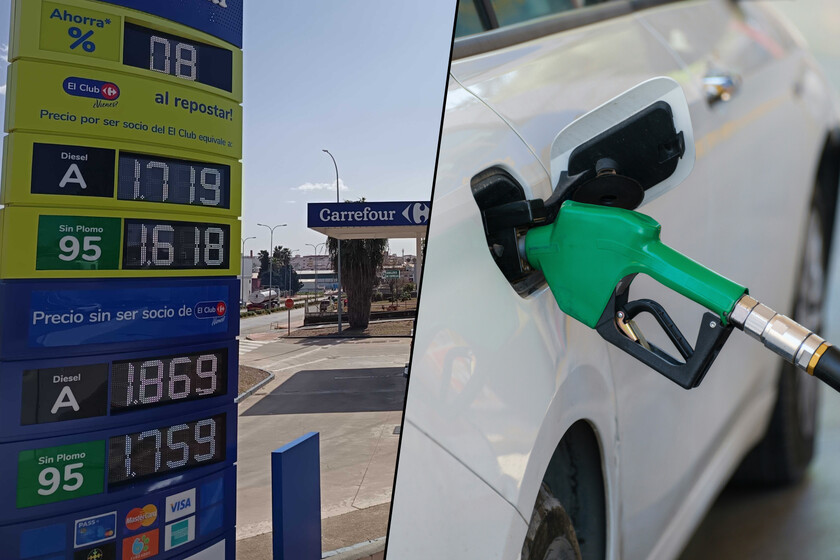
The Spanish Council of Ministers is scheduled to debate the extension of fiscal reductions on fuel prices next Monday, June 29th. The current measures, which include a reduction in VAT on fuels and a cut in the special hydrocarbon tax, are set to expire on June 30th. Failure to extend these subsidies could lead to a substantial increase in the cost of filling vehicle tanks, particularly impacting the upcoming summer holiday travel season.
Initial fuel aid measures were implemented in March as an urgent response to the escalating energy prices attributed to the conflict between the United States and Iran. For drivers, the most noticeable relief came in the form of a reduction in VAT from 21% to 10% on fuels, alongside a decrease in the special tax on hydrocarbons.
Government Considerations
According to reports from ABC, the Ministry of Economy is considering maintaining the reduced VAT rate of 10% for at least an additional three months, extending the relief until September. Another approach under consideration is a gradual phasing out of the subsidies. This strategy aims to mitigate the “rocket effect,” a phenomenon where prices surge dramatically overnight, which could be particularly disruptive during peak travel periods.
Consequences of Non-Extension
Calculations by the Spanish Confederation of Service Station Employers (CEEES) suggest that the complete removal of all current fuel aid measures would result in an increase of 29 cents per liter for gasoline and 22 cents per liter for diesel. With current prices hovering around €1.46 per liter for gasoline and €1.53 for diesel, these increases would push prices to approximately €1.74 per liter for both. Consequently, filling a 55-liter fuel tank, which currently costs around €70, could rise to nearly €90, a significant financial blow for consumers planning summer trips.
The situation for diesel is particularly delicate. The ongoing crisis has led to diesel prices exceeding gasoline prices, an unusual scenario given diesel’s traditionally lower taxation. Despite a recent four-week decline in diesel prices, they remain approximately 5% higher than before the conflict began, according to ABC. If the reduction in the special hydrocarbon tax is not extended, diesel prices could once again surpass the psychologically significant €2 per liter mark.
Challenges to Extension
Extending these subsidies is not a straightforward process for the government. It requires the backing of the Congress of Deputies, necessitating negotiations with coalition and supporting parties, which previously led to tension in March.
Furthermore, external pressures exist. The Bank of Spain recently highlighted that Spain has mobilized the largest share of public resources within the European Union in response to the energy crisis, representing 0.25% of its GDP. However, it criticized that 75% of these measures are general in nature rather than targeted at those most affected, such as the broad VAT reduction. Both the European Commission and the Spanish Treasury Technicians (GESTHA) have advised against continuing these subsidies, viewing them as counterproductive to the energy transition.
Sector Demands
The Spanish Confederation of Road Transport (CETM) has explicitly requested that any extension of fuel aid measures include the road freight transport sector. In a statement, the organization warned that excluding transport would disregard a sector crucial to the nation’s economic activity. The CETM is also demanding the fulfillment of a commitment to provide a 20 cents per liter fuel subsidy specifically for the transport sector.
Presidential Statement
Pedro Sánchez, the President of the Government, has indicated that the upcoming decree will focus on “protecting the productive fabric and also citizens.” However, specific details regarding the scope of these measures have not yet been disclosed. The government acknowledges that even a peace agreement between the United States and Iran may not immediately alleviate economic pressures on fuel prices, which could persist for weeks or months.
Key facts
| Aspect | Detail |
|---|---|
| Decision Date | June 29th |
| Current Subsidy Expiry | June 30th |
| Potential Price Increase | Up to €20 per 55-liter tank if subsidies are not extended |
| Key Affected Sectors | Consumers, road freight transport |
This development is relevant to ReviewArticle readers as it highlights the immediate economic impact of geopolitical events on consumer costs and the policy responses being considered by a major European government. The debate over fuel subsidies touches upon broader themes of energy security, economic stability, and the transition to more sustainable energy sources, all of which are critical areas of interest within the AI and technology landscape where such policies can influence adoption and development.
Source: El Gobierno ya debate si prorroga o no la ayuda a los combustibles. Si no lo hace pagaremos 15 euros más por llenar el depósito – Xataka (https://www.xataka.com/movilidad/gobierno-debate-prorroga-no-ayuda-a-combustibles-no-hace-pagaremos-15-euros-llenar-deposito)
Source
Xataka IA Publicacion original: 2026-06-26T10:01:38+00:00
Related articles

IBM CEO Puts a Number on the Open-Weight AI Value Proposition: 90% of the Performance at 10% of the Token Cost
IBM CEO Arvind Krishna told analysts that open-weight models now deliver about 90% of frontier-model effectiveness while costing between 10% and 25%…
Read article
OCU Finds Spanish Homeowner Communities Overpaying Up to €1,500 on Electricity and €3,515 on Gas—Can AI Tools Optimize Shared Energy Bills?
A new OCU analysis of Spanish homeowner community bills reveals widespread overpayment due to non-competitive tariffs and excess contracted power. Could AI-driven…
Read article
Mayotte fiber dispute does not meet ReviewArticle’s AI news brief
Le Monde reports that France’s competition authority has ordered Orange to suspend part of its fiber-optic rollout in Mayotte. The dispute is…
Read article
DiffEEG Model Uses Diffusion Pre-Training to Improve Seizure Detection from Minimal Labeled Data
Researchers have introduced DiffEEG, a 9.6-million-parameter foundation model that combines denoising diffusion pre-training with reinforcement learning fine-tuning to detect seizure events from…
Read articleWiki relacionada

AI Model API Pricing and Context Window Comparison: Current Rates and Limits
Compare the latest API pricing, context windows, and capabilities of leading AI model providers including OpenAI, Anthropic, Google, and Mistral. Practical guidance…
Read article
AI Agent Evaluation Frameworks: How to Benchmark Agentic Systems
A practical guide to evaluating AI agents — from task completion metrics to safety, cost, and robustness. Covers major frameworks, primary sources,…
Read article
LLM Benchmarks Decoded: What MMLU, HumanEval, and GSM8K Actually Measure for Developers
A developer-focused breakdown of the most-cited LLM benchmarks — MMLU, HumanEval, GSM8K, MATH, Chatbot Arena — including what they test, their hidden…
Read article
What Is RAG? A Practical Guide to Retrieval-Augmented Generation in 2025
Retrieval-Augmented Generation (RAG) grounds LLM outputs in external data, reducing hallucinations and enabling enterprise use cases. This guide covers how RAG works,…
Read article