
Volkswagen Executives Signal Existential Threat Amidst Internal Survey Findings
A leaked internal survey reveals that a majority of Volkswagen's top executives believe the company's very existence is at risk, citing challenges in China, the US, and internal software development.
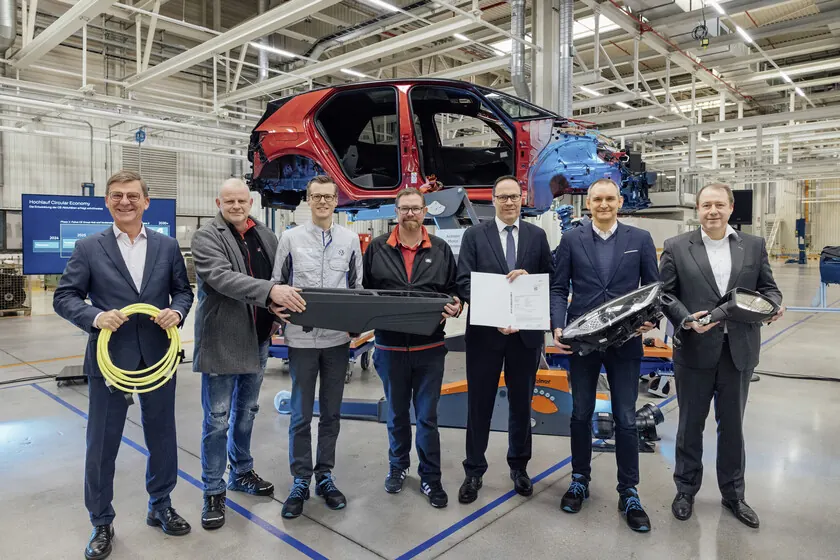
Internal assessments within the Volkswagen Group suggest a dire outlook, with a majority of top executives believing the company’s existence is under threat. The stark assessment emerged from an internal survey, reportedly conducted by management consultants, which revealed deep concerns among the company’s leadership about its current strategy and market position.
Internal Survey Highlights Existential Risk
According to a report by German business publication Manager Magazin, six out of nine senior executives surveyed indicated that Volkswagen is “in danger.” The remaining three executives described the company’s situation as “tense.” This internal sentiment underscores a significant internal acknowledgment of the severe challenges facing the automotive giant. The survey, initiated to analyze internal working methods, concluded that Volkswagen’s current business model is considered “exhausted” by a substantial portion of its leadership.
Discrepancies in Leadership Unity
Further complicating the internal picture, the survey also probed leadership cohesion. German publication Elektroauto reported that Boston Consulting Group was the firm behind the survey, which included eight members of the group’s executive board and Michael Leiters, head of Porsche. Critically, there was no consensus on the unity of the executive board itself. Four board members stated the leadership was united, while another four denied this, a sentiment echoed by eleven out of fourteen members of the company’s Supervisory Board. This division raises questions about the group’s ability to navigate its current challenges with unified resolve.
Key Challenges Identified
The survey respondents pointed to several persistent and critical issues plaguing Volkswagen:
- Declining Performance in China: The Chinese market, a crucial revenue driver, has seen a significant shift towards local manufacturers. These domestic brands are reportedly offering more advanced and appealing vehicles at highly competitive prices, creating a price war that threatens established foreign automakers. Consumer preference for domestic products is also a contributing factor.
- US Market Complications: Tariffs imposed by the US government are negatively impacting the company’s manufacturing operations, particularly those in Mexico. These tariffs also increase the cost of vehicles produced within the US due to the reliance on cross-border parts. Brands like Porsche, which heavily targets the US market, face particular pressure as they do not manufacture vehicles within the country.
- Cost Reduction Plan Difficulties: The feasibility of the aggressive cost-reduction plan proposed by CEO Oliver Blume is questioned by some executives. There is a view that achieving these financial targets may necessitate the cancellation of development for future vehicle platforms.
- Software Development Setbacks: The company’s dedicated software division, Cariad, has been a significant source of problems. Described as a “disaster” by some reports, Cariad’s struggles have led to delays in the launch of important models for Audi and Porsche. This issue is compounded by the slower-than-anticipated public adoption of electric vehicles, impacting the profitability of brands like Volkswagen, Seat/Cupra, and Porsche. Bentley is also reportedly operating at a loss, while Audi is undertaking ambitious initiatives to revitalize its brand image.
Financial Performance and Future Outlook
Volkswagen’s financial performance has suffered as a result of these compounding issues. In 2025, the Group reported its worst financial results since 2016, a period also marked by the “Dieselgate” scandal. The internal survey’s findings suggest a collective realization among the nine board members that the company must fundamentally redefine its strategy and business model to ensure its long-term viability.
This internal acknowledgment of existential risk highlights the profound transformation underway in the automotive industry, driven by technological shifts, geopolitical factors, and evolving consumer preferences. For Volkswagen, the path forward appears to require significant strategic recalibration and a unified approach to address the multifaceted challenges it faces.
Key facts
| Issue | Description |
|—|—|
| Executive Sentiment | 6 out of 9 executives believe Volkswagen is “in danger.” |
| Key Challenges | Declining China sales, US tariffs, software development failures (Cariad), and internal leadership divisions. |
| Financial Impact | Worst results since 2016 reported in 2025. |
| Consulting Firm | Boston Consulting Group reportedly conducted the survey. |
This development is significant for ReviewArticle readers as it pertains to a major global corporation grappling with the strategic and technological shifts impacting the automotive sector. The reliance on internal surveys and the acknowledgment of deep-seated problems by leadership provide insight into the business pressures and potential AI-driven solutions or disruptions within a traditional industry.
Source: Volkswagen Executives Signal Existential Threat Amidst Internal Survey Findings – Xataka IA (https://www.xataka.com/movilidad/directivos-volkswagen-coinciden-su-analisis-existencia-empresa-esta-peligro)
Datos clave
| Punto | Detalle |
|---|---|
| Fuente | Xataka IA |
| Fecha | 2026-06-17T11:30:16+00:00 |
| Tema | Los directivos de Volkswagen coinciden en su análisis: "La existencia de la empresa está en peligro" |
Source
Xataka IA Publicacion original: 2026-06-17T11:30:16+00:00
Related articles
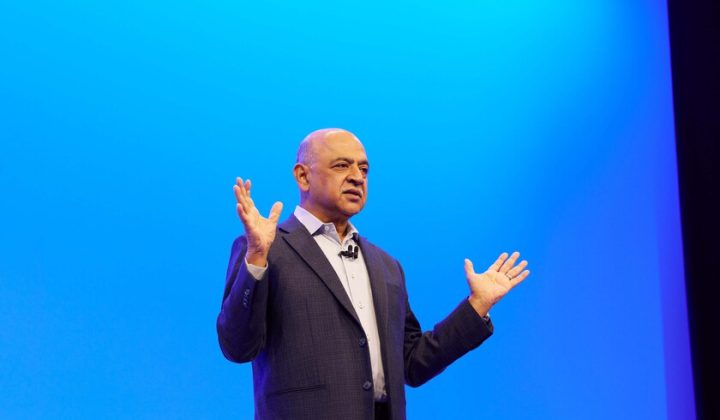
IBM CEO Puts a Number on the Open-Weight AI Value Proposition: 90% of the Performance at 10% of the Token Cost
IBM CEO Arvind Krishna told analysts that open-weight models now deliver about 90% of frontier-model effectiveness while costing between 10% and 25%…
Read article
OCU Finds Spanish Homeowner Communities Overpaying Up to €1,500 on Electricity and €3,515 on Gas—Can AI Tools Optimize Shared Energy Bills?
A new OCU analysis of Spanish homeowner community bills reveals widespread overpayment due to non-competitive tariffs and excess contracted power. Could AI-driven…
Read article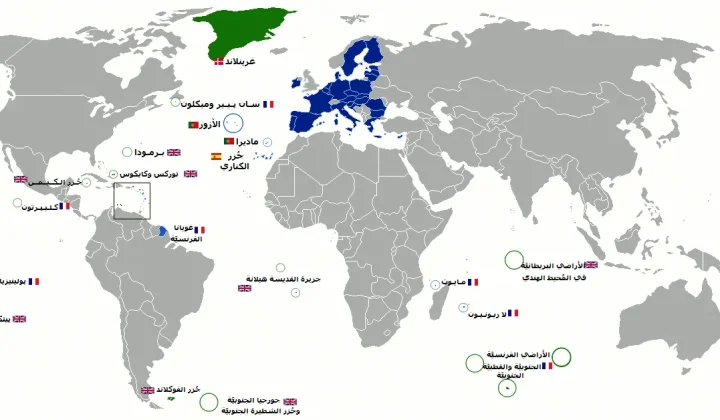
Mayotte fiber dispute does not meet ReviewArticle’s AI news brief
Le Monde reports that France’s competition authority has ordered Orange to suspend part of its fiber-optic rollout in Mayotte. The dispute is…
Read article
DiffEEG Model Uses Diffusion Pre-Training to Improve Seizure Detection from Minimal Labeled Data
Researchers have introduced DiffEEG, a 9.6-million-parameter foundation model that combines denoising diffusion pre-training with reinforcement learning fine-tuning to detect seizure events from…
Read articleWiki relacionada

AI Model API Pricing and Context Window Comparison: Current Rates and Limits
Compare the latest API pricing, context windows, and capabilities of leading AI model providers including OpenAI, Anthropic, Google, and Mistral. Practical guidance…
Read article
AI Agent Evaluation Frameworks: How to Benchmark Agentic Systems
A practical guide to evaluating AI agents — from task completion metrics to safety, cost, and robustness. Covers major frameworks, primary sources,…
Read article
LLM Benchmarks Decoded: What MMLU, HumanEval, and GSM8K Actually Measure for Developers
A developer-focused breakdown of the most-cited LLM benchmarks — MMLU, HumanEval, GSM8K, MATH, Chatbot Arena — including what they test, their hidden…
Read article
What Is RAG? A Practical Guide to Retrieval-Augmented Generation in 2025
Retrieval-Augmented Generation (RAG) grounds LLM outputs in external data, reducing hallucinations and enabling enterprise use cases. This guide covers how RAG works,…
Read article