Spanish Court Awards €50,000 in “La he liado parda” Meme Case, Highlighting Digital Rights
A Spanish court has ordered a media group to pay €50,000 to a woman whose viral 2008 interview phrase became a widely used meme, underscoring the legal implications of digital content reuse.
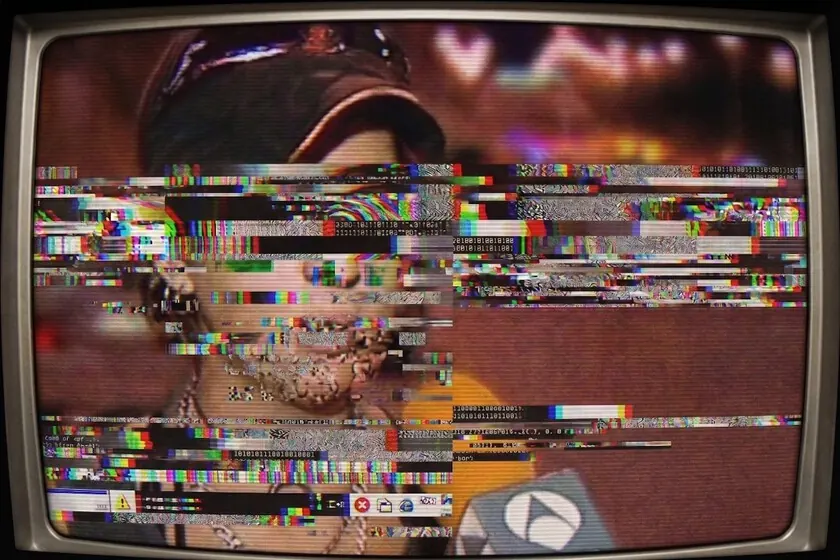
A Spanish court has awarded €50,000 to a woman whose 2008 interview, featuring the phrase “La he liado parda” (roughly translated as “I’ve made a huge mess”), became a viral internet meme. The ruling by the Provincial Court of Madrid against media group Atresmedia addresses the significant legal and personal impact of widespread content reuse without consent, even when the original footage was part of a news report.
The incident, which occurred in the summer of 2008, involved an interview with the woman, a lifeguard, following a chemical incident at a swimming pool. Her spontaneous and emphatic remark quickly gained traction online, evolving into a widely recognized meme in Spanish internet culture.
Legal Action and Ruling
The woman filed a lawsuit in 2021, more than a decade after the interview, after realizing her voice and image continued to be circulated without her permission. The court’s decision not only mandates an indemnity of €50,000, increasing an initial lower court award of €40,000, but also orders the removal of the recordings from all Atresmedia platforms and prohibits their future reuse in similar contexts.
Atresmedia is not being held responsible for the original viral spread of the video, which the court attributes to the natural dynamics of the internet and social media. However, the ruling specifically targets the media group’s continued exploitation of the footage for entertainment purposes across its various channels, including La Sexta, Onda Cero, and Europa FM, long after any justifiable news or informational purpose had ceased.
The Personal Impact of Virality
The consequences for the woman extended far beyond a fleeting viral moment. The article highlights instances where her meme status affected her personal and professional life, including encounters with police referencing the phrase and significant personal distress. She reportedly experienced difficulties finding employment, suffered anxiety attacks, and required hospitalizations, underscoring the severe emotional and psychological toll that uncontrolled virality can inflict. The court recognized this “serious” moral damage, even if not entirely imputable to Atresmedia’s original broadcast.
Historical Context of Viral Content and Legal Challenges
This case echoes other instances of individuals whose lives were significantly impacted by early internet virality. The “Star Wars Kid” incident from 2002, where a teenager’s self-recorded video became a global phenomenon, resulted in severe bullying and psychiatric treatment, leading to a substantial out-of-court settlement for his family.
In Spain, other viral moments have also led to legal or social repercussions. The article mentions Álvaro Muñoz, a child whose racist comments during a viral video led to bullying and legal proceedings. However, it also notes cases where viral fame has been leveraged positively, such as Miquel Montoro, the “Hostia, pilotes” boy, who has become a rural influencer, and José Gómez, who turned a viral phrase about petanca into a world championship.
Understanding Memes and Digital Culture
Researcher Limor Shifman, in her book ‘Memes in Digital Culture,’ defines memes as units of digital content that are created, imitated, and transformed within a shared pattern. This explains how “La he liado parda” transcended its origin as a personal statement to become a reusable cultural artifact. The court’s distinction between the original journalistic use and subsequent entertainment exploitation acknowledges this shift, recognizing the latter as an infringement on the right to one’s own image.
Journalist Jon Ronson’s work on digital lynchings offers further context, describing how individuals can lose their personal identity and become symbols of transgression in the digital sphere. In this instance, the meme’s circulation was not solely driven by anonymous users but was actively perpetuated by the media group that originally recorded the interview.
Key Facts
| Detail | Information |
|---|---|
| Incident Year | 2008 |
| Phrase | “La he liado parda” |
| Defendant | Atresmedia |
| Awarded Indemnity | €50,000 |
| Legal Basis | Reuse of viral content without consent, infringement of image rights |
| Ruling Date (approx.) | May 5, 2024 (for the Provincial Court decision) |
This ruling is significant for the ReviewArticle audience as it illustrates the evolving legal landscape surrounding digital content, personal rights, and the long-term consequences of content virality. As AI tools increasingly facilitate content creation and dissemination, understanding the legal implications of using and repurposing digital material becomes crucial for developers, content creators, and users alike. The case highlights that even content originating from news reports can have significant legal ramifications if reused for entertainment without proper authorization, setting a precedent for how digital fame and its exploitation are legally addressed.
Source: Xataka IA – “Hace 18 años se hizo viral por su célebre “la he liado parda”. Ahora Antena 3 le ha pagado 50.000 euros por convertirla en meme” by John Tones (https://www.xataka.com/magnet/hace-18-anos-se-hizo-viral-su-celebre-he-liado-parda-ahora-antena-3-le-ha-pagado-50-000-euros-convertirla-meme)
Source
Xataka IA Publicacion original: 2026-07-03T11:30:43+00:00
Related articles

Nepal’s “Flood-Proof” Google Maps Landmark Is Not a Verified Safety Rating
A house that survived a destructive Himalayan flood reportedly appeared on Google Maps as a “flood-proof” attraction. The viral label should not…
Read article
Perplexity Deploys GPT-6 Astra for End-to-End Production and Communication Systems
Perplexity has integrated OpenAI’s GPT-6 Astra to handle communications, software changes, and production monitoring, reducing the need for frequent human check-ins compared…
Read article
Privacy Reports Put AI Smart Glasses Under Scrutiny in France
French association e-Enfance says it has received more than 20 reports involving women allegedly recorded without their knowledge by connected glasses, bringing…
Read article
Snowflake Publishes GTM Blueprint for Closing the AI-to-Revenue Gap
Snowflake’s sales and marketing teams share a repeatable RAMP framework and four revenue leaks they fixed to turn AI pilots into measurable…
Read articleWiki relacionada

AI Model API Pricing and Context Window Comparison: Current Rates and Limits
Compare the latest API pricing, context windows, and capabilities of leading AI model providers including OpenAI, Anthropic, Google, and Mistral. Practical guidance…
Read article
AI Agent Evaluation Frameworks: How to Benchmark Agentic Systems
A practical guide to evaluating AI agents — from task completion metrics to safety, cost, and robustness. Covers major frameworks, primary sources,…
Read article
LLM Benchmarks Decoded: What MMLU, HumanEval, and GSM8K Actually Measure for Developers
A developer-focused breakdown of the most-cited LLM benchmarks — MMLU, HumanEval, GSM8K, MATH, Chatbot Arena — including what they test, their hidden…
Read article
What Is RAG? A Practical Guide to Retrieval-Augmented Generation in 2025
Retrieval-Augmented Generation (RAG) grounds LLM outputs in external data, reducing hallucinations and enabling enterprise use cases. This guide covers how RAG works,…
Read article