
Cold Showers and Early Mornings Debunked: Scientific Scrutiny Challenges Productivity Gurus’ Morning Rituals
New research suggests popular productivity hacks like cold showers and extreme early rising may not deliver the promised benefits, with limited evidence for long-term effects on stress, inflammation, or overall well-being.
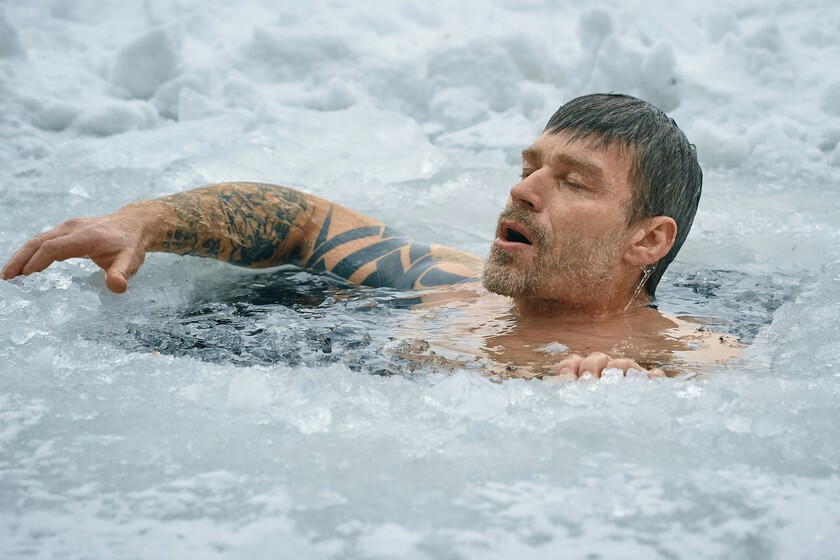
The morning routines championed by productivity gurus, particularly the practice of taking cold showers and waking up at extremely early hours, are facing scientific scrutiny, with recent research suggesting their widely touted benefits may be overstated or even unfounded. A comprehensive review of existing studies indicates that while some short-term effects might be observed, the long-term, transformative impacts on stress reduction, inflammation, and overall well-being are not consistently supported by evidence.
The rise of extreme morning rituals has been fueled by wellness influencers and elite athletes alike. Figures like LeBron James are known to use ice baths post-competition, and Gwyneth Paltrow’s series “The Goop Lab” highlighted the supposed therapeutic qualities of cold water immersion. This trend has trickled down to the general public, with many adopting these practices in pursuit of improved mental and physical health. However, a meta-analysis of 11 global studies, published in PLOS One, sought to scientifically evaluate these claims.
Key Facts
| Practice | Claimed Benefit | Scientific Finding |
|---|---|---|
| Cold Showers/Immersion | Stress reduction, reduced inflammation, boosted immunity | Short-term stress reduction (approx. 12 hours), no long-term effect on stress, potential increase in inflammation, inconclusive impact on immunity. |
| Waking Up at 5 AM | Increased productivity, improved well-being | Limited evidence for long-term benefits; effects on quality of life diminish over time. |
Investigating Cold Water Immersion
The meta-analysis examined data from cold water immersions and showers with temperatures ranging from 7 to 15 degrees Celsius, lasting from 30 seconds to two hours. While some studies noted minor benefits, the researchers highlighted that much of the existing evidence focuses on athletes rather than the general population. One study from the University of Coventry suggested that while cold water exposure can temporarily increase energy expenditure and fat burning, this effect is often neutralized by a subsequent increase in appetite.
The impact on stress levels also appears to be less profound than often claimed. Researchers found that while cold water immersion could reduce stress for approximately 12 hours post-exposure, there was no immediate or significant long-term effect observed. Similarly, participants who took cold showers for 20, 60, or 90 seconds reported slightly higher quality of life scores, but these improvements faded within three months.
Sleep Quality and Immune Response
The link between cold water immersion and improved sleep quality remains inconclusive. While some associations were found, the data was predominantly based on male participants, necessitating further research across diverse demographics. The effect on the immune system is also not definitively proven. Although one study noted a 29% reduction in work absences due to illness among those taking cold showers, this did not translate to significant immediate improvements in immune response to cold exposure. The overall findings suggest that any potential advantages are inconsistent and not durable, casting doubt on the widespread efficacy attributed to these practices.
Inflammation and Potential Risks
Perhaps one of the most surprising findings from the Australian researchers was the effect of cold water immersion on inflammation. Contrary to popular belief, cold baths did not appear to reduce inflammation; instead, they led to significant increases both immediately and an hour after exposure. This is described as an “acute inflammatory response” to the cold stress, similar to muscle damage from exercise. While this adaptation might benefit high-performance athletes, it could potentially be detrimental for individuals with pre-existing health conditions.
Furthermore, research from King’s College London points to potential risks associated with extreme cold water exposure, particularly concerning “autonomic conflict.” When individuals hold their breath while plunging into icy water, opposing reflexes can compete for control of the heart, potentially leading to arrhythmias even in healthy individuals. The risk is reduced with less severe cold shock, making a cold shower a safer option than a full ice bath.
The takeaway for the general public is that while a cold shower might save a few minutes in the morning, its purported benefits for stress, inflammation, and overall health are not strongly supported by current scientific evidence. For those not engaged in elite athletic recovery, the time saved might be the most tangible benefit.
Source: La ciencia ha desmentido el mantra matutino de los gurús de la productividad: la ducha fría es tan inútil como el madrugón, Xataka, https://www.xataka.com/medicina-y-salud/ciencia-ha-desmentido-mantra-matutino-gurus-productividad-ducha-fria-inutil-como-madrugon
Source
Xataka IA Publicacion original: 2026-07-04T07:30:45+00:00
Related articles

Nepal’s “Flood-Proof” Google Maps Landmark Is Not a Verified Safety Rating
A house that survived a destructive Himalayan flood reportedly appeared on Google Maps as a “flood-proof” attraction. The viral label should not…
Read article
Perplexity Deploys GPT-6 Astra for End-to-End Production and Communication Systems
Perplexity has integrated OpenAI’s GPT-6 Astra to handle communications, software changes, and production monitoring, reducing the need for frequent human check-ins compared…
Read article
Privacy Reports Put AI Smart Glasses Under Scrutiny in France
French association e-Enfance says it has received more than 20 reports involving women allegedly recorded without their knowledge by connected glasses, bringing…
Read article
Snowflake Publishes GTM Blueprint for Closing the AI-to-Revenue Gap
Snowflake’s sales and marketing teams share a repeatable RAMP framework and four revenue leaks they fixed to turn AI pilots into measurable…
Read articleWiki relacionada

AI Model API Pricing and Context Window Comparison: Current Rates and Limits
Compare the latest API pricing, context windows, and capabilities of leading AI model providers including OpenAI, Anthropic, Google, and Mistral. Practical guidance…
Read article
AI Agent Evaluation Frameworks: How to Benchmark Agentic Systems
A practical guide to evaluating AI agents — from task completion metrics to safety, cost, and robustness. Covers major frameworks, primary sources,…
Read article
LLM Benchmarks Decoded: What MMLU, HumanEval, and GSM8K Actually Measure for Developers
A developer-focused breakdown of the most-cited LLM benchmarks — MMLU, HumanEval, GSM8K, MATH, Chatbot Arena — including what they test, their hidden…
Read article
What Is RAG? A Practical Guide to Retrieval-Augmented Generation in 2025
Retrieval-Augmented Generation (RAG) grounds LLM outputs in external data, reducing hallucinations and enabling enterprise use cases. This guide covers how RAG works,…
Read article